





316 Stainless Steel Welded Pipe
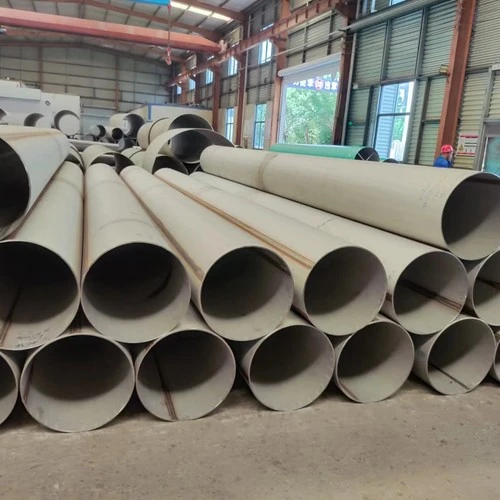
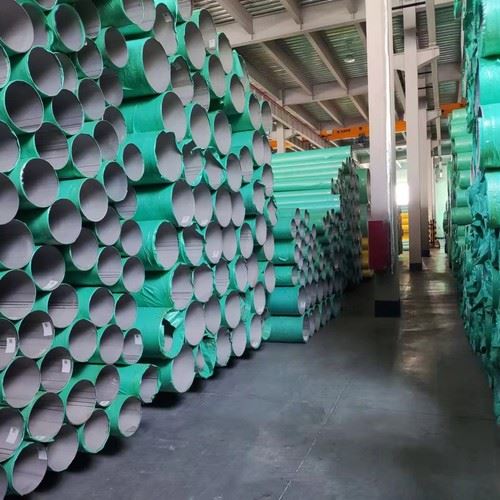
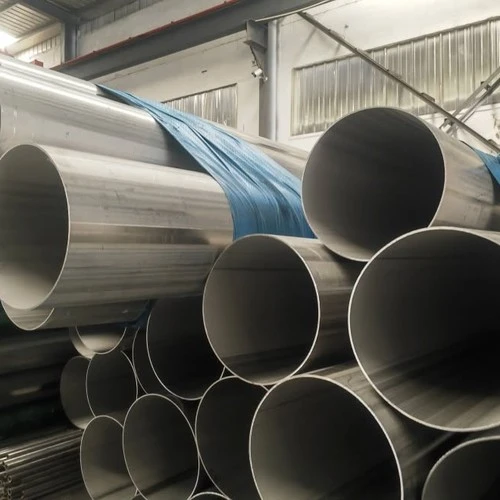
316 stainless steel welded pipe is an austenitic chromium-nickel-molybdenum pipe (UNS S31600, EN 1.4401) formed from strip or plate and joined by a longitudinal weld. It carries the same 515 MPa (75 ksi) tensile and 205 MPa (30 ksi) yield minimums as the seamless grade - the weld is inspected, not weaker. That makes 316 welded pipe the cost-effective route for diameters and wall thicknesses where seamless becomes expensive.
The 2-3 % molybdenum in the alloy is the whole reason to specify 316 over 304: it lifts the pitting resistance equivalent number (PREN) from about 19 to 24-26, so the pipe survives chloride, marine and acidic duty that would attack 304. It stays non-magnetic after annealing and work-hardens rather than heat-treats.
We supply astm a312 tp316 welded pipe from NPS 1/8 to NPS 30 in schedules 5S-80S, and larger diameters as ASTM A358 EFW pipe. Send your NPS, schedule, quantity and destination for a quote.
Technical Specifications
These 316 stainless steel welded pipe specifications describe our typical supply range; exact values are confirmed against the order and the material test certificate.
| Parameter | Capability |
|---|---|
| Standard | ASTM A312 / ASME SA312 (welded & seamless); ASTM A358 / ASME SA358 for large-diameter EFW |
| Grade | TP316 (UNS S31600); EN 1.4401; dual-certified 316/316L available |
| Outside diameter | NPS 1/8-30 (10.3-762 mm) per A312; EFW to NPS 60+ per A358; OD up to 1219 mm |
| Wall thickness | 0.5-30 mm; Schedules 5S, 10S, 40S, 80S, XXS |
| Length | Up to 12 m; single random, double random, or fixed lengths |
| Outside-diameter tolerance | Per ASTM A999: typically ±0.5 % or ±0.75 mm (tighter on small diameters) |
| Wall thickness tolerance | Per ASTM A999: -12.5 % (selected sizes permit positive overrun) |
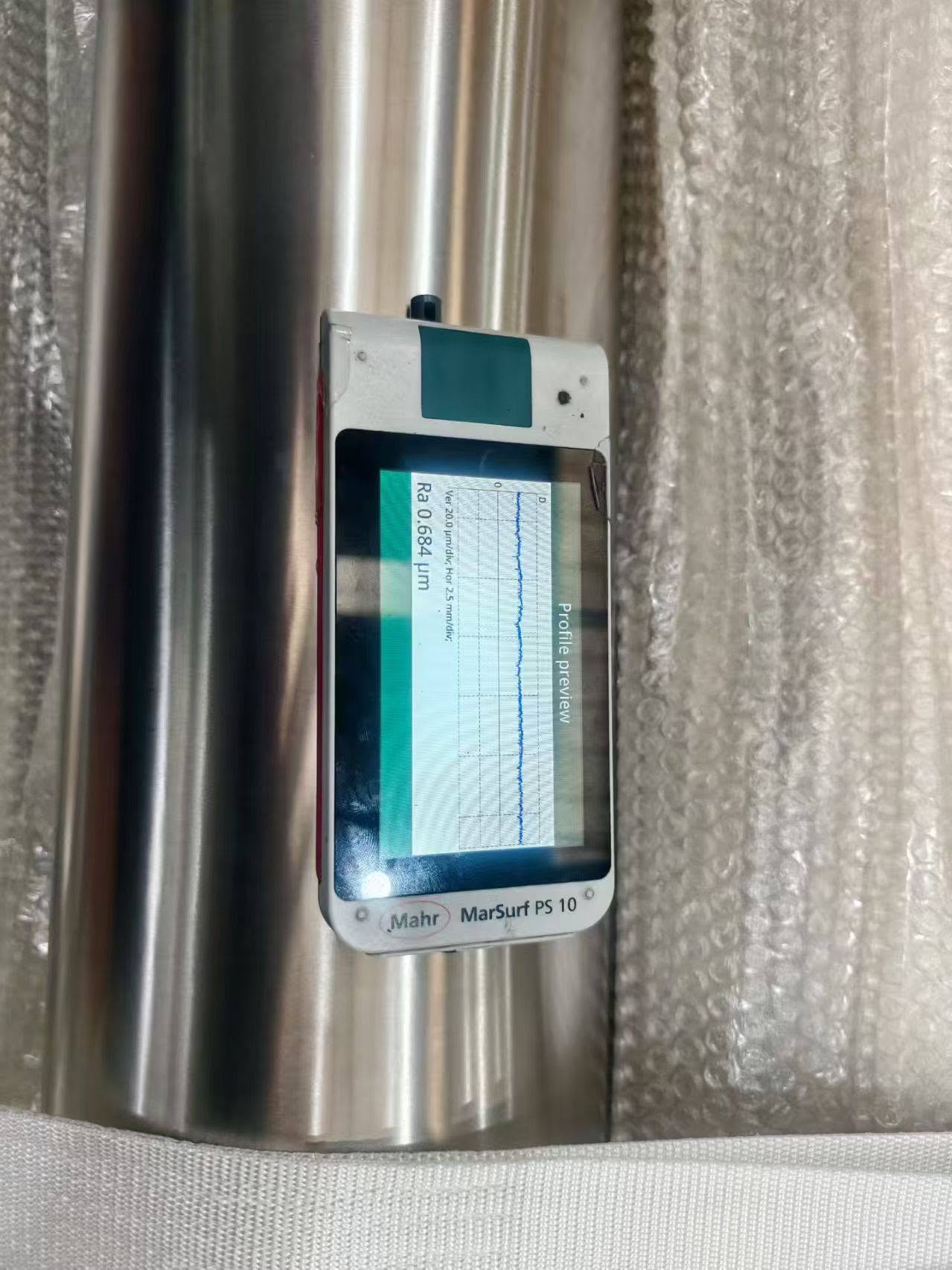
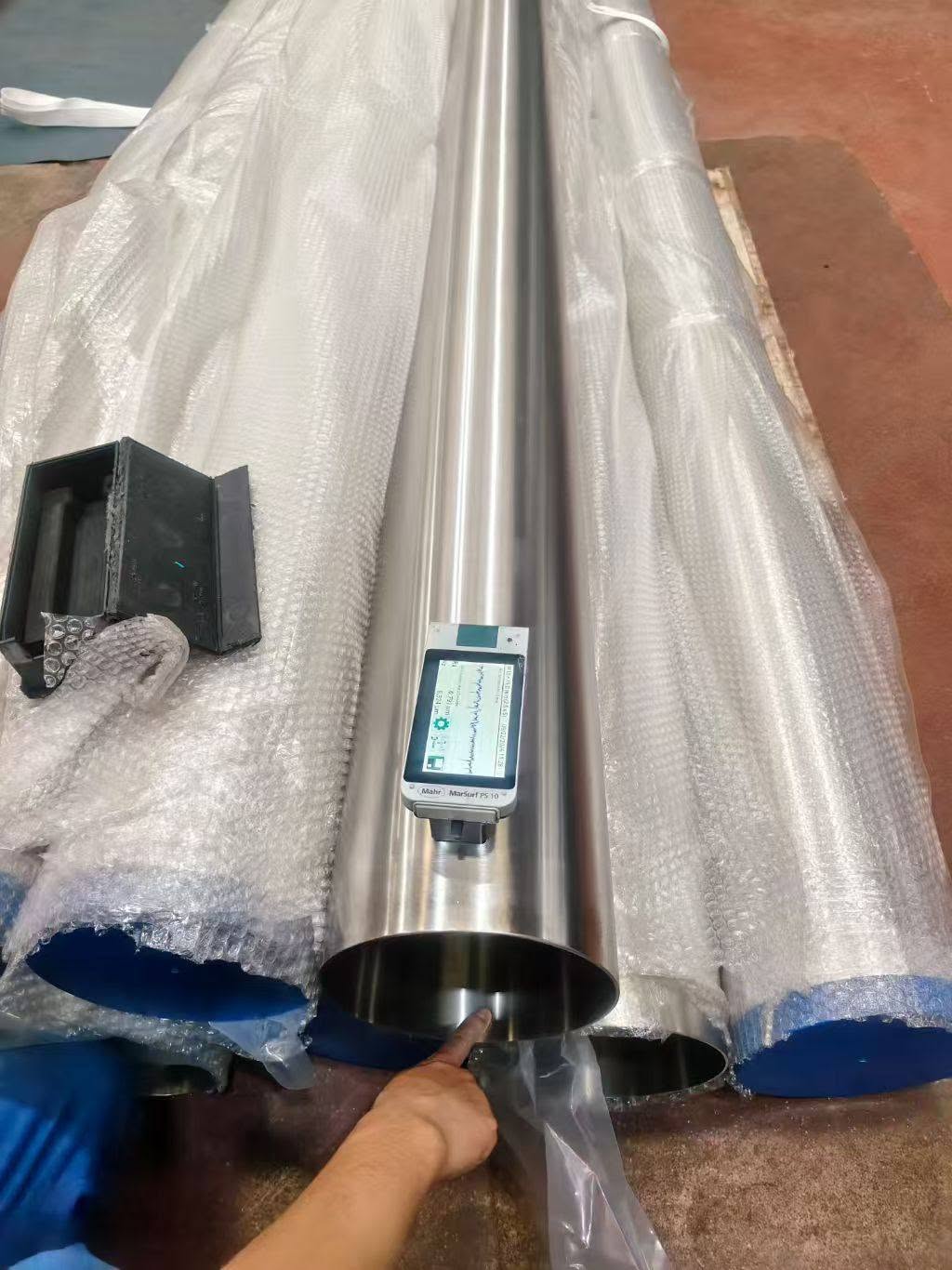
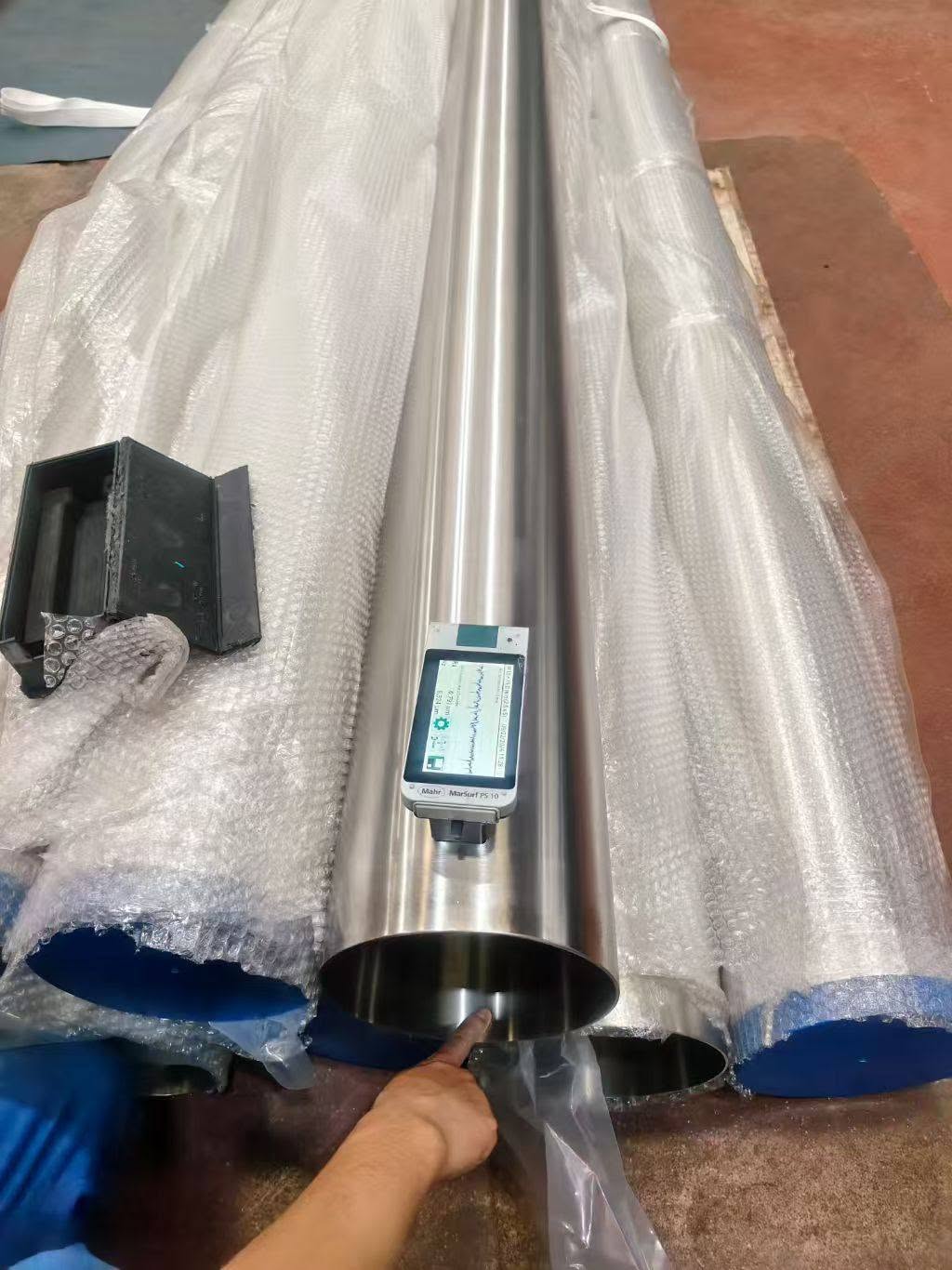
| Surface finish | Pickled (No.1 / 2B), bright annealed (BA), polished 180-600 grit, electropolished |
| Ends | Plain end, beveled end, or threaded |
| Heat treatment | Solution annealed at 1040-1100 °C (1900-2010 °F) and rapidly cooled |
| Certification | EN 10204 3.1 MTC; third-party inspection (SGS, TUV, BV, DNV, ABS) available |
Typical 316 welded pipe dimensions span NPS 1/8 to NPS 30 (10.3-762 mm OD) under A312 and extend to NPS 60 and above as A358 EFW pipe made from plate. The 316 welded pipe wall thickness tolerance is -12.5 % per ASTM A999, with outside-diameter tolerance typically ±0.5 % or ±0.75 mm.
Chemical Composition
The 316 stainless steel welded pipe chemical composition is set by ASTM A312 and is identical to the seamless grade; only the molybdenum band (2.00-3.00 %) distinguishes 316 from 304.
| Element | TP316 (max %) | TP316L (max %) |
|---|---|---|
| Carbon (C) | 0.08 | 0.035 |
| Manganese (Mn) | 2.00 | 2.00 |
| Silicon (Si) | 1.00 | 1.00 |
| Phosphorus (P) | 0.045 | 0.045 |
| Sulfur (S) | 0.030 | 0.030 |
| Chromium (Cr) | 16.0-18.0 | 16.0-18.0 |
| Nickel (Ni) | 10.0-14.0 | 10.0-14.0 |
| Molybdenum (Mo) | 2.00-3.00 | 2.00-3.00 |
| Nitrogen (N) | 0.10 | 0.10 |
Every element is capped to keep the austenite stable and the weld sound. The 2-3 % molybdenum is the controlled element that defines the grade; it is what separates 316 from 304 and from the low-carbon 316L.
Mechanical Properties
The 316 stainless steel welded pipe mechanical properties below apply to TP316 in both welded and seamless form - strength is set by grade, not by route.
| Property | TP316 (welded & seamless) | TP316L |
|---|---|---|
| Tensile strength | ≥515 MPa (75 ksi) | ≥485 MPa (70 ksi) |
| Yield strength (0.2 % offset) | ≥205 MPa (30 ksi) | ≥170 MPa (25 ksi) |
| Elongation (in 2 in / 50 mm) | ≥35 % | ≥35 % |
| Hardness | ≤217 HB / ≤95 HRB | ≤217 HB / ≤95 HRB |
| Test standard | ASTM A312 / A370 | ASTM A312 / A370 |
ASTM A312 sets the strength minimum by grade, not by manufacturing route, so a TP316 welded pipe meets the same 515 MPa tensile and 205 MPa yield as the seamless pipe. Buyers often ask is 316 welded pipe as strong as seamless - it is, because the longitudinal weld is inspected, not weaker. Any page that lists welded 316 at 485 MPa tensile and 170 MPa yield is applying the 316L values by mistake and should be read with caution.
Physical Properties
| Property | Value |
|---|---|
| Density | 8.0 g/cm³ (0.289 lb/in³) |
| Melting range | 1375-1400 °C |
| Modulus of elasticity | 193 GPa |
| Thermal expansion (20-100 °C) | ~16.0 × 10⁻⁶ /K |
| Thermal conductivity | ~16.3 W/m·K |
| Pitting Resistance Equivalent (PREN) | 24-26 |
| Max service temperature | ~870 °C (1600 °F) continuous |
The 316 stainless steel pipe density of 8.0 g/cm³ is slightly higher than that of 304 because of the molybdenum, and the material stays non-magnetic after annealing.
316 vs 304 vs 316L
| Requirement | 304 | 316 (this page) | 316L |
|---|---|---|---|
| Molybdenum | None | 2-3 % | 2-3 % |
| PREN | ~19 | 24-26 | 24-26 |
| Carbon (max) | 0.08 % | 0.08 % | 0.035 % |
| Yield (min) | 205 MPa | 205 MPa | 170 MPa |
| Tensile (min) | 515 MPa | 515 MPa | 485 MPa |
| Best use | General ambient corrosion | Chlorides, acids, marine | Welded-in-place assemblies |
When comparing 316 vs 304 stainless pipe, the choice is driven by the corrosive species, not by strength - both share 515 MPa tensile and 205 MPa yield minimums, but 316's molybdenum lifts PREN to 24-26. And for 316 vs 316l welded pipe, the only difference is carbon (0.08 % vs 0.035 %); 316L is chosen where the pipe is welded in place. Within 316, keep 0.08 % for general service or drop to 0.035 % where sensitisation must be avoided.
Selecting the Right Grade and Route
316 vs 316L vs 304 - which grade
| Grade | Yield (min) | Chloride resistance | Typical use |
|---|---|---|---|
| 304 | 205 MPa | Moderate | Mild, ambient corrosion service |
| 316 | 205 MPa | High (PREN 24-26) | Chemical, marine, acidic process |
| 316L | 170 MPa | High (PREN 24-26) | Welded-in-place assemblies |
Choose by environment and fabrication, not by strength: 316 where chlorides or acids are present, 316L where the pipe is welded in place, and 304 only for mild ambient duty.
Welded vs seamless - which route
| Route | Size suitability | Strength of the route |
|---|---|---|
| Seamless | Up to about NPS 24; homogeneous wall, no seam | Preferred for the highest-pressure and most critical services |
| Welded (A312) | NPS 1/8-30; cost-effective, readily available | Same minimum strength as seamless; seam is inspected, not weaker |
| EFW (A358) | NPS 8-60+ from plate; heavy walls | Large-diameter economics; class system governs seam radiography |
In a direct 316 welded pipe vs seamless pipe comparison, both routes meet the same ASTM A312 strength and chemistry, so welded wins on diameter and cost while seamless is chosen only when a project specification demands it or when the diameter exceeds the welded range.
Applications
316 welded pipe is specified wherever the fluid or atmosphere carries chlorides, mild acids, or hygiene requirements that 304 cannot meet. Five application groups cover most demand:
Chemical and petrochemical processing
Reactor piping, transfer lines, and storage handling chlorides and organic acids where pitting resistance is the design driver.
Marine and offshore
Above-waterline and splash-zone piping, handrails, and topside systems. 316 resists coastal and marine atmospheres far better than 304. A common question is can 316 stainless welded pipe be used in seawater - yes for above-waterline and splash-zone service, but fully immersed or stagnant seawater calls for duplex 2205.
Food, beverage and pharmaceutical
Process and CIP piping requiring cleanability and resistance to sterilising agents; often supplied polished or electropolished for sanitary duty.
Heat exchangers and condensers
Tube bundles and shells where corrosion resistance and formability matter more than very high pressure.
Water treatment and pulp & paper
Desalination-adjacent and process-water systems, and pulp-handling lines exposed to chlorides and bleaching agents.
Why Source 316 Stainless Steel Welded Pipe from GNEE
Full range across A312 welded (NPS 1/8-30) and A358 EFW (to NPS 60+), with schedules 5S-80S and custom wall thicknesses.
Material test certificates to EN 10204 3.1, with PMI and third-party inspection (SGS, TUV, BV, DNV, ABS) available on request.
Dual-certified 316/316L stock and solution-annealed, pickled, BA or polished finishes to match the service.
Technical team confirms the specification - grade, route, schedule, length, and inspection level - and returns a quotation with lead time, typically within 24 hours.
As a 316 stainless steel welded pipe manufacturer and exporter serving 30+ countries, we support both small maintenance parcels and large project volumes. Among 316 stainless steel welded pipe suppliers, we are one of the few that confirm every length with PMI and an EN 10204 3.1 certificate as standard.
Quality Control and Testing
Hydrostatic or NDE. Each 316 welded pipe hydrostatic test is run to ASTM A999 (or a nondestructive electric test - eddy current per ASTM E426 or ultrasonic - is applied instead at the manufacturer's option unless the order fixes one); NPS 10 and larger may waive the hydrotest by agreement and are marked "NH".
Weld integrity. A transverse tensile test spans the weld, and a flattening or guided-bend test proves ductility and weld soundness.
Material verification. Positive material identification (PMI) confirms the heat is S31600 before shipment.
Radiography. ASTM A358 classes 1, 3 and 4 require 100 % radiography of the seam; class 5 requires spot radiography; class 2 requires none.
Intergranular corrosion. ASTM A262 Practice E is performed when specified (S7), confirming the heat has not been sensitised.
Certification. EN 10204 3.1 material test certificate, with full chemistry and mechanical results traceable to the heat.
Send your NPS or outside diameter, schedule or wall thickness, quantity, required finish, and destination port - our technical team will confirm the specification and return a quotation with lead time, typically within 24 hours. For the current 316 stainless steel welded pipe price, include your specification and volume so we can quote accurately. Contact GNEE today.
FAQ
What is the chemical composition of 316 stainless steel welded pipe?
316 stainless steel welded pipe (TP316) contains, by ASTM A312, carbon 0.08 % max, manganese 2.00 % max, silicon 1.00 % max, phosphorus 0.045 % max, sulfur 0.030 % max, chromium 16.0-18.0 %, nickel 10.0-14.0 %, and molybdenum 2.00-3.00 %. The 2-3 % molybdenum is what separates 316 from 304 and gives it far better resistance to pitting and crevice corrosion in chloride environments.
Is 316 stainless steel welded pipe as strong as seamless pipe?
Yes. ASTM A312 sets the strength requirement by grade, not by manufacturing route, so TP316 welded pipe carries the same minimums as TP316 seamless pipe: tensile strength 515 MPa (75 ksi) minimum and yield strength 205 MPa (30 ksi) minimum. The longitudinal weld is inspected, but it does not lower the specified minimum strength. Any listing that shows welded 316 at 485 MPa tensile and 170 MPa yield is using the 316L values by mistake.
What size range is available for 316 stainless steel welded pipe?
Under ASTM A312, 316 welded pipe is supplied from NPS 1/8 to NPS 30 (10.3-762 mm OD) in schedules 5S, 10S, 40S and 80S, with wall thickness from about 0.5 mm to 30 mm and lengths up to 12 m. For diameters beyond NPS 30, the same grade is produced as electric-fusion-welded (EFW) pipe to ASTM A358, extending to NPS 60 and above from plate.
What is the difference between 316 and 316L welded pipe?
Only the carbon content differs. 316 caps carbon at 0.08 %; 316L caps it at 0.035 %. The lower carbon of 316L prevents sensitisation (intergranular carbide precipitation) in the heat-affected zone of a weld, so 316L is the preferred choice where the pipe is welded in place. Because modern stock is mostly dual-certified 316/316L, the two are often supplied from the same material.
How does 316 welded pipe differ from 304 stainless pipe?
316 adds 2-3 % molybdenum to the 18-8 austenitic base. That raises its Pitting Resistance Equivalent Number (PREN) from about 19 for 304 to 24-26 for 316, giving much better resistance to pitting and crevice corrosion in chloride and acidic service. The mechanical strength of the two grades is essentially identical (both 515 MPa tensile, 205 MPa yield minimum).
What standards apply to 316 welded stainless pipe?
ASTM A312/A312M-24b covers welded and seamless austenitic pipe, including TP316, up to roughly NPS 30. ASTM A358/A358M-24 covers electric-fusion-welded large-diameter pipe made from plate. ASTM A999/A999M-23 supplies the general requirements (tolerances, testing, marking) that both invoke. ASME SA312 and SA358 are the pressure-equipment-code editions and are technically equivalent.
How is 316 stainless steel welded pipe tested?
Each length receives either a hydrostatic test or a nondestructive electric test (eddy current per ASTM E426 or ultrasonic) - the manufacturer's option unless the order specifies one. Welded pipe also undergoes a transverse tensile test across the weld and a flattening or guided-bend test, plus positive material identification (PMI). ASTM A358 classes 1, 3 and 4 require 100 % radiography of the seam; class 5 requires spot radiography and class 2 none.
Can 316 stainless welded pipe be used in seawater?
316 is the standard 'marine grade' for above-waterline and splash-zone service and resists chlorides far better than 304. In fully immersed, stagnant or warm seawater, pitting and crevice corrosion can still occur, so for those conditions duplex 2205 or a super-austenitic grade is normally specified instead.
Hot Tags: 316 stainless steel welded pipe, China 316 stainless steel welded pipe manufacturers, suppliers, 316 Stainless Steel Welded Pipe
You Might Also Like




Send Inquiry