


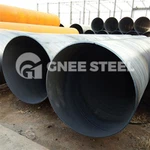


Pipe Fitting
why choose GNEE

why choose Us
GNEE Group is a well-known steel trading company in China. It owns multiple subsidiaries, and its supply range includes longitudinal submerged arc welded steel pipes, electrofusion welded pipes, 3PE steel pipes, galvanized pipes, casings, flanges, elbows, valves, finned pipes and other steel materials. The materials include carbon steel, Stainless steel etc. The main standards are GB, HG, ANSI, API, MSS, AWWA, DIN, BS, JISB2220, NFE, UNI, year-round supply of Q235, S235, 20#, A234WPB 20G, 16Mn, 12Cr1MoV, 15CrMo, 1Cr5Mo, 1Cr9Mo, A335P5/P9 /P11/P12/P22/P91/P92, WB36, 10CrMo910, OCr18Ni9 and 1Cr18Ni9Ti and other pipes.
GNEE Group is a company certified by ISO. The company has three large pushing machines, two large hydraulic units, two medium frequency bending machines, one cold extrusion bending machine, and one bending forming machine. With complete equipment and sophisticated testing devices, GNEE Group adheres to quality first, striving to provide convenient one-stop services to every customer. We welcome cooperation from both domestic and international clients.


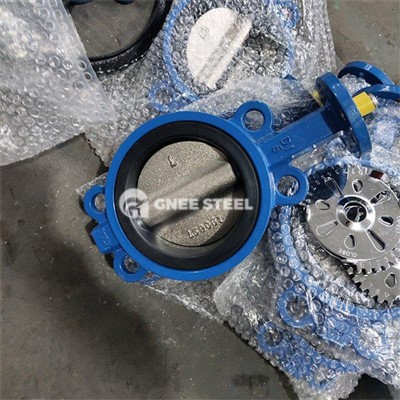

What is Pipe Fitting?
Pipe fittings are components in pipeline systems that serve various functions such as connection, control, change of direction, diversion, sealing, and support. Steel pipe fittings belong to pressure-bearing fittings. They are categorized into four main types based on different processing techniques: butt-weld fittings (welded and non-welded), socket-weld fittings, threaded fittings, and flanged fittings.
GNEE Group can supply you with elbows, tees, crosses, reducers, pipe clamps, internal and external threaded pipe fittings, flexible pipe fittings, quick hose connectors, threaded nipples, supports (tables), cocks (pipe plugs), Pipe caps, blind plates, etc., excluding valves, flanges, fasteners, gaskets.
GNEE Group specialises in supplying a wide range of steel pipe fittings including:
1. Flanges, live joints, pipe hoops, clamps, ferrules, throat hoops, etc.
2. elbows, bends
3. Reducing (reducer), reducer elbow, branch pipe platform, reinforcement pipe
4. tees, crosses
5. gaskets, raw material tape, line hemp, flange blind, pipe plugs, blind, head, welded plugs
6. rings, tow hooks, rings, brackets, brackets, pipe cards, etc.
7. Surface treatment: pickling, sand rolling, sand blasting, polishing, etc.
8. Size: 1/2"-60" (DN15-DN3000) Class 150-Class 2500
9. Outer diameter: SCH5S, SCH10S, SCH10, SCH40S, STD, XS, XXS, SCH20, SCH30, SCH40, SCH60, SCH80, SCH160, XXS, etc.
10. Standards: ASTM, JIS, DIN, EN
11. Steel grade A105N, A234WPB, A193 Gr.B7 ASTEM A194 GR.2H ASTM A194A216WCB, SS304, etc.

Pipe Elbows Production Process
Hot Forming
The forming process of hot induction bends utilizes specialized bending machines, mandrels, and heating devices. The blank pipe placed on the mold moves forward under the push of the push rod and is heated, expanded, and bent during the process.
The deformation characteristics of hot induction bends are determined based on the volume change of the metal material before and after plastic deformation to determine the diameter of the blank pipe. The diameter of the blank pipe used is smaller than that of the bend, and the deformation process of the blank pipe is controlled by the mandrel to compress the inner arc. Metal flow compensates for the thinning of other parts due to the increase in diameter, resulting in a bend with uniform wall thickness.


Pressing
When the production volume of bends is low, both excessively thick or thin walls will utilize the stamping method for bend production. Stamped bends are divided into cold stamping and hot stamping, typically chosen based on material properties and equipment performance. The forming process of cold-stamped bends involves placing the blank into an outer die using a specialized bending machine, closing the upper and lower dies. The blank is retained along the inner and outer dies and undergoes shaping through the movement of the push rod.
Hot stamping bends involve heating the pipe material, processing it through specialized equipment, then cutting and heating it to a temperature higher than the critical temperature. After insulation for a period, it is rapidly placed into a quenching agent, causing a sudden temperature drop. The formed bend is rapidly cooled at a rate greater than the critical cooling rate.
Centre plate welding
Half of the bend profile is fabricated using a plate press machine, and then the two parts are welded together. This technique is commonly used for bends above DN700.

Flange production process

Casting flange machining process
The selected raw material steel is placed into an intermediate frequency induction furnace for smelting, ensuring that the molten steel temperature reaches 1600-1700 ℃; the metal mold is preheated to 800-900 ℃ and kept constant temperature; the centrifugal machine is started, and the molten steel is poured into the preheated metal mold; the casting is naturally cooled to 800-900 ℃ and kept for 1-10 minutes; it is then cooled with water to near room temperature, and the casting is removed from the mold.
Forged flange processing technology
The forging process generally includes the following steps: selecting high-quality blanks for cutting, heating, shaping, and cooling after forging. There are various forging methods, including free forging, die forging, and closed die forging. During production, different forging methods are chosen based on the size of the forgings and the production batch size.
Die forgings have high dimensional accuracy, small machining allowances, and a more reasonable distribution of fiber structure in the forgings, which can further improve the service life of the parts.
The basic processes of free forging: During free forging, the shape of the forgings is gradually formed through some basic deformation processes. The basic processes of free forging include upsetting, stretching, punching, bending, and cutting.


Die forging process
The basic process flow of die forging includes: blanking, heating, pre-forging, final forging, punching and trimming, edging, annealing, and shot blasting strengthening. Commonly used techniques include upsetting, stretching, bending, punching, and die pressing.
Processing of cut florins
The flange is cut directly from the center plate, leaving the inner diameter, outer diameter, and flange thickness for further processing, and then the bolt holes and water lines are machined. Flanges produced using this method are called cut flanges, and the maximum diameter of this type of flange is limited by the width of the center plate.


Processing of rolled flanges
The process of cutting strips from medium-thick plates and then rolling them into circular shapes is called rolling, primarily used for producing large flanges. After rolling, welding is performed, followed by flattening, and then machining waterlines and bolt holes.
How to ensure Pipe Fitting quality
To guarantee the quality of our pipes&pipe fittings and to meet the needs of our customers, we will carry out strict quality tests for all our pipes&pipe fittings.

Before production
Ensure raw material quality:Chemical composition analysis is conducted on steel billets and other raw materials to meet standard specifications. Additionally, visual inspections are performed to detect surface or subsurface defects such as pits, cracks, and voids.
during production process
Most of the products from GNEE Group are produced using the PQF rolling mill, which is the world's most advanced seamless steel pipe production technology. Non-destructive testing methods are used to inspect steel pipes and fittings without damaging the sample's applicability, mainly including:
Eddy Current Testing
Magnetic Particle Testing
Ultrasonic Testing


Finished product production
Physical testing aims to test the mechanical properties of steel materials according to standard specifications or customer requirements. It mainly includes:
Tensile strength testing
Yield strength testing
Elongation testing
Charpy V-notch impact testing
Hardness testing (BHN, HV, RC, HRB)
Hydrostatic testing Before shipment, surface, ends, markings, packaging, quantity, and weight should be strictly measured.
GNEE Packaging and shipping
Pipe Fitting Packaging
We usually pack flanges and fittings in pallets or plywood boxes, plywood boxes for under 6 inches, and pallets for over 6 inches.

Pipe Fitting Shipping
GNEE Group supports the following methods to provide the most efficient and safe sea and land transportation for all products: sea transportation, air transportation, container rail transportation, ship transportation, rail transportation and truck transportation.

FAQ
Q: Do you accept customization of pipe fittings?
Q: Do you support pipe fitting customization?
Q: What should I do if the pipe fittings I receive are defective?
Q: Are you a manufacturer or trader?
Q: Can you provide samples? Are there any fees?
Q: What is the delivery time of pipe fittings?
Q: What is your minimum order quantity of pipe fittings?
Q: What is your payment term?
Q: What is your term of trade?