


A BTC connection (Buttress Thread Coupling) is a high-strength, API-standard threaded and coupled (T&C) connection used primarily for casing in the oil and gas industry.
It is characterized by its trapezoidal (square-cut) thread profile, which distinguishes it from the rounded "V" threads of LTC or STC.
Looking for premium API 5CT BTC casing? Skip the middleman and get factory-direct pricing. Save 15% compared to market rates!
BTC Thread Basic Geometric Design Parameters (API 5B)
Regardless of the pipe size, all BTC threads follow these fundamental geometric designs:
| Parameter | Technical Standard | Remarks |
| Threads Per Inch (TPI) | 5 TPI | Coarser threads allow for faster makeup speed. |
| Thread Profile | Trapezoidal / Buttress | Square-cut design provides high pull-out resistance. |
| Load Flank Angle | 3° | Nearly vertical; prevents "thread jump-out" under heavy tension. |
| Stabbing Flank Angle | 10° | Facilitates easy alignment and rapid engagement. |
| Taper | 1:16 (7.5%) | For pipes with OD < 13-3/8". |
| Taper | 1:12 (8.3%) | For pipes with OD ≥ 13-3/8". |
BTC Common Size and Dimensional Parameters (Imperial)
This table shows the key thread length parameters for various casing outside diameters (OD).
| Casing OD (Inches) | Total Thread Length (
L4L4 ) (Inches) |
Hand-tight Engagement (
L1L1 ) (Inches) |
Diameter at Vanish Point (
E7E7 ) (Inches) |
| 4-1/2" | 2.500 | 1.625 | 4.381 |
| 5-1/2" | 2.750 | 1.875 | 5.381 |
| 7" | 3.125 | 2.250 | 6.881 |
| 9-5/8" | 3.750 | 2.875 | 9.506 |
| 10-3/4" | 4.000 | 3.125 | 10.631 |
| 13-3/8" | 4.375 | 3.500 | 13.256 |
| 20" | 4.875 | 4.000 | 19.866 |
BTC Casing Grade and Application Matching Table
BTC threads are typically paired with high-strength steel grades to handle deep-well loads.
| Steel Grade | Color Code | Min Tensile Strength (psi) | Typical Application |
| J55 / K55 | Bright Green | 75,000 | Shallow to medium wells, normal formations. |
| N80-Q | Red | 100,000 | Deep wells requiring high collapse/tensile strength. |
| L80-1 | Red + Brown | 95,000 | Sour Service (
H2SH2S ), corrosive environments. |
| P110 | White | 125,000 | Ultra-deep/High-pressure wells, heavy loads. |
| Q125 | Orange | 135,000 | Extreme high-pressure and depth environments. |
BTC vs. LTC/STC Performance Comparison Table
Understand the parametric advantages of BTC at a glance.
| Performance Metric | BTC (Buttress) | LTC (Long Round) | STC (Short Round) |
| Connection Efficiency | Highest (Up to 100% of body) | Higher (Approx. 80%-90%) | Standard (Approx. 60%-70%) |
| Jump-out Resistance | Extreme | Moderate | Standard/Low |
| Sealing Reliability | Good | Excellent | Good |
| Makeup Time | Shortest | Moderate | Longer |
| Recommended Depth | > 4,500 Meters | 1,500 - 4,500 Meters | < 1,500 Meters |
Why Choose GNEE Pipe for BTC Casing?
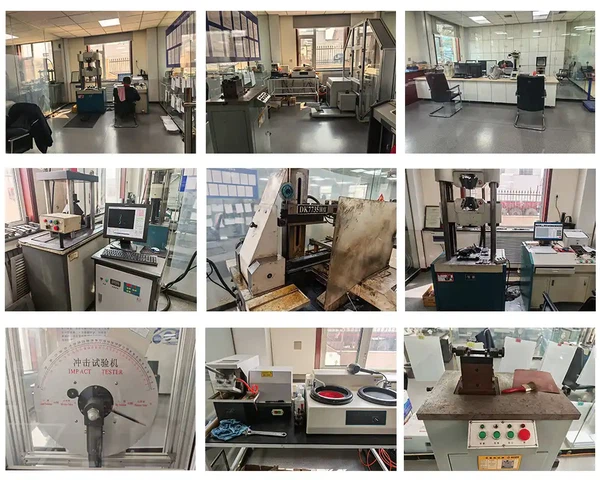
100% Compliance: Threading strictly follows API 5B procedures, ensuring every pipe passes ring and plug gauge inspections.
Precision CNC Machining: High-precision CNC lathes ensure accurate buttress flank angles, reducing the risk of thread galling.
Global Logistics: Providing CIF quotes with direct shipping to your port or oilfield base.
FAQ
What are the different types of casing connection?
These follow the API 5CT specification and are the most common and cost-effective:
STC (Short Round Thread): Rounded threads with a short section; best for shallow wells and light loads.
LTC (Long Round Thread): Rounded threads with a longer section for better engagement; the "all-rounder" for medium-depth wells.
BTC (Buttress Thread): Trapezoidal (square-cut) threads; designed for extreme tensile strength in deep wells to prevent "jump-out."
What is the difference between BTC and LTC threads?
The main difference between BTC and LTC lies in their thread shape and tensile strength:
BTC (Buttress Thread): Features a trapezoidal (square-cut) thread profile with 5 threads per inch. It is designed for extreme tensile strength, making it the industry standard for deep wells and heavy casing strings to prevent the pipe from pulling apart (jump-out).
LTC (Long Round Thread): Features a rounded "V" thread profile with 8 threads per inch. It prioritizes sealing reliability and is the most common choice for medium-depth wells where standard loads are present.


