


In the oil and gas industry, API Circular Thread Casing Couplings are critical components used to connect two sections of casing.
Based on the length of the threads, they are primarily classified into two categories:
STC (Short Threaded and Coupled): Short circular thread couplings.
LTC (Long Threaded and Coupled): Long circular thread couplings.
Get Factory-Direct Pricing on API 5CT Casing Couplings – Save Up to 15% on Your Next Project!
API Circular Thread Casing Couplings Technical Parameters
Applicable Standard: API Spec 5CT (American Petroleum Institute Standard).
Common Steel Grades: J55, K55, N80, L80, P110, etc.
Thread Profile: Both the crests and roots of the threads feature a rounded (arc-shaped) profile (V-shaped threads with rounded tips).
Thread Density: Typically 8 threads per inch (8 TPI).
Surface Treatment: Typically treated via phosphating or copper plating to enhance wear resistance and prevent thread galling.
Comparison: STC vs. LTC Casing Couplings
| Feature | STC (Short Round Thread) | LTC (Long Round Thread) |
| Thread Length | Shorter thread length. | Longer thread length. |
| Connection Strength | Approximately 60%-80% of the pipe body strength. | Higher joint strength than STC; better structural integrity. |
| Application | Shallow wells, low-pressure environments, and short casing strings. | Deeper wells, high-tension environments, and long casing strings. |
| Sealing Performance | Relies on thread compound (dope) to fill the gaps between threads for sealing. | Larger thread contact area provides superior sealing performance and leak resistance. |
API Round Thread Casing Coupling Dimensions
Note: STC = Short Round Thread, LTC = Long Round Thread. This table includes selected common specifications; the full range covers sizes from 4-1/2" to 20".
| Casing OD (Size) | Thread Type | Coupling OD - W (in/mm) | Coupling Length - L (in/mm) | Diameter of Counterbore - Q (in/mm) |
| 4-1/2" | STC | 5.000 (127.00) | 6.250 (158.75) | 4.610 (117.09) |
| 4-1/2" | LTC | 5.000 (127.00) | 7.000 (177.80) | 4.610 (117.09) |
| 5-1/2" | STC | 6.050 (153.67) | 6.750 (171.45) | 5.610 (142.49) |
| 5-1/2" | LTC | 6.050 (153.67) | 8.000 (203.20) | 5.610 (142.49) |
| 7" | STC | 7.656 (194.46) | 7.250 (184.15) | 7.110 (180.59) |
| 7" | LTC | 7.656 (194.46) | 9.000 (228.60) | 7.110 (180.59) |
| 9-5/8" | STC | 10.625 (269.88) | 7.750 (196.85) | 9.735 (247.27) |
| 9-5/8" | LTC | 10.625 (269.88) | 10.625 (269.88) | 9.735 (247.27) |
| 13-3/8" | STC | 14.375 (365.13) | 8.000 (203.20) | 13.485 (342.52) |
| 20" | STC | 21.000 (533.40) | 9.000 (228.60) | 20.125 (511.18) |
API 5CT Casing Coupling Tolerance Requirements
API standards enforce strict precision requirements to ensure the safety and reliability of oilfield operations.
| Item | Tolerance | Remarks |
| Coupling Outside Diameter (W) | ±1% | Slight adjustments may apply for larger diameter specifications. |
| Coupling Length (L) | ±1/8 inch (±3.18 mm) | Ensures consistent connection and engagement depth. |
| Diameter of Counterbore (Q) | +0.031 in / -0 | Ensures smooth entry and alignment of the casing. |
| Internal Alignment/Consistency | Must comply with API standards | Inspected using specialized API thread plug gauges. |
| Thread Form (Thread) | 8 TPI (8 Threads Per Inch) | Standard for Round Thread (STC/LTC) configurations. |
Quality and Material Requirements
This table demonstrates GNEE's rigorous quality control capabilities and adherence to international standards.
| Inspection Item (Checklist) | Standard / Requirement | GNEE Quality Control Method |
| Steel Grade | J55, K55, N80, L80, P110 | Spectroscopic analysis to verify and confirm chemical composition. |
| Non-Destructive Testing (NDT) | 100% Magnetic Particle Inspection (MPI) | Thorough inspection to detect any cracks, slag inclusions, or surface defects. |
| Surface Treatment (Thread) | Phosphating or Copper Plating | Applied to prevent thread galling during the makeup and breakout process. |
| Hydrostatic Testing | Compliance with API 5CT specified pressure levels | Conducted to ensure leak-proof performance under extreme high-pressure conditions. |
| Color Coding / Identification | Specific color bands corresponding to steel grades (e.g., Green for J55) | Provides easy identification for on-site operators and warehouse management. |
API Coupling test and inspection equipment
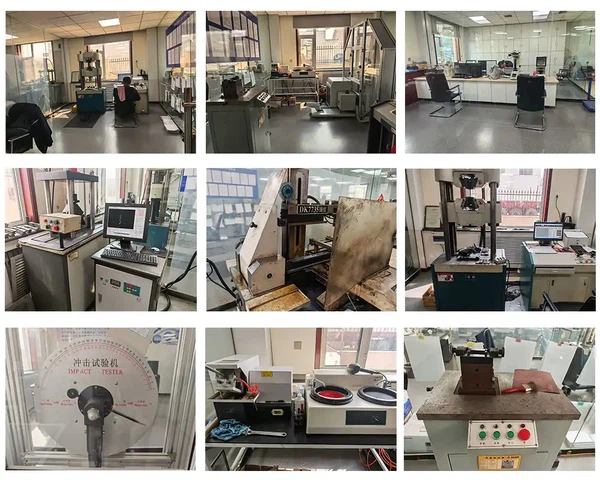
API Casing coupling factory

FAQ
What is differences between Casing coupling and tubing coupling?
he main differences between Casing Couplings and Tubing Couplings can be summarized in three key areas: Size, Function, and Thread Type.
| Feature | Casing Coupling | Tubing Coupling |
| Size (OD) | Larger: Usually 4-1/2" to 20". | Smaller: Usually 1.05" to 4-1/2". |
| Function | Used to connect casing pipes that line and stabilize the wellbore. | Used to connect tubing pipes that transport oil or gas to the surface. |
| Thread Type | Commonly STC, LTC, or BTC (Buttress Thread). | Commonly EUE (External Upset) or NUE (Non-Upset). |
| Wall Thickness | Generally thinner relative to the diameter. | Generally thicker to handle internal flow pressure. |
What is an API coupling?
An API Coupling is a high-strength, internally threaded short pipe used to connect two lengths of oilfield pipe (casing or tubing).
Standardized Quality: It is manufactured strictly according to the API Spec 5CT (American Petroleum Institute) standards, ensuring it can withstand extreme underground pressure.
The "Bridge": It acts as the connector between two pipe joints, providing a leak-proof seal and structural integrity for the entire well string.
Common Types:
Casing Couplings: Connect larger structural pipes (Types: STC, LTC, BTC).
Tubing Couplings: Connect smaller production pipes (Types: EUE, NUE).


