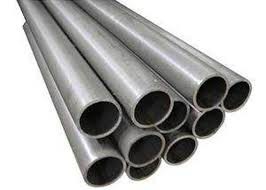
1. Primary Application: Low-Temperature Service
The ASME SA333 Gr. 9 seamless steel pipe is specifically engineered for use in low-temperature environments. Its primary application is in piping systems that operate at sub-zero temperatures, where standard carbon steels become brittle and susceptible to failure.
Key industries and applications include:
Oil and Gas Industry: For gathering lines, process piping, and equipment in cold climates and offshore facilities where temperatures can routinely drop below -45°C (-50°F).
Liquefied Gas (Cryogenic) Plants: Used in the processing and handling of liquefied gases like LNG (Liquefied Natural Gas), though typically for less extreme cold sections than those requiring 9% nickel steel.
Refrigeration and Chemical Processing: In plants that involve low-temperature chemical processes or large-scale industrial refrigeration.
Power Generation: For auxiliary systems in power plants that may be exposed to low ambient temperatures.
2. Key Benefits and Advantages
The SA333 Gr. 9 grade offers a compelling combination of properties that make it ideal for its intended duties:
Excellent Low-Temperature Toughness: This is its defining characteristic. The addition of approximately 1% Nickel significantly improves the ductility and impact resistance of the steel at temperatures as low as -70°C (-100°F), preventing catastrophic brittle fracture.
Economic Efficiency: Compared to higher nickel-alloyed steels like SA333 Gr. 3 (3.5% Ni) or Gr. 7 (9% Ni), Gr. 9 provides a substantial cost saving. It offers a superior low-temperature performance compared to plain carbon steel (like Gr. 6) at a moderate price premium, making it a cost-effective "sweet spot" for a specific temperature range.
Good Weldability and Fabricability: The chemistry of Gr. 9 steel is designed to allow for good weldability using common techniques like Shielded Metal Arc Welding (SMAW) and Gas Tungsten Arc Welding (GTAW). This simplifies construction and field fabrication of piping systems.
High Strength and Pressure Integrity: As a seamless pipe manufactured to the ASME standard, it guarantees consistent mechanical properties and can withstand the internal pressures required for process and transport applications.
Proven Reliability: Being a long-established material within the ASME Boiler and Pressure Vessel Code, it has a extensive track record of safe and reliable performance in critical applications worldwide.
3. Future Development Prospects
The future for SA333 Gr. 9 steel pipe remains stable and is intertwined with the evolution of the energy and chemical sectors.
Sustained Demand in Energy Infrastructure: The ongoing global demand for oil and gas, coupled with the exploration and production in arctic and cold-climate regions, will continue to drive demand for reliable low-temperature piping materials like Gr. 9.
Role in the LNG and Clean Energy Transition: While core LNG liquefaction lines use more advanced materials, the extensive supporting and utility piping systems in LNG terminals and related infrastructure are ideal applications for SA333 Gr. 9. The growth of the LNG market as a transition fuel supports its continued use.
Advancements in Manufacturing: Future developments are likely to focus on production process improvements rather than changes to the grade itself. This includes enhanced Non-Destructive Testing (NDT) techniques, more precise control of chemical composition for even better toughness, and improved heat treatment processes to optimize properties and reduce costs.
Niche Application Stability: Its position as a cost-effective solution for the -50°F to -100°F range is well-established. It is not expected to be replaced by new materials for this specific niche, as developing a cheaper alternative with equivalent performance is challenging.
In conclusion, ASME SA333 Gr. 9 steel pipe is a critical, cost-effective, and reliable material for low-temperature piping systems. Its unique balance of nickel content, toughness, and price ensures its continued relevance in energy and industrial projects facing cold service challenges.