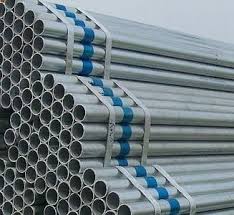
1. Primary Application and Use Cases
ASME SA333 Gr. 8 is a seamless steel pipe specification designed explicitly for low-temperature service. Its primary use is in environments where materials must maintain toughness and ductility to prevent catastrophic brittle fracture.
Key application areas include:
Liquefied Natural Gas (LNG) Facilities: This is the most significant application. SA333 Gr. 8 pipes are used in the critical cryogenic sections of LNG plants, including:
Heat exchangers (cold boxes)
Transfer lines
Process piping handling liquefied natural gas at temperatures around -162°C (-260°F).
Cryogenic Processing Plants: Used in air separation units (ASU) for producing liquid oxygen, nitrogen, and argon, where temperatures can plunge below -195°C (-320°F).
Industrial Gases and Chemical Processing: Employed in piping systems for storing and transporting other liquefied gases like ethylene.
Aerospace and Research: Used in systems requiring reliable containment of cryogenic fluids, such as in rocket propellant lines and scientific research equipment.
2. Key Advantages and Benefits
The superiority of SA333 Gr. 8 in its niche stems from its specific material composition and guaranteed properties.
Exceptional Low-Temperature Toughness: This is its core benefit. The pipe is manufactured from a 9% Nickel Steel alloy, which possesses an exceptional ability to absorb energy and resist crack propagation at cryogenic temperatures, far surpassing carbon steels.
High Strength-to-Weight Ratio: 9% Nickel steel offers high yield strength at low temperatures. This allows for the design of pipes with thinner walls compared to some alternative materials, reducing the overall weight and material cost of the system.
Excellent Weldability and Fabricability: Despite its high alloy content, SA333 Gr. 8 has good weldability when using appropriate matching filler metals (e.g., AWS A5.14 ERNiCrMo-6). This allows for the reliable construction of complex piping systems.
Cost-Effectiveness vs. Alternatives: While more expensive than carbon steel, it is significantly more cost-effective than stainless steels (like 304/316L) and high-alloy materials for the same cryogenic service. It provides an optimal balance of performance, reliability, and life-cycle cost.
Proven Reliability and Standardization: As an ASME/ ASTM standard material (ASTM A333 is the material spec, ASME SA333 is the code designation for adoption), it comes with stringent requirements for chemical composition, heat treatment (typically double normalized and tempered or quenched and tempered), and mandatory Charpy V-Notch impact testing, ensuring consistent quality and safety.
3. Future Development Prospects and Trends
The future for SA333 Gr. 8 steel pipe is intrinsically linked to global energy and technology trends, and it remains promising.
Sustained Growth in the Global LNG Market: The global demand for natural gas, a cleaner-burning transition fuel, continues to grow. The expansion of LNG liquefaction and regasification terminals worldwide will directly drive the demand for reliable cryogenic piping like SA333 Gr. 8.
The Hydrogen Economy: As the world moves towards green hydrogen, a major challenge is storage and transport. Liquid Hydrogen (LH2), stored at -253°C (-423°F), requires even more demanding materials. While SA333 Gr. 8 is not suitable for LH2 itself, its established use in ultra-low temperatures positions 9% Ni steel as a base technology. Research into modified high-nickel alloys for hydrogen service is an active and related field of development.
Advancements in Manufacturing and Welding: Future developments will focus on improving production efficiency and reliability. This includes:
Advanced Thermo-Mechanical Control Processing (TMCP) to achieve superior and more consistent mechanical properties.
Development of New Welding Consumables and Automated Processes (e.g., laser-hybrid welding) to further enhance the speed, quality, and integrity of welded joints.
Competition from Advanced Materials: While firmly established, SA333 Gr. 8 faces competition from:
Austenitic Stainless Steels (e.g., 304L, 316L): Which are easier to weld but have lower strength and higher cost.
Aluminum Alloys (e.g., 5083): Which have good cryogenic properties but lower strength and different joining methods.
The future will see continued competition, with material selection being a careful balance of design temperature, pressure, cost, and fabricability for each specific project.
In conclusion, ASME SA333 Gr. 8 is a mature, high-performance, and critical material enabling the safe and efficient handling of cryogenic fluids. Its future is bright, underpinned by the growing global energy infrastructure and its pivotal role as a benchmark material in the expanding cryogenic engineering landscape.