1. Primary Application: Withstanding the Cold
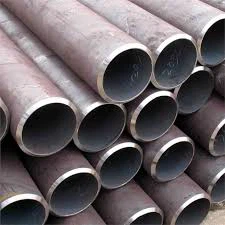
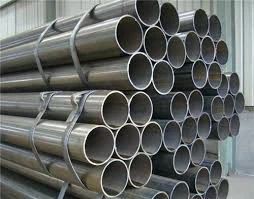
The ASME SA333 Gr.10 pipe is specifically designed and manufactured for low-temperature service. Its primary application is in process piping systems and equipment that operate in environments where temperatures can fall as low as -55°C (-67°F).
Key industries and applications include:
Oil and Gas: In gas processing plants, liquefied natural gas (LNG) facilities, and offshore platforms for handling cold fluids.
Chemical and Petrochemical Plants: For transporting process gases and liquids in refrigeration units and separation facilities.
Refrigeration Systems: In large-scale industrial refrigeration and cryogenic storage systems.
Power Generation: Particularly in plants located in arctic or severely cold climates.
2. Key Advantages and Benefits: Why Choose SA333 Gr.10?
The standout benefit of SA333 Gr.10 is its exceptional impact toughness at low temperatures. This is not a standard carbon steel pipe; it is a fine-grained, 1/4% Nickel alloy steel designed to prevent catastrophic brittle fracture.
The main advantages include:
Superior Low-Temperature Toughness: The addition of a small percentage of Nickel (0.40-0.70%) and strict controls on manufacturing (typically normalized heat treatment) significantly refine the grain structure. This ensures the pipe can absorb energy and resist cracking when subjected to mechanical stress in cold environments.
Proven Reliability and Safety: As an ASME/SA standard material, it is governed by strict specifications for chemical composition, mechanical properties, and non-destructive testing. This provides engineers and operators with a high degree of confidence in the safety and integrity of their piping systems.
Excellent Weldability: Unlike some higher alloy steels, SA333 Gr.10 has good weldability. It can be welded using common procedures without requiring highly specialized techniques, which simplifies fabrication, installation, and maintenance.
Cost-Effectiveness for its Class: For its service temperature range (down to -55°C), it offers a more economical solution compared to higher nickel-alloyed steels like A333 Gr. 3 (3.5% Ni) or stainless steels, while providing the necessary performance.
3. Future Development Prospects: A Stable Niche with Evolving Demands
The future for SA333 Gr.10, while not one of explosive growth, remains stable and resilient, closely tied to global energy and industrial trends.
Driven by Energy Infrastructure: The ongoing global demand for LNG (Liquefied Natural Gas) is a significant driver. As new LNG liquefaction and regasification terminals are built, the need for reliable low-temperature piping like SA333 Gr.10 will persist.
Arctic Exploration and Development: The gradual opening of arctic regions for oil, gas, and mineral exploration creates a direct demand for materials capable of withstanding extreme cold.
Advancements in Adjacent Technologies: The growth of the blue and green hydrogen economy and carbon capture (CCUS) projects often involves the processing and handling of cryogenic or low-temperature gases, potentially opening new application niches.
Competition from Alternative Materials: Its market position is stable but faces competition. For less severe temperatures, cost-optimized grades like A333 Gr. 9 (1% Ni, for -60°F) may be considered. For more corrosive environments or different temperature ranges, stainless steels (e.g., 304/316L) or duplex stainless steels might be selected. However, for its specific performance window, SA333 Gr.10 remains a standard, trusted, and often the most technically appropriate choice.
Conclusion
ASME SA333 Gr.10 alloy steel pipe serves a critical and specialized role in industrial infrastructure. It is the material of choice for ensuring the safety and integrity of piping systems that must operate reliably in challenging low-temperature conditions. Its future is secured by its proven performance and its alignment with the world's ongoing need for energy and advanced process industries.