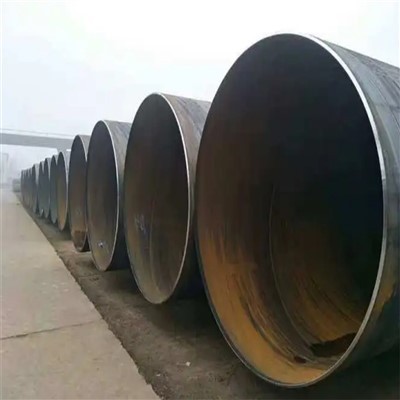
Cold working is a crucial process in the manufacturing and processing of Electric Resistance Welded (ERW) carbon steel pipes. As a supplier of ERW Carbon Steel Pipes, I've witnessed firsthand how cold working can significantly alter the properties of these pipes, impacting their performance in various applications. In this blog, we'll delve into the effects of cold working on the properties of ERW carbon steel pipes.

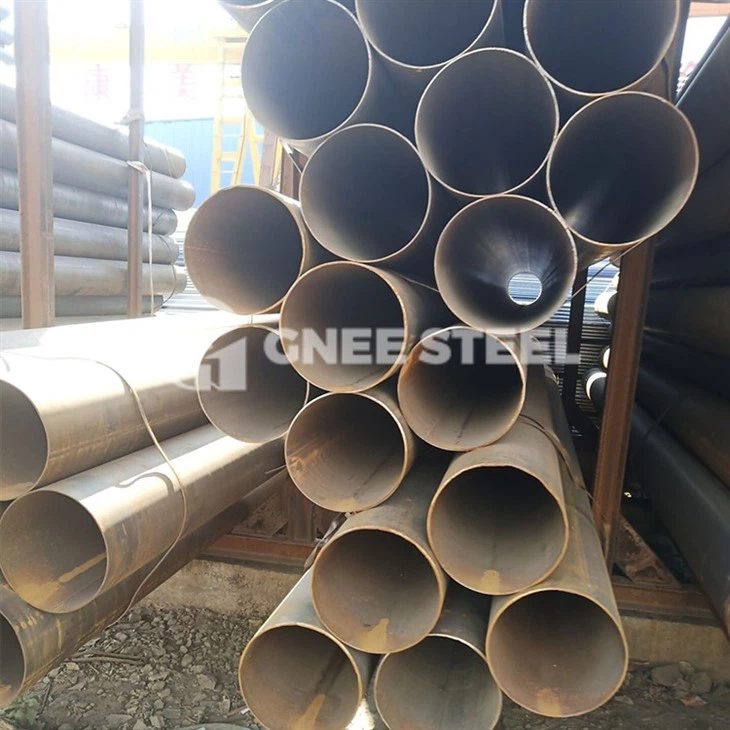
Understanding Cold Working
Cold working, also known as cold forming or cold deformation, is a metalworking process carried out at room temperature. It involves deforming the metal without heating it to a high temperature as in hot working processes. Common cold - working methods for ERW carbon steel pipes include drawing, rolling, and bending.
When we perform cold working on ERW carbon steel pipes, we are essentially changing the shape and structure of the steel. The mechanical forces applied during cold working cause the grains within the steel to deform and realign. This realignment of grains has a profound impact on several key properties of the pipes.
Impact on Mechanical Properties
Strength and Hardness
One of the most significant effects of cold working on ERW carbon steel pipes is the increase in strength and hardness. As the steel is deformed during cold working, the dislocations within the crystal structure of the steel become more numerous and interact with each other. This interaction restricts the movement of dislocations, making it more difficult for the material to deform further.
For example, when we draw an ERW carbon steel pipe through a die, the cross - sectional area of the pipe is reduced. This reduction in area causes the steel to work - harden. The yield strength and ultimate tensile strength of the pipe increase as a result. A higher strength pipe is often desirable in applications where the pipe will be subjected to high internal or external pressures. For instance, in oil and gas pipelines, A691 1/2 CR CLASS53 TUBE that has undergone cold working can better withstand the high - pressure flow of fluids.
The increase in hardness also makes the pipe more resistant to wear and abrasion. In industries such as mining, where pipes are used to transport abrasive materials like slurries, a harder pipe can have a longer service life.
Ductility and Toughness
However, the improvement in strength and hardness comes at the cost of ductility and toughness. Ductility is the ability of a material to deform plastically before fracturing, while toughness is the ability of a material to absorb energy before fracturing.
During cold working, the realignment of grains and the increased number of dislocations make it more difficult for the material to deform plastically. As a result, the ductility of the ERW carbon steel pipe decreases. A pipe with low ductility is more likely to crack or fracture under sudden or high - impact loads.
Toughness is also reduced because the cold - worked steel has less ability to absorb energy through plastic deformation. In applications where the pipes may be exposed to impact loads, such as in construction or automotive industries, the reduced ductility and toughness of cold - worked pipes need to be carefully considered. For example, A691 5CR CLASS22 TUBE that has been severely cold - worked may not be suitable for use in structures that are likely to experience seismic activity.
Impact on Microstructure
Cold working also has a notable effect on the microstructure of ERW carbon steel pipes. The original equiaxed grains in the steel are deformed into elongated grains during cold working. This change in grain shape can lead to anisotropy in the material.
Anisotropy means that the properties of the material vary depending on the direction. For example, the strength and ductility of a cold - worked pipe may be different in the longitudinal and transverse directions. In the longitudinal direction, where the grains are elongated, the pipe may have higher strength but lower ductility compared to the transverse direction.
This anisotropy can be both an advantage and a disadvantage. In some applications, the directional properties can be exploited. For instance, in applications where the pipe is mainly subjected to loads in a specific direction, the enhanced strength in that direction can be beneficial. However, in applications where the pipe may be subjected to loads from multiple directions, the anisotropy can lead to uneven stress distribution and potential failure.
Impact on Corrosion Resistance
The effect of cold working on the corrosion resistance of ERW carbon steel pipes is complex. In some cases, cold working can increase the corrosion rate. The deformation of the steel during cold working can introduce internal stresses and create micro - cracks on the surface of the pipe. These micro - cracks can act as initiation sites for corrosion.
On the other hand, the increased hardness and density of the cold - worked surface can sometimes provide a barrier against corrosion. The cold - worked layer can be more resistant to the penetration of corrosive agents. However, if the cold - worked layer is damaged, the underlying steel may be more susceptible to corrosion due to the presence of internal stresses.
For ASTM A672 C70 CL22 EFW Pipes, which are often used in environments where corrosion is a concern, the impact of cold working on corrosion resistance needs to be carefully evaluated. Protective coatings or post - cold - working treatments may be necessary to enhance the corrosion resistance of the pipes.
Applications and Considerations
The effects of cold working on ERW carbon steel pipes make them suitable for a wide range of applications. In the construction industry, cold - worked pipes with increased strength can be used in structural applications such as building frames and bridges. In the automotive industry, cold - worked pipes can be used for exhaust systems due to their improved wear resistance.
However, when selecting cold - worked ERW carbon steel pipes for an application, several factors need to be considered. The intended use of the pipe, the expected loads and environmental conditions, and the required service life are all important considerations. If a pipe needs to have high ductility and toughness, the degree of cold working may need to be limited. If corrosion resistance is a major concern, appropriate corrosion protection measures should be implemented.
Conclusion
Cold working has a significant impact on the properties of ERW carbon steel pipes. It can enhance the strength and hardness of the pipes, but at the same time, it can reduce ductility, toughness, and may affect corrosion resistance. As a supplier of ERW Carbon Steel Pipes, we understand the importance of balancing these effects to meet the specific needs of our customers.
If you are in the market for ERW carbon steel pipes and need to understand how cold working can be optimized for your application, we invite you to contact us for a detailed discussion. Our team of experts can provide you with the technical knowledge and guidance to select the right pipes for your project. Whether you need A691 1/2 CR CLASS53 TUBE, A691 5CR CLASS22 TUBE, or ASTM A672 C70 CL22 EFW Pipes, we are here to assist you in making the best choice.
References
- ASM Handbook Volume 1: Properties and Selection: Irons, Steels, and High - Performance Alloys. ASM International.
- Callister, W. D., & Rethwisch, D. G. (2017). Materials Science and Engineering: An Introduction. Wiley.
- Welding Journal. Various issues related to the properties of welded steel pipes.