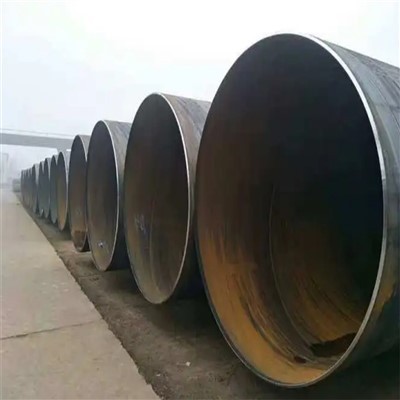
As a seasoned supplier of ERW (Electric Resistance Welded) carbon steel pipes, I've witnessed firsthand the evolving demands and standards within the construction industry. ERW carbon steel pipes are a staple in construction, valued for their strength, durability, and cost - effectiveness. In this blog, I'll delve into the key requirements for these pipes in the construction sector.
Material Quality and Composition
The foundation of a high - quality ERW carbon steel pipe lies in its material. The steel used must have a well - defined chemical composition. Carbon content is a crucial factor; it typically ranges from 0.1% to 0.3% in most construction - grade ERW pipes. A higher carbon content can increase the pipe's strength but may also reduce its weldability and ductility.
In addition to carbon, other elements such as manganese, silicon, sulfur, and phosphorus are carefully controlled. Manganese enhances the strength and hardness of the steel, while silicon acts as a deoxidizer during the steel - making process. Sulfur and phosphorus are generally kept at low levels as they can have a negative impact on the pipe's mechanical properties, especially its toughness and weldability.
For instance, our A691 CM75 CLASS43 TUBE meets strict material composition standards. It is engineered to have the right balance of elements to ensure optimal performance in high - pressure and high - temperature construction applications.
Dimensional Accuracy
In construction, precise dimensions are non - negotiable. ERW carbon steel pipes must have accurate outer diameters (OD), wall thicknesses, and lengths. The OD tolerance is typically within a few millimeters, depending on the pipe size. For example, for smaller - diameter pipes, the OD tolerance might be around ±0.5mm, while for larger pipes, it could be ±1mm or more.
Wall thickness is another critical dimension. It affects the pipe's pressure - bearing capacity and structural integrity. Deviations in wall thickness can lead to uneven stress distribution, which may cause premature failure of the pipe. Our manufacturing process ensures that each pipe, including the A691 1 CR CLASS42 TUBE, adheres to tight wall - thickness tolerances, typically within ±10% of the specified value.


Length accuracy is also important, especially when pipes need to be joined together. Standard lengths for construction pipes are usually 6 meters or 12 meters, but custom lengths can be provided to meet specific project requirements.
Weld Quality
The welding process is a defining characteristic of ERW carbon steel pipes. A high - quality weld is essential for the pipe's overall performance. The weld should be free from defects such as cracks, porosity, and lack of fusion.
Non - destructive testing methods, such as ultrasonic testing (UT), magnetic particle testing (MT), and radiographic testing (RT), are commonly used to inspect the weld quality. UT can detect internal defects within the weld, while MT is effective for detecting surface and near - surface defects. RT provides a detailed image of the weld, allowing for the identification of even the smallest flaws.
Our A671 CC65 Carbon Steel EFW Pipe undergoes rigorous weld - quality inspections to ensure that it meets the highest industry standards. This ensures that the pipe can withstand the stresses and pressures encountered in construction projects.
Mechanical Properties
ERW carbon steel pipes must possess certain mechanical properties to be suitable for construction applications. Tensile strength is one of the most important properties. It measures the maximum stress that the pipe can withstand before breaking. Construction - grade pipes typically have a minimum tensile strength of around 400 MPa to 600 MPa, depending on the specific application.
Yield strength is another key property. It indicates the stress at which the pipe begins to deform plastically. A high yield strength is desirable as it allows the pipe to withstand high loads without permanent deformation.
Ductility, measured by elongation and reduction of area, is also crucial. Ductile pipes can bend and deform without cracking, which is important during installation and in situations where the pipe may be subjected to external forces.
Corrosion Resistance
In construction, pipes are often exposed to various environmental conditions that can cause corrosion. Corrosion can weaken the pipe over time, leading to leaks and structural failures. Therefore, ERW carbon steel pipes need to have adequate corrosion resistance.
Surface treatments such as galvanizing, painting, or applying anti - corrosion coatings can enhance the pipe's corrosion resistance. Galvanizing involves coating the pipe with a layer of zinc, which acts as a sacrificial anode, protecting the steel from corrosion. Painting and anti - corrosion coatings create a barrier between the pipe and the environment, preventing moisture and other corrosive agents from reaching the steel surface.
Certification and Standards
The construction industry is highly regulated, and ERW carbon steel pipes must comply with various national and international standards. Standards such as ASTM (American Society for Testing and Materials), API (American Petroleum Institute), and EN (European Norms) define the requirements for pipe material, dimensions, mechanical properties, and testing methods.
Certification from recognized third - party organizations is also important. It provides assurance to construction companies and contractors that the pipes meet the specified standards. Our company ensures that all our products, including the pipes mentioned above, are fully compliant with relevant standards and are accompanied by the necessary certifications.
Installation and Compatibility
Finally, ERW carbon steel pipes need to be easy to install and compatible with other construction materials and components. They should be able to be joined using standard welding or mechanical connection methods. Compatibility with other materials, such as fittings, valves, and supports, is also crucial to ensure a seamless and reliable construction system.
In conclusion, the requirements for ERW carbon steel pipes in the construction industry are multifaceted. From material quality and dimensional accuracy to weld quality, mechanical properties, corrosion resistance, and compliance with standards, every aspect plays a vital role in ensuring the pipes' performance and reliability.
If you're involved in a construction project and are in need of high - quality ERW carbon steel pipes, I encourage you to reach out to us for a detailed discussion. We can provide you with the right pipes that meet your specific requirements and help you achieve a successful construction project.
References
- ASTM International. (Year). ASTM standards related to carbon steel pipes.
- American Petroleum Institute. (Year). API specifications for steel pipes.
- European Committee for Standardization. (Year). EN standards for steel pipes.