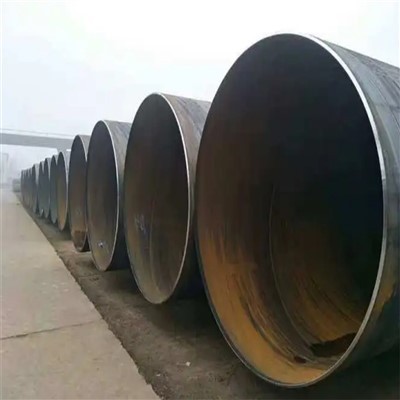
As a trusted supplier of X60 Spiral Steel Pipe, I've witnessed firsthand the critical role that temperature plays in the performance and integrity of these pipes. In this blog, I'll delve into the profound impact of temperature on X60 Spiral Steel Pipe, exploring how different temperature conditions can affect its mechanical properties, corrosion resistance, and overall service life.
Mechanical Properties at Varying Temperatures
High - Temperature Effects
At elevated temperatures, the mechanical properties of X60 Spiral Steel Pipe undergo significant changes. One of the primary concerns is the reduction in yield strength and tensile strength. As the temperature rises, the atomic structure of the steel becomes more mobile, and the bonds between atoms are weakened. This leads to a decrease in the material's ability to withstand external forces without deforming permanently.
For instance, in high - temperature industrial applications such as steam pipelines or power plants, X60 Spiral Steel Pipe may experience temperatures well above 300°C. At these temperatures, the yield strength can drop by a considerable margin compared to its room - temperature value. This reduction in strength means that the pipe may be more prone to deformation, which can compromise the structural integrity of the entire pipeline system.
Moreover, high temperatures can also increase the creep rate of the steel. Creep is the gradual deformation of a material under a constant load over time. In X60 Spiral Steel Pipe, excessive creep can lead to wall thinning and eventual failure, especially in areas where the pipe is subjected to high internal pressures.
Low - Temperature Effects
On the other end of the spectrum, low temperatures can also have a detrimental impact on X60 Spiral Steel Pipe. At extremely cold temperatures, the steel becomes more brittle. This is due to the fact that the movement of dislocations within the steel lattice is restricted at low temperatures, making it more difficult for the material to deform plastically.


For example, in Arctic or sub - Arctic regions where the temperature can drop below - 20°C, X60 Spiral Steel Pipe used in oil and gas transportation is at risk of brittle fracture. A small crack or flaw in the pipe, which may not cause any issues at normal temperatures, can propagate rapidly under low - temperature conditions, leading to catastrophic failure. This is a major concern in offshore oil and gas operations where pipelines are exposed to harsh cold environments.
Corrosion Resistance and Temperature
High - Temperature Corrosion
Temperature can also influence the corrosion resistance of X60 Spiral Steel Pipe. At high temperatures, the rate of corrosion can increase significantly. In the presence of oxygen and moisture, the steel undergoes oxidation, forming iron oxides on the surface. As the temperature rises, the oxidation reaction accelerates, leading to faster corrosion.
In addition, in some industrial environments, high - temperature corrosion can be exacerbated by the presence of other corrosive substances such as sulfur compounds or chlorides. For example, in coal - fired power plants, the flue gases contain sulfur dioxide, which can react with water vapor to form sulfuric acid. This acid can attack the surface of the X60 Spiral Steel Pipe, causing pitting corrosion and reducing the wall thickness of the pipe over time.
Low - Temperature Corrosion
Low - temperature corrosion is also a concern, especially in environments where there is condensation. When the temperature drops, water vapor in the air can condense on the surface of the pipe. If the pipe is not properly protected, this condensed water can lead to the formation of rust.
In coastal areas, where the air contains salt particles, low - temperature corrosion can be even more severe. The salt acts as an electrolyte, accelerating the electrochemical corrosion process. This can lead to the formation of corrosion products that can weaken the pipe and reduce its service life.
Impact on Welded Joints
High - Temperature Effects on Welds
Welded joints in X60 Spiral Steel Pipe are particularly vulnerable to high - temperature effects. The heat - affected zone (HAZ) in the weld is a region where the microstructure of the steel has been altered due to the welding process. At high temperatures, the HAZ can experience changes in its mechanical properties that are different from the base metal.
For example, the HAZ may become softer or harder than the base metal, depending on the welding parameters and the cooling rate. This difference in properties can lead to stress concentrations at the weld joint, increasing the risk of cracking. In addition, high - temperature corrosion can also be more severe in the HAZ due to the presence of microstructural defects and residual stresses.
Low - Temperature Effects on Welds
Low - temperature conditions can also pose challenges for welded joints. The brittleness of the steel at low temperatures is more pronounced in the weld area. Welds may contain small defects such as porosity or lack of fusion, which can act as initiation sites for brittle fracture at low temperatures.
To ensure the integrity of the welded joints in X60 Spiral Steel Pipe under low - temperature conditions, proper welding procedures and post - weld heat treatment are essential. These measures can help to reduce the brittleness of the weld and improve its resistance to cracking.
Service Life and Temperature
The overall service life of X60 Spiral Steel Pipe is closely related to the temperature conditions it is exposed to. High - temperature environments can accelerate the degradation of the pipe due to reduced strength, increased creep, and enhanced corrosion. Low - temperature environments, on the other hand, can increase the risk of brittle fracture, which can shorten the service life of the pipe significantly.
To extend the service life of X60 Spiral Steel Pipe, it is important to select the appropriate pipe material and coating system based on the expected temperature range. For high - temperature applications, pipes with better high - temperature strength and corrosion resistance may be required. For low - temperature applications, pipes with improved toughness and low - temperature impact resistance should be chosen.
Conclusion and Call to Action
In conclusion, temperature has a far - reaching impact on X60 Spiral Steel Pipe, affecting its mechanical properties, corrosion resistance, and service life. As a supplier of X60 Spiral Steel Pipe, we understand the importance of providing pipes that can withstand the specific temperature conditions of different applications.
We offer a wide range of X60 Spiral Steel Pipe products that are designed to meet the diverse needs of our customers. Whether you need pipes for high - temperature industrial applications or low - temperature Arctic environments, we have the expertise and resources to provide you with the right solution.
If you are interested in Factory Supply Q195 Spiral Welded Pipe, API X70 Spiral Steel Pipe Piles, or Q235B DN400 Large Diameter Spiral Welded Pipe, please feel free to contact us for more information. We are ready to discuss your requirements and provide you with the best - quality steel pipes at competitive prices. Let's work together to ensure the success of your projects.
References
- ASM Handbook, Volume 1: Properties and Selection: Irons, Steels, and High - Performance Alloys. ASM International.
- NACE International - Corrosion Basics: An Introduction. NACE International.
- API RP 5L2 - Recommended Practice for Design and Installation of Offshore Production Platform Piping Systems. American Petroleum Institute.