


STC (Short Round Thread) and LTC (Long Round Thread) are two common round-thread casing connections under the API 5CT standard. While they share the same rounded "V" thread profile, STC features a shorter threaded section and is primarily used for shallower wells with lighter loads due to its cost-effectiveness. In contrast, LTC utilizes an extended thread length to enhance engagement, providing higher tensile strength and superior sealing reliability, which makes it the mainstream choice for medium-depth and standard drilling operations.
Struggling to choose between STC and LTC for your well depth? Consult our senior engineers for a free load calculation and thread selection guide today.
STC (Short Round Thread Coupling)
STC is the most traditional and economical casing connection method.
Thread Profile: Features a rounded "V" thread profile with 8 threads per inch (8 TPI).
Key Feature: The threaded section on the pipe end and inside the coupling is relatively short.
Advantages:
Lowest Cost: It is the most budget-friendly threading option due to simple machining.
Easy Makeup: The connection process is very fast and straightforward at the rig site.
Disadvantages:
Limited Strength: Because the threaded section is short, the contact area is smaller, leading to lower tensile strength. Under extreme weight, the threads are more likely to "jump" or pull apart.
Applications: Primarily used for shallow wells, surface casing, or applications where the pipe string is short and light.
LTC (Long Round Thread Coupling)
LTC is an improved version of STC created by increasing the thread length. It is currently the most popular "all-rounder" thread in the industry.
Thread Profile: Identical to STC (rounded "V" thread with 8 TPI).
Key Feature: The threaded section is significantly longer than STC.
Advantages:
Higher Tensile Strength: The longer threads increase the engagement area between the pipe and the coupling, allowing it to support much heavier casing strings (deeper wells).
Better Sealing: More thread engagement creates a longer path for potential leaks, providing a more reliable seal when used with thread dope.
Disadvantages: Slightly more expensive than STC, though still very cost-effective.
Applications: Widely used in medium-depth wells, production casing, and standard drilling operations with moderate loads.
The main difference between LTC (Long Round Thread) and STC (Short Round Thread) lies in the length of the threaded section and the resulting tensile strength.
While both share the same rounded "V" thread profile and 8 threads per inch (TPI) according to API 5CT, they are used for different well depths and load requirements.
Thread Length
STC (Short Thread): As the name implies, the threaded portion of the pipe and the coupling is shorter.
LTC (Long Thread): The threaded section is significantly longer, providing more "engagement" between the pipe and the coupling.
Tensile Strength (Load Capacity)
STC: Because there are fewer threads engaged, it has lower resistance to axial tension. Under extreme weight, the pipe is more likely to pull out of the coupling.
LTC: More threads are in contact, which increases the friction and mechanical grip. This gives LTC higher tensile strength and better resistance to the heavy weight of a long casing string.
Sealing Performance
STC: Offers a good seal for standard applications but is more prone to leaks if subjected to high bending or high-tension stress.
LTC: Generally provides better leak resistance because the longer threaded path makes it harder for fluids or gases to escape through the thread interference.
Application
STC: Primarily used for shallow wells, surface casing, or applications where the pipe string is short and light. It is the most economical choice.
LTC: The preferred choice for medium-depth wells and standard drilling where higher tension is present. It is the most common "all-rounder" thread in the industry.
Comparison Summary Table
| Feature | STC (Short Round Thread) | LTC (Long Round Thread) |
| Thread Profile | Rounded "V" (8 TPI) | Rounded "V" (8 TPI) |
| Thread Length | Shorter | Longer |
| Tensile Strength | Standard | Higher |
| Leak Resistance | Good | Better |
| Common Use | Shallow / Surface Casing | Medium-depth / Production Casing |
| Cost | Most Economical | Moderate |
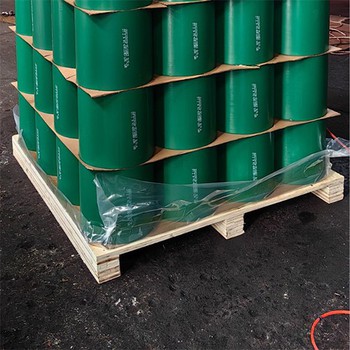
API STC and LTC Thread
FAQ
What is an stc thread?
An STC thread, or Short Round Thread Coupling, is a standard API 5CT casing connection featuring a rounded "V-shaped" profile with eight threads per inch. Due to its relatively short threaded section, it is the most economical and easiest-to-install option, primarily used for shallow wells and surface casing where the pipe string is light and extreme tensile strength is not required.
What does LTC stand for?
In the oil and gas industry (specifically API 5CT standards), LTC stands for Long Round Thread Coupling.
It refers to a casing connection that uses a rounded "V-shaped" thread profile with a longer threaded section compared to the standard Short Thread (STC), providing higher tensile strength and better sealing for medium-depth wells.


