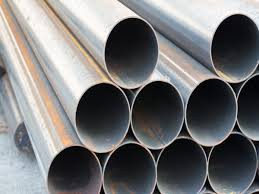
### 1. What is high carbon steel?
High carbon steel is a type of carbon steel with a carbon content ranging from approximately 0.60% to 1.0%. This high carbon content makes it very hard and strong, but it also reduces its ductility, making it more brittle and less suitable for welding. High carbon steel is primarily used for applications where extreme hardness and wear resistance are required, such as in cutting tools, springs, high-strength wires, and blades. It is not typically used for piping systems.
### 2. What is carbon steel pipe used for?
Carbon steel pipe is one of the most widely used materials for conveying liquids, gases, and slurries across various industries. Its primary uses include:
* **Oil and Gas Industry:** For gathering, transmission, and distribution pipelines, both onshore and offshore.
* **Power Plants:** For transporting steam, condensate, and feedwater.
* **Structural and Construction Applications:** As scaffolding and for structural support in buildings.
* **Water and Sewage Systems:** For municipal water supply and wastewater lines.
* **Industrial Processing:** In chemical plants, refineries, and manufacturing facilities to move process fluids and air.
### 3. What grade is carbon steel pipe?
Carbon steel pipes come in several grades defined by standards organizations like ASTM (American Society for Testing and Materials). The most common grades for general service and high-temperature applications are:
* **ASTM A106 Grade B:** This is the most common grade for high-temperature service (e.g., in power plants and process industries). It has a higher tensile and yield strength than Grade A.
* **ASTM A53 Grade B:** Very common for mechanical and pressure applications, as well as for steam, water, and air lines. It is similar to A106 B but is also available as ERW (Electric Resistance Welded) pipe.
Other grades include ASTM A106 Grade A (lower strength) and Grade C (higher strength), as well as API 5L grades like Grade B and X42-X80 for oil and gas transmission.
### 4. What does cs pipe mean?
**CS pipe** is a common abbreviation for **Carbon Steel pipe**. It is a general term used to distinguish pipes made primarily from iron and carbon from those made from other materials like stainless steel (SS), plastic (e.g., PVC, HDPE), or copper.
### 5. What is the difference between CS and SS pipes?
The fundamental difference between Carbon Steel (CS) and Stainless Steel (SS) pipes lies in their chemical composition and, consequently, their properties.
* **Composition and Corrosion Resistance:** CS is primarily iron and carbon, which makes it susceptible to rust and corrosion when exposed to moisture and air. SS contains a minimum of 10.5% Chromium, which forms a passive, protective oxide layer on the surface, making it highly resistant to corrosion and staining.
* **Strength and Hardness:** Generally, carbon steel can be stronger and harder than some grades of stainless steel, especially in its various heat-treated forms.
* **Cost:** Carbon steel is significantly less expensive than stainless steel, making it the default choice for applications where corrosion is not a primary concern.
* **Applications:** CS is used for structural, utility, and industrial applications where the environment is not highly corrosive (e.g., transporting oil, gas, water). SS is used where corrosion resistance and hygiene are critical, such as in chemical processing, food and beverage production, pharmaceutical plants, marine environments, and medical devices.
* **Appearance:** CS has a dark, matte appearance and will rust if not coated, while SS is typically bright, silvery, and maintains its appearance.