Q1: What are the main manufacturing methods of ordinary carbon steel pipe?
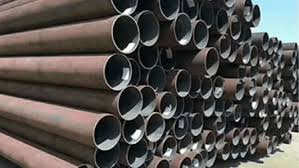
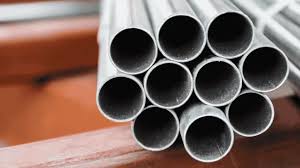
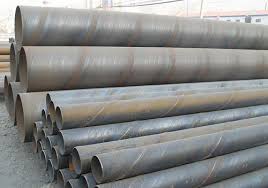
Ordinary carbon steel pipe is mainly produced by welding and seamless: welded pipe adopts high-frequency resistance welding (ERW) or submerged arc welding (SAW), and the steel strip is curled and welded, which is efficient and low cost; seamless pipe is produced by hot rolling or cold drawing process, without welds, and has stronger pressure bearing capacity. In addition, there are special processes such as cold bending. The selection of production method needs to consider the purpose, cost and quality requirements comprehensively.
Q2: What is the production process of high-frequency welded carbon steel pipe?
The production of high-frequency welded carbon steel pipe includes the following steps: steel strip uncoiling and leveling → edge milling → forming machine curling → high-frequency current welding → removal of internal and external weld scars → sizing and straightening → cutting → water pressure test → inspection and packaging. The whole process is continuously automated and can produce 20~100 meters per minute. The welding quality depends on the precise control of current frequency, pressure and speed.
Q3: What are the characteristics of the hot rolling process of seamless carbon steel pipe?
Hot-rolled seamless carbon steel pipes are made of round billets. After being heated and perforated by a piercing machine, they are rolled and formed multiple times by a tube rolling machine. They are characterized by the ability to produce thick-walled pipes (such as SCH40 and above), dense structures, and uniform mechanical properties. However, the energy consumption is high, the surface roughness is poor, and subsequent straightening and pickling treatment are usually required. Hot-rolled pipes are suitable for high-pressure and high-temperature scenarios, such as oil cracking pipelines.
Q4: What are the advantages of cold-drawn carbon steel pipes?
Cold-drawn carbon steel pipes significantly improve strength and dimensional accuracy through cold working hardening: the outer diameter tolerance can be controlled at ±0.05mm, and the surface finish is below Ra1.6μm. It is suitable for the production of small-caliber (<Φ100mm) and thin-walled precision pipes, such as hydraulic cylinder barrels. However, the cold drawing process is inefficient, costly, and residual stress may affect subsequent welding.
Q5: What are the key points of quality control in the production of ordinary carbon steel pipes?
Key control points include: chemical composition testing of raw materials, molding dimensional accuracy (ovality ≤ 1%), welding non-destructive testing (UT/RT), water pressure test (1.5 times the working pressure), and mechanical properties sampling test. In addition, surface defects (such as cracks and slag inclusions) require 100% visual inspection. Modern production lines are mostly equipped with online monitoring systems to control process parameters in real time.