1. Material Definition and Core Properties
Q: What is ASTM A519 4320 steel pipe?
A:
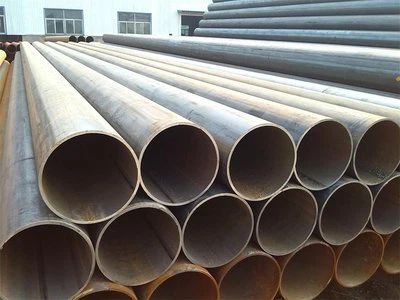
4320 steel pipe is a nickel-chromium-molybdenum carburized alloy steel seamless pipe (UNS G43200) specified in the ASTM A519 standard. Its core composition is: 0.17%-0.22% carbon, 1.65%-2.00% nickel, 0.40%-0.60% chromium, and 0.20%-0.30% molybdenum. This material, through the synergistic design of nickel, chromium, and molybdenum, combines ultra-high carburizing performance (case hardness HRC 60-64) with excellent core toughness (core impact energy ≥50J). Its characteristic feature is a controlled surface retained austenite content (15%-25%) after carburizing, which significantly improves contact fatigue life and is particularly suitable for high-precision, heavy-loaded gear components.
2. Mechanical Properties and Technical Parameters
Q: What are the performance indicators of 4320 steel pipe? A:
In the carburized, quenched, and low-temperature tempered state:
Surface properties: Hardness HRC 60-64, contact fatigue limit 1800-2000 MPa
Core properties: Tensile strength ≥ 1000 MPa, yield strength ≥ 850 MPa, impact energy ≥ 45J at -40°C
Special properties: Bending fatigue strength (10⁷ cycles) is 55%-60% of tensile strength, and grain size maintains ASTM grade 6-8 after high-temperature carburizing.
Optimized processes (such as vacuum carburizing) can achieve a smoother carburized layer gradient (transition zone slope ≤ 40 HV/0.1mm).
3. Typical Application Scenarios
Q: What are the main applications of 4320 steel pipe?
A:
Aerospace Gears: Helicopter Main Drive Planetary Gears, Turbofan Engine Drive Gears (Must Comply with AMS 6265 Standard)
Energy Equipment: Wind Turbine Gearbox High-Speed Gears, Nuclear Power Main Pump Reducer
Precision Transmissions: High-Speed Rail Traction Gears, Shield Machine Cutterhead Drive Ring Gears
Military Applications: Tank Transmission System Hyperbolic Gears, Ship Reduction Gears (Must Pass MIL-S-6050 Testing)
4. Key Points for Heat Treatment and Processing
Q: How to Optimize the Heat Treatment and Processing of 4320 Steel Pipe? A:
The cutting-edge "low-pressure carburizing + high-pressure gas quenching" process must be used:
Carburize at 930°C, 0.2 MPa acetylene atmosphere for 6-8 hours, with the carbon potential precisely controlled to ±0.05%
Quench with 20 bar nitrogen at a cooling rate >100°C/s
Cryogenic treatment (-120°C x 5 hours) + low-temperature tempering (180°C x 4 hours) to stabilize the microstructure
Machining Restrictions:
Welding requires ERNiCrMo-3 wire, preheated to 300°C
For turning, CBN tools are recommended (cutting speed 80-100 m/min).
Slow cooling between 600-800°C is prohibited to prevent grain boundary carbide precipitation.
5. Comparison with Similar Materials
Q: What is the difference between 4320, 9310, and 8620 steel pipes? A:
vs. 9310: 4320 has a lower nickel content (1.65%-2.00% vs. 3.0%-3.5%), resulting in a 30% lower cost but slightly lower low-temperature toughness.
vs. 8620: 4320 has added molybdenum, improving hardenability by 50%, making it suitable for larger gear cross-sections.
No Substitution Principle:
▶ Strictly prohibit replacing CSS-42L for ultra-high-speed (>20,000 rpm) gears.
▶ Strictly prohibit replacing Pyrowear 53 for high-temperature (>400°C) wear-resistant parts.