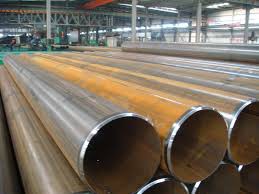
ASTM A500 is the standard specification for cold-formed welded and seamless carbon steel structural tubing in shapes such as round, square, and rectangle. Among its grades, Grade D represents one of the highest strength variants commonly available for structural applications.
1. Primary Applications and Uses
ASTM A500 Gr. D tubing is predominantly used in structural frameworks where high strength-to-weight ratio is crucial. Its key applications include:
Building Construction: As columns, beams, and trusses in commercial and industrial buildings (e.g., warehouses, shopping malls, high-rises).
Bridge Components: For constructing pedestrian bridges, highway bridge supports, and other transportation infrastructure.
Industrial Structures: Used in the fabrication of transmission towers, crane booms, and support frames for heavy machinery.
Architectural and Miscellaneous Structures: For stairways, railings, and exposed structural elements in modern architectural designs, where its high strength allows for slimmer, more aesthetic profiles.
2. Key Advantages and Benefits
The widespread use of ASTM A500 Gr. D is driven by several significant benefits:
High Strength: With a minimum yield strength of 50 ksi (345 MPa) for round tubes and 46 ksi (317 MPa) for shaped tubes, it offers superior load-bearing capacity compared to lower grades like Gr. A, B, or C. This allows for the design of lighter and more efficient structures.
Excellent Strength-to-Weight Ratio: The high strength enables the use of smaller or thinner cross-sections to support the same load, reducing the overall weight and cost of the structure and simplifying transportation and handling.
Cost-Effectiveness: By optimizing material usage, it often results in lower total project costs compared to using hot-rolled sections or lower-grade steels that require more material.
Fabrication Friendly: It possesses good weldability and can be easily cut, drilled, and formed with standard metalworking equipment, offering flexibility in design and construction.
Aesthetically Pleasing: The clean, sharp lines of rectangular and square sections are often preferred for modern architectural applications, combining structural performance with visual appeal.
3. Future Development Prospects
The future for high-performance structural tubing like ASTM A500 Gr. D appears promising, with trends pointing towards:
Sustainably Driven Construction: The push for "green" buildings and sustainable infrastructure favors materials that minimize weight and waste. Gr. D's material efficiency aligns perfectly with the principles of sustainable design and life cycle assessment.
Advancements in Fabrication Technology: The growth of automated fabrication, including robotic welding and CNC cutting, is well-suited to the precise and consistent nature of cold-formed tubes, further streamlining construction processes.
Innovation in Hybrid and Complex Structures: As architectural designs become more ambitious, the demand for high-strength, reliable materials that can be used in complex geometries will continue to rise.
Material and Coating Development: Future developments may include the increased use of high-strength, low-alloy (HSLA) chemistries and the adoption of advanced corrosion protection coatings (like novel galvanizing techniques), enhancing the durability and longevity of structures built with A500 Gr. D tubing, especially in harsh environments.
In conclusion, ASTM A500 Gr. D is a foundational material in modern steel construction. Its proven strength, economic efficiency, and design versatility ensure it will remain a material of choice, with a bright future shaped by the demands of sustainability and technological innovation.