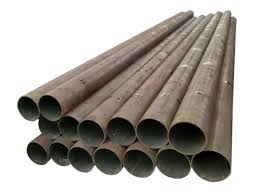
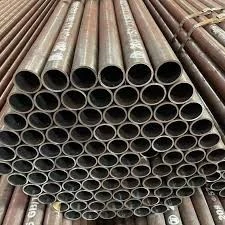
1. Primary Uses and Applications
ASTM A335 P91, commonly known as "P91," is a chromium-molybdenum alloy steel that falls under the category of creep strength enhanced ferritic (CSEF) steels. Its primary use is in high-temperature and high-pressure applications, particularly in the power generation and petrochemical industries.
Key applications include:
Power Plant Piping and Tubing: It is extensively used in fossil fuel power plants for critical sections like:
Main Steam Lines: Piping that carries superheated steam from the boiler to the turbine.
Hot Reheat Lines: Piping that returns steam from the high-pressure turbine back to the boiler for reheating before entering the intermediate/low-pressure turbine.
Headers: Components that collect and distribute steam within the boiler system.
Petrochemical Industry: In refineries and chemical plants for process piping that operates at elevated temperatures.
Heat Exchangers and Boiler Components: In sections where resistance to high-temperature creep and oxidation is required.
2. Key Benefits and Advantages
The adoption of P91 over conventional low-alloy steels like P22 (2.25Cr-1Mo) offers significant technical and economic benefits:
Superior High-Temperature Strength: P91's most significant advantage is its exceptional creep strength-its resistance to deformation under mechanical stress at high temperatures over long periods. This allows it to withstand the same pressure as older steels but at a higher temperature, or to handle higher pressures at the same temperature.
Enhanced Thermal Efficiency: The high-temperature capability of P91 enables the design of power plants with higher steam temperatures and pressures (moving towards ultra-supercritical conditions). This directly translates to higher thermal efficiency, more power output from the same amount of fuel, and reduced greenhouse gas emissions.
Reduced Material Requirements: Due to its higher strength, components made from P91 can be designed with thinner walls compared to those made from P22 or P11 for the same service conditions. This leads to:
Lighter weight structures.
Reduced material costs.
Easier welding and fabrication due to less weld metal required.
Good Oxidation and Corrosion Resistance: The 9% Chromium content provides good resistance to oxidation (scaling) and sulfidation in high-temperature environments, extending the service life of the components.
Good Thermal Fatigue Resistance: Its lower thermal expansion coefficient and higher thermal conductivity compared to austenitic stainless steels (like 304H) result in better resistance to thermal fatigue caused by cycling temperatures.
3. Development and Future Prospects
P91 was developed in the late 1970s and 1980s as a breakthrough material, bridging the gap between low-alloy steels and more expensive austenitic stainless steels.
Development Path: Its development was based on modifying 9Cr-1Mo steel (P9) with micro-alloying elements like Vanadium (V) and Niobium (Nb) and controlling the heat treatment to create a stable microstructure with a high density of dislocations and fine precipitates. This "micro-alloying" is the key to its superior creep strength.
Current Status and Challenges: P91 is now a mature and well-established material. However, its fabrication, especially welding and heat treatment, requires strict procedural control. Issues like the formation of a soft "heat-affected zone" (HAZ) and the need for precise Post Weld Heat Treatment (PWHT) are critical and well-documented challenges that industry has learned to manage.
Future Outlook: The future prospects for P91 are closely tied to the global energy landscape:
Role in Clean Coal Technology: It remains a crucial material for new ultra-supercritical (USC) coal-fired power plants and for retrofitting older plants to improve efficiency and reduce emissions.
Transition Fuel and Biomass Plants: As the world transitions to renewables, P91 will be important for flexible, high-efficiency power plants that can balance grid fluctuations, including those co-firing with biomass.
Foundation for Advanced Alloys: The success of P91 paved the way for even more advanced grades like P92 (NF616) and P122 (HCM12A), which offer higher temperature capabilities. However, P91 continues to be the workhorse due to its balanced properties, extensive database, and established supply chain.
Geothermal and Concentrated Solar Power (CSP): Its high-temperature strength makes it a candidate for certain components in next-generation geothermal and thermal energy storage systems in CSP plants.
In conclusion, ASTM A335 P91 is a foundational material that enabled a significant leap in thermal power plant efficiency. While newer alloys exist, its proven performance, cost-effectiveness, and versatility ensure it will remain a vital material in the global energy sector for decades to come, both in traditional fossil fuel and emerging thermal energy applications.