


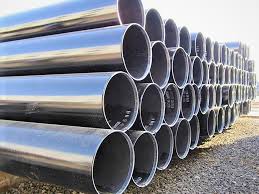
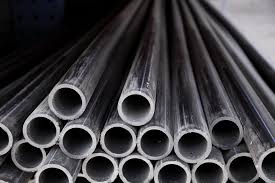
ASTM A252 Grade 3 Steel Piling Pipe
Overview
ASTM A252 Grade 3 is the highest-strength grade within the ASTM A252 specification for welded and seamless steel pipe piles. Designed for demanding foundation applications requiring superior load-bearing capacity and resistance to hard driving conditions.
Mechanical Properties
| Property | Grade 3 Requirement | Comparison Across Grades |
|---|---|---|
| Minimum Yield Strength | 45,000 psi (310 MPa) | Gr1: 30,000 psi • Gr2: 35,000 psi |
| Minimum Tensile Strength | 66,000 psi (455 MPa) | Gr1: 50,000 psi • Gr2: 60,000 psi |
| Yield-to-Tensile Ratio | Not specified | Performance-based specification |
| Elongation | Not specified | Ductility verified via flattening test |
Note: Chemical composition is not specified – mechanical performance governs acceptance.
Manufacturing (ERW Process)
Forming: Cold formed from steel coil/plate
Welding: High-frequency electric resistance welding (HF-ERW)
Heat Treatment: Generally as-welded (optional normalizing available)
Inspection: Weld seam tested via nondestructive methods
Typical Dimensions
| Parameter | Common Range | Application Notes |
|---|---|---|
| Outside Diameter | 8" to 24"+ | Larger diameters for heavy column loads |
| Wall Thickness | 0.250" to 1.000"+ | Selected for driving resistance & corrosion allowance |
| Length | 30 ft to 80+ ft | Minimize splices in deep foundations |
Testing Requirements
| Test | Frequency | Purpose |
|---|---|---|
| Tensile Test | 1 per 400 lengths or fraction | Confirm minimum strength |
| Flattening Test | 1 per 400 lengths (pipe ≤14" OD) | Verify ductility & weld quality |
| Optional Tests | Bend, Charpy (if specified) | Additional quality assurance |
| Hydrostatic Test | Not required | Non-pressure application |
Primary Applications
Demanding Foundation Scenarios:
High-rise buildings with heavy column loads
Bridge piers & abutments in dense soils
Industrial facilities (power plants, refineries)
Offshore/marine structures requiring high axial capacity
Seismic zones where pile ductility is critical
Areas with obstructions (boulders, old foundations)
When Grade 3 is Specified:
Design loads exceed Grade 2 capacity
Very dense soils or rock driving anticipated
Limited pile spacing/diameter constraints
High seismic or lateral load requirements
Long unsupported lengths in soft soils
Design & Installation
Geotechnical Considerations:
Soil Set-Up: Higher strength allows driving through resistant layers
Driveability: Thicker walls reduce damage during hard driving
Corrosion Allowance: Extra wall thickness for aggressive environments
Buckling Resistance: Higher yield strength improves slender pile capacity
Installation Methods:
Heavy Impact Hammers (required for Grade 3 capacity)
Vibratory Drivers (less common for high-strength piles)
Auger Cast Piles (with pipe permanent casing)
Jacked Piles (for limited access areas)
Splicing & Connections:
Full Penetration Welds required for splices
Butt welds with backup bars common
Mechanical Splices available for some applications
Driving Shoes: Hardened points for rock/dense layers
Grade Comparison for Piling Selection
| Criteria | Grade 1 | Grade 2 | Grade 3 |
|---|---|---|---|
| Yield Strength | 30 ksi | 35 ksi | 45 ksi |
| Typical Cost Premium | Baseline | +5-10% | +15-25% |
| Soil Conditions | Soft to medium | Medium to dense | Dense to very dense |
| Structure Type | Light commercial | Medium commercial | Heavy industrial/high-rise |
| Driving Difficulty | Easy to moderate | Moderate | Hard to very hard |
Corrosion & Protection
High-Risk Environments:
Marine/Coastal: Cathodic protection + coatings
Contaminated Soils: Epoxy or polyurethane coatings
Variable Water Table: Dual protection systems
Arid Regions: Often minimal protection needed
Common Protection Methods:
Concrete Fill (most common – adds strength & protection)
Cathodic Protection (impressed current or sacrificial anodes)
Protective Coatings (fusion-bonded epoxy, coal tar)
Corrosion Allowance (extra 1/8" to 1/4" wall thickness)
Monitoring Systems (corrosion coupons, probes)
Structural Advantages
Higher Load Capacity: Maximum axial resistance
Better Driving Performance: Withstands hard driving without damage
Reduced Pile Quantity: Fewer piles needed per foundation
Improved Lateral Resistance: Higher strength improves bending capacity
Longer Unsupported Lengths: Suitable for deep soft soil layers
Limitations & Considerations
Cost Premium: 15-25% over Grade 2
Availability: May require longer lead times
Welding Requirements: More stringent for field splices
Brittle Fracture Risk: In very cold climates (consider Charpy testing)
Driving Equipment: Requires larger hammers
Quality Verification
Mill Requirements:
Tensile test reports
Flattening test results
Dimensional verification
Visual inspection certification
Field Quality Control:
Dynamic Monitoring: Pile Driving Analyzer (PDA) testing
Load Tests: Static load tests to verify capacity
NDT: Ultrasonic testing of field welds
Alignment: Verticality checks during installation


