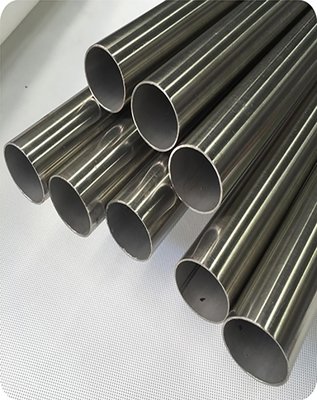
1. Material Definition and Standard Specifications
S31989 is a high-nitrogen super-austenitic stainless steel (corresponding to European designation 1.4565). Its core characteristics are:
Composition Design:
High-chromium, nickel-molybdenum base (Cr 23.0-25.0%, Ni 18.0-20.0%, Mo 3.0-3.5%) + nitrogen strengthening (N: 0.40-0.60%);
Ultra-low carbon (C ≤ 0.03%), controlled phosphorus and sulfur limits (P ≤ 0.020%, S ≤ 0.005%);
Implementation Standards: EN 10216-5 (European standard), ASTM A312 (American standard optional). 2. Core Performance Advantages
Corrosion Resistance:
Pitting Resistance Equivalent (PREN) ≥ 50 (6% FeCl₃ solution, 0.01 mm/year);
Passes ISO 3651-2 intergranular corrosion test;
Mechanical Properties:
Room temperature tensile strength ≥ 800 MPa, yield strength ≥ 400 MPa;
-196°C impact energy ≥ 100 J (suitable for extreme low temperatures);
Process Characteristics: Requires laser welding or electron beam welding (conventional welding is prone to cracking).
3. Typical Applications
Offshore Engineering:
High-pressure pipelines on deep-sea drilling platforms;
Reverse osmosis membrane housings for seawater desalination plants;
Extreme Chemical Environments:
Concentrated hydrochloric acid storage and transportation pipelines;
Hydrometallurgical reactor linings;
Special Applications: Nuclear waste vitrification containers. 4. Comparison with Similar Materials
vs. 254SMO (S31254):
Higher nitrogen content, 30% higher strength;
15% lower cost (reduced molybdenum content);
vs. AL-6XN (N08367):
Higher chromium content, greater resistance to oxidizing acids.
5. Procurement and Processing Key Points
Key Tests:
Nitrogen content verification (spectral analysis);
100% eddy current and ultrasonic testing;