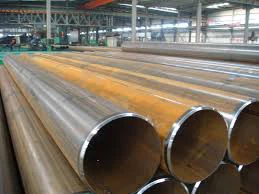
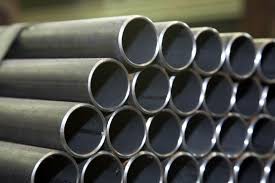
1. Product Definition and Key Characteristics
15CrMoG is a Chromium-Molybdenum (Cr-Mo) alloy steel pipe specifically designed for high-temperature and high-pressure service. The "G" in its designation stands for "Boiler" (from the Chinese standard "Guo"), indicating its primary use in boiler and pressure vessel applications.
Its key characteristic is its excellent high-temperature strength and creep resistance. This is achieved through its chemical composition:
Chromium (Cr): ~0.80-1.10% - Provides improved oxidation and corrosion resistance at high temperatures.
Molybdenum (Mo): ~0.45-0.60% - Significantly enhances strength at elevated temperatures and improves creep resistance.
This combination makes 15CrMoG a reliable material for long-term operation in demanding thermal environments.
2. Primary Applications and Uses
15CrMoG pipes are predominantly used in the power generation and petrochemical industries where components are subjected to high temperatures and pressures.
Power Plant Boilers: They are a standard material for manufacturing:
Superheater Tubes: Which heat saturated steam to become superheated steam.
Reheater Tubes: Which reheat steam from the turbine to increase efficiency.
High-Temperature Headers and Steam Pipelines: Which collect and transport high-pressure steam.
Main Steam Pipes: The critical arteries carrying steam from the boiler to the turbine.
Petrochemical Industry:
Heat Exchanger Tubes: In reactors and heat exchangers that operate at elevated temperatures.
Process Pipelines: For transporting high-temperature oil, gas, and other process fluids.
Pressure Vessels: For manufacturing vessels that must withstand both high pressure and high temperature.
3. Key Advantages and Benefits
The widespread use of 15CrMoG is driven by several significant technical and economic benefits:
Excellent High-Temperature Strength: It maintains its mechanical integrity and does not soften or deform easily under continuous high-temperature service (typically up to 550-580°C).
Superior Creep Resistance: This is its most critical property. Creep is the slow, permanent deformation of a material under constant stress at high temperatures. 15CrMoG has excellent resistance to this phenomenon, ensuring long-term structural safety.
Good Thermal Stability and Oxidation Resistance: The chromium content forms a stable, protective oxide layer on the surface, preventing rapid scaling and degradation in an oxidizing atmosphere.
Good Weldability and Processability: Compared to higher-grade alloy steels, 15CrMoG has relatively good weldability. With proper pre-heating and post-weld heat treatment (PWHT), it can be reliably fabricated into complex components.
Cost-Effectiveness: For its performance range, 15CrMoG offers an optimal balance between cost and capability. It provides a significant performance upgrade over plain carbon steels without the high cost of advanced 9-12% chromium steels.
4. Development Prospects and Future Trends
The future of 15CrMoG is shaped by the global energy landscape, which is evolving towards higher efficiency and lower emissions.
Sustained Demand in Modernizing Power Infrastructure:
In many developing countries, new sub-critical and supercritical coal-fired power plants are still being built, where 15CrMoG remains a fundamental material for high-temperature pressure parts.
It will continue to see high demand for the maintenance and replacement of components in existing power plants worldwide.
Role in the Transition to Biomass and Waste-to-Energy:
As the world shifts towards renewable and alternative energy sources, biomass power plants and waste incineration plants are becoming more common. These facilities require high-temperature boiler tubing, and 15CrMoG is a suitable and cost-effective choice for many of their components.
Competition and Niche Specialization:
For new ultra-supercritical (USC) power plants with higher steam parameters (temperature > 600°C, pressure > 25 MPa), advanced steels like P91 (10Cr9Mo1VNb) and P92 are preferred due to their superior strength.
Consequently, the application of 15CrMoG is becoming more specialized. Its primary market will remain in supercritical and sub-critical power plants, heat recovery steam generators (HRSGs) in gas-fired plants, and the petrochemical industry, where its performance-to-cost ratio is unbeatable.
Technological Improvements:
Future developments will focus on optimizing the manufacturing process (e.g., improved heat treatment control, cleaner steel production) to further enhance the consistency, longevity, and reliability of 15CrMoG tubes, ensuring they meet ever-stricter safety and environmental standards.
Conclusion
In summary, 15CrMoG steel pipe is a crucial high-temperature material that has been the backbone of thermal power systems for decades. Its exceptional creep strength and oxidation resistance at elevated temperatures make it indispensable for boiler and pressure vessel applications. While the rise of advanced materials may limit its role in the most cutting-edge power plants, its proven reliability, good processability, and cost-effectiveness ensure that it will remain a vital and widely used material in the global energy and industrial sectors for the foreseeable future, particularly in plant modernization, biomass energy, and the robust petrochemical industry.