





API 5CT L80-1 Oil Country Tubular Goods
API 5CT L80-1 Oil Country Tubular Goods (OCTG) is a medium strength petroleum specific pipe material that complies with the American Petroleum Institute (API) 5CT standard. It is mainly used for the production of casing and tubing in oil and gas wells and is suitable for low corrosive environments.
L80-1 is a foundation type under the L80 steel grade, with "L80" indicating a minimum yield strength of 80 ksi (approximately 552 MPa), which has good mechanical properties and economy. L80-1 is made of carbon manganese steel, which does not contain significant alloying elements and has no special corrosion resistance. It is usually protected against corrosion by an external coating (such as epoxy resin).
It is widely used in onshore conventional oil and gas wells, shallow gas reservoirs, and shale gas horizontal wells with low corrosion risks. It is the lowest cost and highest market share model in the L80 series. According to the API 5CT standard, L80-1 can be made into casing, tubing, and drill pipe, with a common outer diameter range of Φ 114.3-508mm and a wall thickness of 5.21-16.13mm. The length is divided into three categories: R1, R2, and R3.
Still worried about frequent replacement of oil casing due to poor compression resistance? API 5CT L80-1 oil casing, made of high-strength material suitable for complex downhole conditions, click to obtain exclusive solutions
Chemical Composition Table
| Element | Content Requirement (%) | Notes |
|---|---|---|
| Carbon (C) | ≤0.45 | Controls hardenability, prevents welding cracks |
| Manganese (Mn) | 0.60–1.35 | Enhances strength and toughness |
| Phosphorus (P) | ≤0.030 | Strictly limited to prevent cold brittleness |
| Sulfur (S) | ≤0.025 | Reduces hot cracking and corrosion initiation |
| Silicon (Si) | 0.10–0.45 | Deoxidizer, improves strength |
| Chromium (Cr), Nickel (Ni), Molybdenum (Mo) | No specific requirement | No significant alloy content, distinguishing it from L80-9Cr/L80-13Cr |
Mechanical Properties Table
| Property | Standard Value (API 5CT) | Typical Measured Value |
|---|---|---|
| Yield Strength (YS) | ≥552 MPa | 580–650 MPa |
| Tensile Strength (TS) | 655–827 MPa | 700–780 MPa |
| Elongation (A) | ≥18% | 20–25% |
| Hardness (HB) | ≤255 | 220–240 |
| Impact Toughness (-20℃) | ≥40 J | 50–60 J |
Color Band Identification
Per API 5CT standards, the color band marking for L80-1 is as follows:
Primary Band: Red
Secondary Band: None
Marking Method: A 25mm wide red circumferential band is painted on both ends of the pipe body for rapid field identification of the grade.
Production Casing Size Table
| Nominal Casing Size (inches) | Outside Diameter (mm) | Common Wall Thickness (mm) | Application Segment |
|---|---|---|---|
| 4½ | 114.3 | 6.35, 7.37, 8.56 | Intermediate-depth production zones |
| 5 | 127.0 | 7.52, 9.19 | Conventional oil & gas wells |
| 5½ | 139.7 | 7.72, 9.17, 11.51 | Main production casing |
| 7 | 177.8 | 8.05, 10.36, 12.65 | Deep well completion sections |
| 9⅝ | 244.5 | 9.53, 11.05, 13.84 | Surface/intermediate casing |
API 5CT L80 Type 1 Casing Tolerance Table
| Item | Tolerance Requirement |
|---|---|
| Outside Diameter (OD) | ±0.75% (for wall thickness ≥5.21mm) |
| Wall Thickness (WT) | +12.5% / -10.0% |
| Length | R1: +100mm / -200mm; R2/R3: +100mm / -150mm |
| Ovality | ≤0.75% OD |
| Straightness | ≤3mm/m, total ≤12mm |
| Thread Parameters | Must comply with API 5B standard, with strict tolerances on pitch, taper, and thread height |
Casing Connection Types
| Connection Type | Abbreviation | Typical Application |
|---|---|---|
| Buttress Thread Casing | BTC / BC | Widely used for medium and deep wells requiring high axial load capacity |
| Short Thread Casing | STC | Commonly used for shallow to medium-depth wells |
| Long Thread Casing | LTC | Provides improved connection strength compared with STC |
| Premium Connections | - | Used for high-pressure, HPHT, and gas-tight sealing requirements |
For severe production conditions, premium connections with metal-to-metal sealing designs may be selected to improve gas tightness and connection performance.
Material Selection Guide: L80-1 vs L80 9Cr vs L80 13Cr
Different L80 grades are designed for different corrosion challenges.
| Factor | L80-1 | L80 9Cr | L80 13Cr |
|---|---|---|---|
| Material Type | Carbon-manganese steel | 9% Chromium alloy steel | 13% Chromium martensitic stainless steel |
| Main Advantage | Controlled hardness and cost efficiency | Improved CO₂ corrosion resistance | Excellent CO₂ corrosion resistance |
| H₂S Service | Commonly selected when hardness control is required | Requires service condition evaluation | Requires service condition evaluation |
| CO₂ Resistance | Limited | Good | Excellent |
| Relative Cost | Lowest | Medium | Highest |
| Availability | Widely available | More specialized | More specialized |
| Typical Application | Sour-service wells, general production wells | Moderate CO₂ corrosion environments | Severe CO₂ wet gas environments |
Mandatory Heat Treatment: Quench and Temper
API 5CT L80-1 requires quench-and-temper (Q&T) heat treatment to achieve the required combination of strength, toughness, and hardness control.
The process includes:
Quenching
Full-length heating followed by rapid cooling to produce a hardened martensitic structure.
Tempering
Controlled reheating to transform the brittle quenched structure into tempered martensite with improved toughness and controlled hardness.
The purpose of Q&T treatment is to achieve:
Yield strength between 552–655 MPa
Maximum hardness of 23 HRC
Uniform mechanical properties along the pipe length
Improved resistance to SSC susceptibility
Unlike some N80 products that may be supplied in normalized conditions, L80-1 requires quench-and-temper treatment according to API 5CT requirements.
Inspection and Testing Requirements
API 5CT L80-1 products undergo inspection and testing to verify chemical composition, mechanical properties, dimensions, and service reliability.
The exact inspection scope depends on:
Product specification level (PSL)
Manufacturing method
Customer requirements
Applicable project specifications
Delivery Documentation
Each API 5CT L80-1 shipment is supplied with quality documentation for material traceability.
Typical documentation includes:
Material Test Certificate (MTC)
Heat number identification
Chemical composition report
Mechanical test results
Hardness test records
Heat treatment records
NDT inspection reports
Dimensional inspection report
Thread inspection and gauging report
Complete documentation allows customers to verify compliance with API 5CT requirements and maintain traceability throughout project execution.
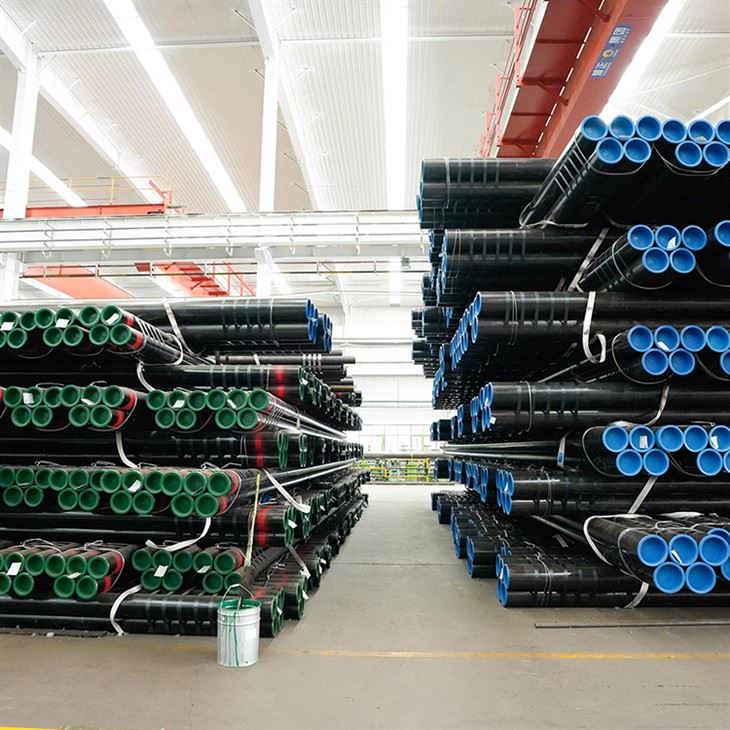
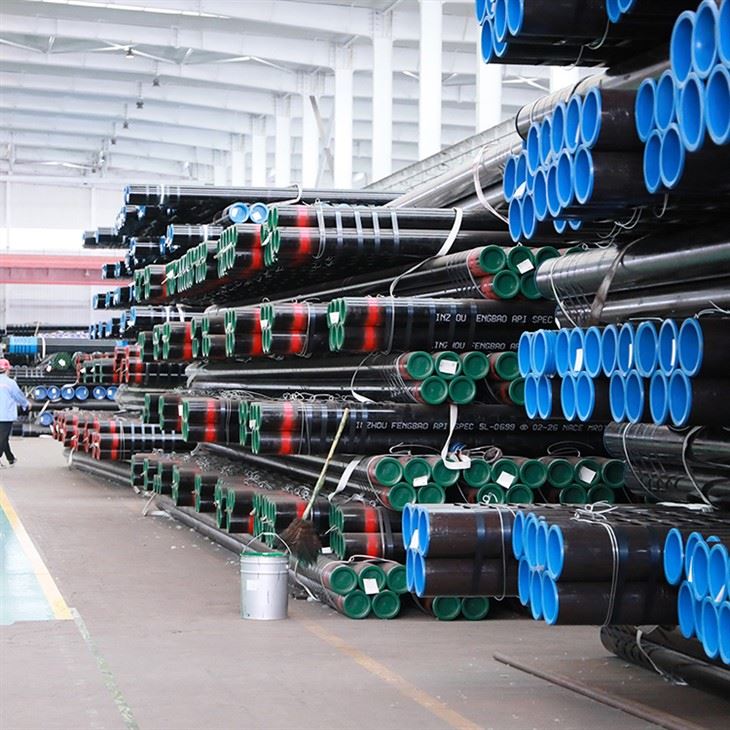
API 5CT L80-1 OCTG Factory

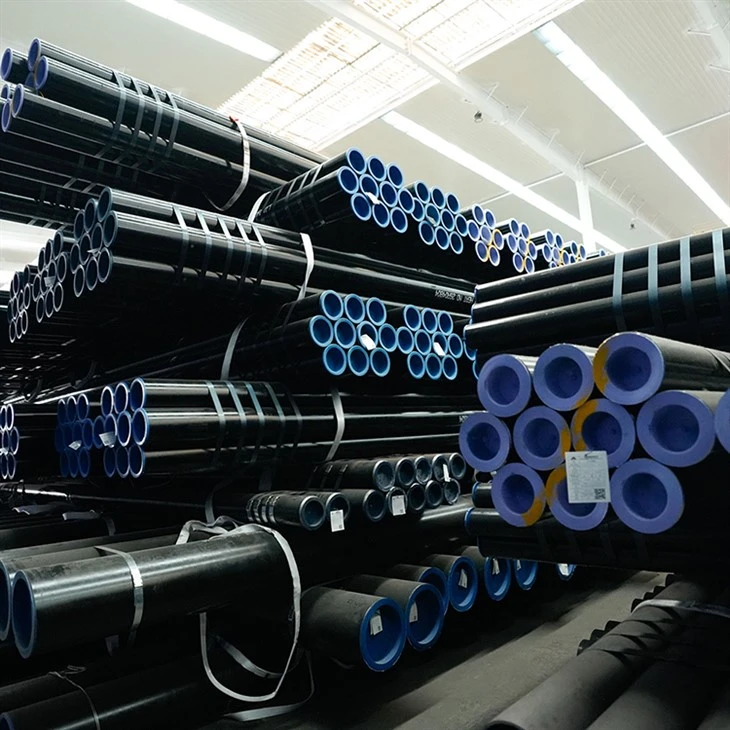
API 5CT L80-1 Casing pipe test and inspection

FAQ
What does API 5CT L80-1 mean?
API 5CT L80-1 is a carbon-manganese OCTG grade designed according to API Spec 5CT for casing and tubing applications. The grade provides a minimum yield strength of 80,000 psi (552 MPa) and requires controlled hardness of maximum 23 HRC (241 HBW). The "-1" designation refers to the Type 1 carbon-manganese version of the L80 family.
Is API 5CT L80-1 suitable for sour service?
API 5CT L80-1 is commonly selected for sour-service applications because its mandatory hardness control helps reduce susceptibility to sulfide stress cracking (SSC). However, suitability must be evaluated according to the actual well environment and NACE MR0175 / ISO 15156 requirements, including H₂S partial pressure, temperature, and stress conditions.
What is the maximum hardness of API 5CT L80-1?
The maximum hardness of API 5CT L80-1 is:
23 HRC
241 HBW
This hardness limit is a mandatory API 5CT requirement and is one of the key differences between L80-1 and N80.
What is the difference between API 5CT L80-1 and N80?
The main difference is hardness control.
Both grades have similar yield strength levels:
L80-1: 552–655 MPa
N80: 552–655 MPa
However:
L80-1 requires a maximum hardness of 23 HRC
N80 does not have the same mandatory hardness limitation under API 5CT
Because hardness control is important for reducing SSC susceptibility, L80-1 is commonly preferred for sour-service applications.
Can API 5CT L80-1 be manufactured by ERW?
Yes.
Among the L80 family grades, L80-1 is the grade permitted for both seamless and ERW manufacturing under API 5CT.
ERW L80-1 must meet applicable requirements for:
Heat treatment
Weld seam quality
Inspection
Testing
Seamless L80-1 remains the most common supply form for critical oil and gas applications.
What heat treatment is required for API 5CT L80-1?
API 5CT L80-1 requires quench-and-temper (Q&T) heat treatment.
The process improves:
Strength consistency
Toughness
Hardness control
Resistance to SSC susceptibility
The final product must meet API 5CT mechanical property and hardness requirements.
What are the common connections for L80-1 casing and tubing?
Common API 5CT L80-1 casing connections include:
BTC (Buttress Thread Casing)
STC (Short Thread Casing)
LTC (Long Thread Casing)
Common tubing connections include:
EUE (External Upset End)
NU (Non-Upset)
For high-pressure gas wells or demanding production conditions, premium gas-tight connections with metal-to-metal seals may be selected.
Is L80-1 better than N80?
Neither grade is universally better.
The correct choice depends on well conditions.
Choose L80-1 when:
Sour-service conditions require controlled hardness
SSC resistance is a priority
Reliable OCTG performance is required
Choose N80 when:
Sour-service requirements are not present
Cost efficiency is the main consideration
Service conditions are suitable for N80 properties
Material selection should always follow engineering requirements and applicable standards.
Hot Tags: api 5ct l80-1 oil country tubular goods, China api 5ct l80-1 oil country tubular goods manufacturers, suppliers, 316 Stainless Steel Welded Pipe
You Might Also Like


Send Inquiry