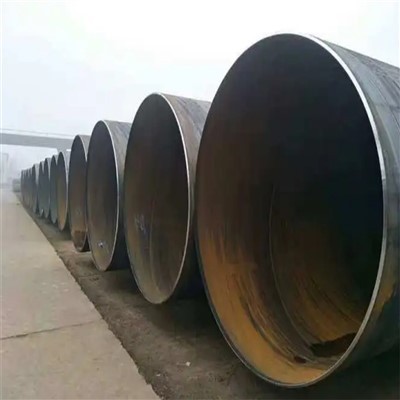
Hey there! As a supplier of SSAW (Submerged Arc Welded) Carbon Steel Tubes, I often get asked about the tensile strength of these tubes. So, I thought I'd write this blog to break it down for you.
First off, let's understand what tensile strength actually means. Tensile strength is the maximum amount of tensile (pulling) stress that a material can take before it breaks or fails. In the case of SSAW Carbon Steel Tubes, it's a crucial property because these tubes are used in a wide range of applications where they might be subjected to pulling forces.
The tensile strength of SSAW Carbon Steel Tubes can vary depending on several factors. One of the main factors is the grade of carbon steel used. Different grades have different chemical compositions, and these compositions play a big role in determining the tube's strength.
For example, let's take a look at some common grades. The A36 Spiral Welded Black Tube is a popular choice. A36 is a low - carbon steel grade. It has a minimum tensile strength of around 58,000 psi (pounds per square inch). This grade is widely used in general construction and structural applications. It's relatively easy to work with, and its moderate tensile strength makes it suitable for many projects where high - end strength isn't a strict requirement.
Another well - known grade is the ASTM A36 Spiral Welded Carbon Welded Pipe. ASTM A36 also falls into the low - carbon steel category. Just like the A36 Spiral Welded Black Tube, it offers good weldability and formability. The tensile strength of ASTM A36 pipes is typically in the range of 58,000 - 80,000 psi. This range gives engineers and contractors some flexibility when designing structures, as they can account for different loading conditions.
Then there's the X42 Welded Spiral Pipe. The X42 grade is a bit different. It's a high - strength, low - alloy (HSLA) steel. The "X42" designation means that it has a minimum yield strength of 42,000 psi, and its tensile strength is usually in the range of 60,000 - 85,000 psi. HSLA steels like X42 are used in more demanding applications, such as oil and gas pipelines. The higher tensile strength allows these pipes to withstand the high pressures and stresses associated with transporting fluids over long distances.
The manufacturing process of SSAW Carbon Steel Tubes also affects their tensile strength. The submerged arc welding process used to make these tubes is a high - quality welding method. It creates a strong and consistent weld bead, which contributes to the overall strength of the tube. During the welding process, the heat input and welding speed need to be carefully controlled. If the heat input is too high, it can cause the steel to become over - annealed, which might reduce its strength. On the other hand, if the heat input is too low, the weld might not be fully fused, leading to weak points in the tube.
The wall thickness of the tube is another factor. Generally, thicker - walled tubes have higher tensile strength. This is because there's more material to resist the pulling forces. However, thicker walls also mean a heavier tube, which might not be suitable for all applications. Engineers need to strike a balance between strength and weight when selecting the appropriate wall thickness for a project.
The heat treatment of the SSAW Carbon Steel Tubes can also enhance their tensile strength. Heat treatment processes like quenching and tempering can change the microstructure of the steel, making it stronger and more ductile. For example, if a tube is quenched, it's rapidly cooled from a high temperature, which forms a hard and strong martensitic structure. Then, tempering is done to relieve the internal stresses and improve the ductility of the steel.
When it comes to testing the tensile strength of SSAW Carbon Steel Tubes, standard test methods are used. A sample of the tube is taken, and it's pulled in a tensile testing machine until it breaks. The machine records the maximum force applied and the corresponding cross - sectional area of the sample. From these values, the tensile strength can be calculated.
In real - world applications, understanding the tensile strength of SSAW Carbon Steel Tubes is crucial for ensuring the safety and reliability of structures. For instance, in a building construction project, the columns and beams made of these tubes need to be able to support the weight of the building and any additional loads, such as wind or seismic forces. If the tubes don't have sufficient tensile strength, they might fail under these loads, leading to structural collapse.
In the oil and gas industry, the pipes used for transporting oil and gas need to withstand high internal pressures. The tensile strength of the SSAW Carbon Steel Tubes ensures that the pipes don't burst or rupture, preventing costly leaks and environmental hazards.


So, if you're in the market for SSAW Carbon Steel Tubes, it's important to consider the tensile strength based on your specific application. Whether you need a tube for a simple construction project or a high - pressure pipeline, we've got you covered. We offer a wide range of grades and wall thicknesses to meet your requirements.
If you're interested in learning more about our SSAW Carbon Steel Tubes or want to discuss a potential purchase, feel free to reach out. We're here to help you find the perfect tubes for your project and can provide you with all the technical information you need. Don't hesitate to start a conversation with us and let's get your project on the right track!
References
- ASME Boiler and Pressure Vessel Code
- ASTM International Standards for Carbon Steel Tubes
- API (American Petroleum Institute) Standards for Oil and Gas Pipes