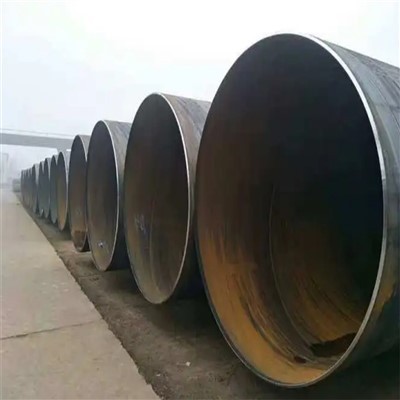
Electrofusion welding is a critical process in the installation of pipes, especially for high - performance and durable connections. As a supplier of Electrofusion Welded Pipe, I understand the importance of getting every detail right, including the pressure requirements during the electrofusion welding process.
The Basics of Electrofusion Welding
Electrofusion welding is a technique where an electric current is passed through a heating element (usually a wire coil) embedded in a fitting. The heat generated melts the plastic material of both the fitting and the pipe, creating a homogeneous and strong joint when the molten materials cool and solidify. This method is widely used in the installation of polyethylene (PE) pipes, which are popular for their corrosion resistance, flexibility, and long - term durability.
Why Pressure Matters in Electrofusion Welding
Pressure plays a crucial role in electrofusion welding for several reasons. Firstly, it ensures good contact between the pipe and the fitting. During the welding process, the melted plastic needs to flow and mix thoroughly to form a reliable joint. Adequate pressure helps to eliminate any gaps or air pockets between the two components, which could otherwise weaken the joint and lead to leaks or failures over time.
Secondly, pressure affects the heat transfer and melting process. When pressure is applied, it brings the surfaces of the pipe and the fitting closer together, allowing for more efficient heat transfer from the heating element. This results in a more uniform melting of the plastic and a stronger bond.
Pressure Requirements During the Welding Process
The pressure requirements during electrofusion welding can be divided into three main stages: pre - welding, welding, and post - welding.
Pre - welding Pressure
Before the welding process begins, it is essential to ensure that the pipe and the fitting are properly aligned and clamped. A certain amount of pressure should be applied to hold them in place. This pre - welding pressure typically ranges from 0.1 to 0.3 MPa (megapascals). The exact value depends on the diameter and wall thickness of the pipe. For larger - diameter pipes, a slightly higher pressure may be required to ensure a stable and centered position.
Welding Pressure
During the welding process, the pressure needs to be carefully controlled. As the plastic begins to melt, an appropriate pressure should be maintained to promote the flow and mixing of the molten material. The welding pressure usually ranges from 0.2 to 0.5 MPa. This pressure helps to ensure that the melted plastic fills the entire interface between the pipe and the fitting, creating a seamless joint.

It is important to note that the pressure should not be too high during welding. Excessive pressure can cause the molten plastic to be squeezed out of the joint, resulting in a lack of material at the interface and a weaker bond. On the other hand, insufficient pressure may lead to incomplete melting and poor fusion.

Post - welding Pressure
After the welding is completed, a post - welding pressure is applied to allow the joint to cool and solidify under pressure. This helps to maintain the shape of the joint and prevent any shrinkage or deformation. The post - welding pressure is typically in the range of 0.1 to 0.2 MPa and is maintained for a specific period, usually several minutes, depending on the pipe size and material.
Factors Affecting Pressure Requirements
Several factors can influence the pressure requirements during electrofusion welding.
Pipe Material
Different types of pipe materials have different melting points, viscosities, and flow characteristics. For example, high - density polyethylene (HDPE) pipes may require different pressure settings compared to medium - density polyethylene (MDPE) pipes. HDPE has a higher melting point and greater viscosity, which means that slightly higher pressures may be needed to ensure proper melting and flow during welding.
Pipe Diameter and Wall Thickness
Larger - diameter pipes and pipes with thicker walls generally require higher pressures during welding. This is because there is more material to melt and a larger interface area to bond. For instance, a pipe with a diameter of 500 mm will need a higher pressure than a pipe with a diameter of 100 mm to achieve a reliable joint.
Environmental Conditions
The temperature and humidity of the environment can also affect the pressure requirements. In colder temperatures, the plastic may be more rigid, and higher pressures may be needed to achieve the same level of melting and flow. Similarly, high humidity can affect the surface properties of the pipe and fitting, potentially requiring adjustments to the pressure settings.
Ensuring Optimal Pressure in Electrofusion Welding
As a supplier of Electrofusion Welded Pipe, we understand the importance of providing our customers with the necessary guidance and support to ensure optimal pressure during welding. We offer detailed installation manuals that include specific pressure requirements for different pipe sizes and materials.
In addition, we provide training programs for installers to help them understand the principles of electrofusion welding and how to properly control the pressure. Our technical support team is also available to answer any questions and provide on - site assistance if needed.
Our Product Range
We offer a wide range of electrofusion welded pipes, including A691 3CR CLASS21 TUBE, ASTM A106 High Pressure Welded Steel Pipe, and A672 B55 High - Pressure Pipe. These pipes are designed to meet the highest quality standards and are suitable for a variety of applications, including water supply, gas transmission, and industrial piping systems.

Contact Us for Procurement
If you are interested in our electrofusion welded pipes or have any questions about the pressure requirements during electrofusion welding, please feel free to contact us. Our sales team is ready to discuss your specific needs and provide you with a customized solution. We look forward to establishing a long - term partnership with you and helping you achieve successful pipe installations.
References
- "Plastic Pipes Handbook" by B. A. Kosior.
- "Electrofusion Welding of Polyethylene Pipes: A Technical Guide" by The Welding Institute.
- Standards and specifications related to electrofusion welding of pipes from relevant industry associations.