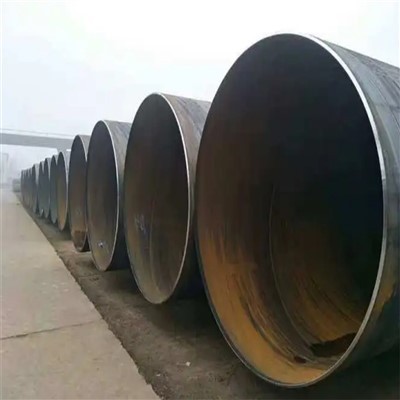
Hey there! As a supplier of SSAW (Submerged Arc Spiral Welded) pipes, I often get asked about the pressure rating of these pipes. So, I thought I'd write this blog to share some insights on this topic.


First off, let's understand what pressure rating means. In simple terms, the pressure rating of a pipe is the maximum pressure that the pipe can safely handle under normal operating conditions. It's a crucial factor to consider when you're using pipes in various applications, like oil and gas transportation, water supply systems, and more.
Now, the pressure rating of SSAW pipes isn't a fixed number. It depends on several factors. One of the main factors is the pipe's wall thickness. Generally speaking, the thicker the wall of the SSAW pipe, the higher its pressure rating. That's because a thicker wall can withstand more internal pressure without bursting or deforming. For instance, if you have two SSAW pipes of the same diameter but different wall thicknesses, the one with the thicker wall will be able to handle a greater amount of pressure.
Another important factor is the material of the pipe. SSAW pipes can be made from different types of steel, such as carbon steel. Different steel grades have different mechanical properties, which directly affect the pressure rating. For example, a high - grade carbon steel SSAW pipe will usually have a higher pressure rating compared to a lower - grade one. Some of the popular carbon steel grades used in SSAW pipes include API 5L X42. You can check out more details about API 5L X42 Spiral Welded Carbon Steel Pipe.
The manufacturing process also plays a role in determining the pressure rating. SSAW pipes are made by spirally welding a steel strip. The quality of the welding is crucial. A well - welded SSAW pipe will have a better pressure - bearing capacity. During the manufacturing process, strict quality control measures are taken to ensure the integrity of the weld. Any defects in the weld, like cracks or porosity, can significantly reduce the pressure rating of the pipe.
The diameter of the SSAW pipe is yet another factor. In general, smaller - diameter pipes can handle higher pressures compared to larger - diameter ones. This is because the stress distribution is more favorable in smaller pipes. However, it's important to note that this relationship isn't absolute and is also influenced by other factors like wall thickness and material.
To calculate the pressure rating of an SSAW pipe, there are some industry - standard formulas. These formulas take into account the factors we've just discussed, such as wall thickness, material properties, and pipe diameter. But keep in mind that these calculations are just estimates, and in real - world applications, additional safety factors are often considered to account for uncertainties, like fluctuations in pressure and temperature.
Let's talk about some common applications and the corresponding pressure requirements. In the oil and gas industry, SSAW pipes are widely used for transporting crude oil and natural gas. These pipes often need to handle high pressures, especially when the transportation is over long distances. For on - shore pipelines, the pressure can range from a few hundred psi (pounds per square inch) to several thousand psi. In water supply systems, the pressure requirements are usually lower, typically in the range of 50 - 200 psi.
Now, if you're in the market for SSAW pipes, you might be interested in different types. We offer Carbon Pipe Seamless Spiral Welded Steel Pipe and Carbon Steel Pipe Q195 Spiral Welded. These pipes are made with high - quality materials and advanced manufacturing techniques to ensure a reliable pressure rating for your specific needs.
When you're choosing SSAW pipes based on pressure rating, it's always a good idea to consult with experts. At our company, we have a team of experienced engineers who can help you select the right pipes for your project. They can take into account all the relevant factors, such as the operating pressure, temperature, and the type of fluid being transported.
In addition to the technical aspects, we also offer excellent customer service. We understand that every customer's needs are unique, and we're committed to providing customized solutions. Whether you need a small quantity of SSAW pipes for a local project or a large - scale order for an industrial application, we can meet your requirements.
If you're thinking about purchasing SSAW pipes, don't hesitate to get in touch. We're here to answer all your questions and guide you through the purchasing process. Whether it's about the pressure rating, the material, or the price, we'll give you all the information you need to make an informed decision.
In conclusion, the pressure rating of SSAW pipes is a complex but important concept. It's influenced by multiple factors, including wall thickness, material, manufacturing process, and pipe diameter. By understanding these factors and working with a reliable supplier, you can ensure that you get the right SSAW pipes for your project. So, if you're in the market for SSAW pipes, reach out to us, and let's start a conversation about your needs.
References:
- Industry standards on pipe pressure ratings
- Technical literature on SSAW pipe manufacturing and properties