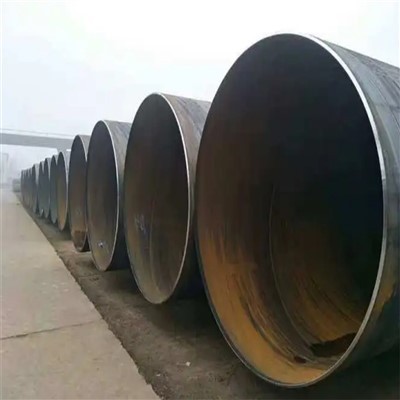
As a supplier of X52 Spiral Steel Pipe, I've witnessed firsthand the critical role that raw materials play in determining the quality of the final product. In this blog, I'll delve into the profound impact of raw materials on the quality of X52 Spiral Steel Pipe, exploring various aspects such as mechanical properties, chemical composition, and manufacturing processes.
The Significance of Raw Materials in X52 Spiral Steel Pipe Production
The quality of X52 Spiral Steel Pipe is fundamentally shaped by the raw materials used in its production. X52 Spiral Steel Pipe is widely used in various industries, including oil and gas transportation, construction, and infrastructure projects. Its ability to withstand high pressure, corrosion, and harsh environmental conditions is directly related to the quality of the raw materials.


Mechanical Properties and Raw Materials
One of the primary factors influenced by raw materials is the mechanical properties of X52 Spiral Steel Pipe. The tensile strength, yield strength, and elongation of the pipe are crucial indicators of its performance. High - quality raw materials ensure that the pipe can bear the required load without deformation or failure.
For example, the carbon content in the raw steel can significantly affect the tensile strength. An appropriate carbon content can enhance the strength of the pipe, but too much carbon may make the pipe brittle. Other alloying elements such as manganese, silicon, and chromium also play important roles. Manganese can improve the hardenability and strength of the steel, while silicon helps in deoxidation during the steel - making process.
Chemical Composition and Its Impact
The chemical composition of the raw materials is another key factor. X52 Spiral Steel Pipe needs to meet specific chemical composition standards to ensure its quality. Sulfur and phosphorus are common impurities in steel. High sulfur content can lead to hot - shortness, which means the steel becomes brittle at high temperatures during the manufacturing process. Phosphorus can cause cold - shortness, making the steel brittle at low temperatures.
On the other hand, controlled amounts of alloying elements can provide beneficial effects. For instance, nickel can improve the toughness and corrosion resistance of the pipe, which is especially important for pipes used in corrosive environments such as offshore oil and gas fields.
Impact on Weldability
The raw materials also have a significant impact on the weldability of X52 Spiral Steel Pipe. Since spiral steel pipes are formed by welding, good weldability is essential to ensure the integrity of the pipe. If the raw materials contain excessive amounts of certain elements, it can lead to welding defects such as porosity, cracks, and lack of fusion.
For example, a high carbon equivalent in the raw steel can reduce the weldability. Carbon equivalent is a measure that takes into account the combined effect of carbon and other alloying elements on the hardenability of the steel during welding. By carefully selecting raw materials with appropriate chemical compositions, we can ensure that the X52 Spiral Steel Pipe has excellent weldability.
Comparison with Other Spiral Steel Pipes
When comparing X52 Spiral Steel Pipe with other types of spiral steel pipes such as Q195 Carbon Spiral Welded Pipe, Mild Carbon Q355 Spiral Welded Pipe, and Carbon Steel X46 Spiral Welded Pipe, the difference in raw materials becomes evident.
Q195 Carbon Spiral Welded Pipe is generally made of lower - grade carbon steel, which has relatively lower strength compared to X52. Mild Carbon Q355 Spiral Welded Pipe has a different chemical composition and mechanical properties, with a slightly higher strength than Q195 but lower than X52 in some cases. Carbon Steel X46 Spiral Welded Pipe has similar properties to X52 but with lower specified minimum yield strength. These differences are mainly due to the variation in the raw materials used in their production.
The Role of Raw Material Source
The source of the raw materials also matters. Reputable raw material suppliers often have strict quality control measures in place. They can provide steel with consistent chemical compositions and mechanical properties. When we source raw materials from reliable suppliers, we can better control the quality of our X52 Spiral Steel Pipe.
Quality Control during Raw Material Procurement
As a supplier, we implement strict quality control procedures during the raw material procurement process. We conduct thorough inspections of the raw materials, including chemical analysis, mechanical testing, and non - destructive testing. This helps us to ensure that only high - quality raw materials are used in the production of X52 Spiral Steel Pipe.
Influence on Manufacturing Processes
The quality of raw materials can also affect the manufacturing processes of X52 Spiral Steel Pipe. High - quality raw materials are easier to process, which can improve the efficiency of the production line. For example, raw materials with good formability can be more easily shaped into the spiral form without cracking or wrinkling.
Long - term Performance and Durability
The impact of raw materials on the long - term performance and durability of X52 Spiral Steel Pipe cannot be overstated. Pipes made from high - quality raw materials are more likely to resist corrosion, fatigue, and other forms of degradation over time. This is crucial for applications where the pipes need to operate for long periods without maintenance or replacement.
Conclusion
In conclusion, the raw materials have a far - reaching impact on the quality of X52 Spiral Steel Pipe. From mechanical properties and chemical composition to weldability and long - term performance, every aspect of the pipe's quality is closely related to the raw materials used. As a supplier, we are committed to using only the best raw materials to produce high - quality X52 Spiral Steel Pipe.
If you are in the market for X52 Spiral Steel Pipe and are concerned about quality, we invite you to contact us for procurement and negotiation. We are confident that our pipes, made from superior raw materials, will meet your requirements.
References
- ASME Boiler and Pressure Vessel Code
- API 5L Specification for Line Pipe
- ASTM Standards for Steel Pipes