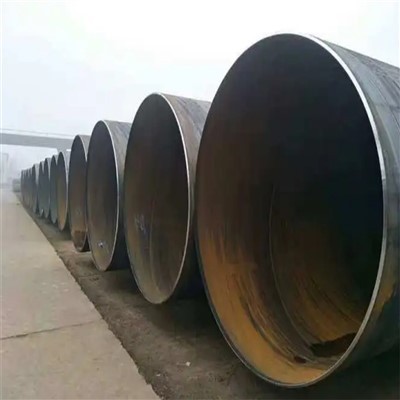
Hey there! As a supplier of spiral welded pipes, I often get asked about the fatigue properties of these pipes. It's a super important topic, especially when you're using these pipes in long - term or high - stress applications. So, let's dive right in and talk about what makes the fatigue properties of spiral welded pipes tick.
First off, what exactly is fatigue in the context of pipes? Fatigue is the weakening of a material caused by cyclic loading. In simple terms, when a pipe is subjected to repeated stress over time, like pressure changes, vibrations, or temperature fluctuations, its structure starts to degrade. This can lead to cracks, and if left unchecked, these cracks can grow and eventually cause the pipe to fail.
One of the key factors that influence the fatigue properties of spiral welded pipes is the material they're made from. We offer a variety of pipes, such as the ASTM A139 Carbon Steel Spiral Welded Pipe. Carbon steel is a popular choice because it has good strength and toughness. The carbon content in this steel gives it the ability to withstand a certain amount of stress before fatigue sets in. However, the quality of the carbon steel can vary, and that directly impacts the fatigue life of the pipe. High - quality carbon steel with proper heat treatment will have better fatigue resistance compared to lower - grade steel.
Another type of pipe we supply is the X42 SSAW Spiral Steel Pipe. The X42 grade indicates a minimum yield strength of 42,000 psi. This higher strength can be beneficial when it comes to fatigue. Pipes with higher yield strength can generally handle more stress cycles before they start to show signs of fatigue. But it's not just about the strength; the ductility of the steel also plays a role. Ductility allows the pipe to deform slightly under stress without cracking immediately. This means that even when the pipe is under cyclic loading, it can absorb some of the energy and reduce the risk of fatigue failure.
The Carbon Steel Welded Pipe Q235B is also a common option. Q235B steel has a relatively lower carbon content compared to some other grades, which gives it good weldability. But when it comes to fatigue, the welding process becomes crucial. A well - executed weld can ensure that the pipe maintains its integrity under cyclic loading. Poor welding, on the other hand, can introduce defects like porosity, lack of fusion, or residual stresses. These defects act as stress concentrators, making the pipe more susceptible to fatigue cracks.
The manufacturing process of spiral welded pipes also has a big impact on their fatigue properties. Spiral welding involves continuously winding a steel strip into a pipe and welding the edges together. The quality of the weld seam is a critical factor. A smooth and uniform weld seam with proper penetration and no internal defects will enhance the fatigue resistance of the pipe. Our manufacturing process is carefully controlled to ensure that the weld seams meet high - quality standards. We use advanced welding techniques and inspection methods to detect and correct any potential issues early on.
The geometry of the pipe can also affect its fatigue behavior. For example, the diameter and wall thickness of the pipe matter. A larger - diameter pipe with a thinner wall may be more prone to fatigue under certain types of loading. This is because the stress distribution in the pipe wall is different compared to a smaller - diameter or thicker - walled pipe. When the pipe is subjected to internal pressure or external forces, the stress levels can vary across the wall thickness. In a thinner - walled pipe, the stress concentration may be higher, increasing the risk of fatigue cracking.
Environmental factors can't be ignored either. If the pipe is used in a corrosive environment, like in a chemical plant or near the ocean, corrosion can accelerate the fatigue process. Corrosion can eat away at the pipe surface, creating pits and grooves. These irregularities act as stress raisers, which can initiate fatigue cracks. To combat this, we can offer pipes with anti - corrosion coatings or made from corrosion - resistant materials.
Temperature is another environmental factor. Extreme temperatures can change the mechanical properties of the steel. At high temperatures, the steel may become softer and more ductile, but it can also lose some of its strength. At low temperatures, the steel may become brittle, increasing the risk of sudden fracture. When specifying a spiral welded pipe for a particular application, we need to consider the temperature range it will be exposed to and choose the appropriate material accordingly.


Now, let's talk about how to test the fatigue properties of spiral welded pipes. There are several standard testing methods available. One common method is the fatigue testing machine, which applies cyclic loading to the pipe specimens. The number of cycles the pipe can withstand before failure is recorded. This data is used to create S - N curves, which show the relationship between the stress amplitude and the number of cycles to failure. These curves can help us predict the fatigue life of the pipes under different operating conditions.
We also conduct non - destructive testing (NDT) methods, such as ultrasonic testing and magnetic particle testing, to detect any internal or surface defects in the pipes. By identifying and removing defective pipes from the production line, we can ensure that the pipes we supply have good fatigue properties.
In conclusion, the fatigue properties of spiral welded pipes are influenced by a combination of factors, including the material, manufacturing process, geometry, and environmental conditions. As a supplier, we take all these factors into account to provide high - quality pipes that can withstand the rigors of long - term use. If you're in the market for spiral welded pipes and want to learn more about how our products can meet your specific requirements, don't hesitate to reach out. We're here to help you choose the right pipe for your project and ensure its long - term performance. Whether you need pipes for oil and gas pipelines, water supply systems, or any other application, we've got you covered. Let's start a conversation and see how we can work together to get the best spiral welded pipes for your needs.
References
- ASME Boiler and Pressure Vessel Code
- API Standards for Pipeline Transportation Systems
- ASTM Standards for Steel Pipes