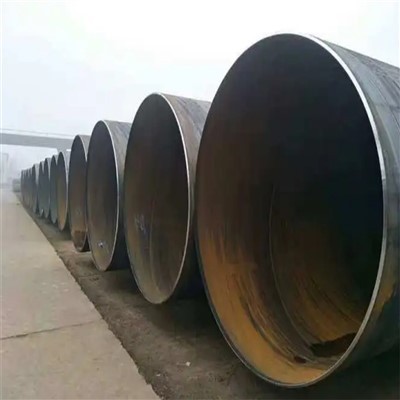
Hey there! I'm a supplier of straight seam steel pipes, and I've been in this business for quite a while. Over the years, I've noticed some pretty significant differences between the domestic and international markets for straight seam steel pipes. So, I thought I'd share my insights with you all.


Market Demand
First off, let's talk about market demand. In the domestic market, the demand for straight seam steel pipes is mainly driven by large - scale infrastructure projects, such as building construction, road and bridge construction, and the energy sector. The government often invests heavily in these areas, which creates a stable and relatively large - scale demand. For instance, the construction of high - speed railways and urban subways requires a huge amount of straight seam steel pipes for supporting structures and pipelines.
On the international market, the demand is more diversified. Different countries have different focuses based on their economic structures. In some developed countries, the demand for high - quality and high - precision straight seam steel pipes is high, especially in industries like aerospace, high - end manufacturing, and advanced energy (such as nuclear power). These industries require pipes with strict quality control and specific performance parameters. In developing countries, on the other hand, the demand is often related to basic infrastructure development, similar to the domestic situation but with different scales and requirements. They might be more price - sensitive and focus on more basic types of straight seam steel pipes.
Quality Standards
Quality standards are another major area of difference. In the domestic market, there are well - established national standards for straight seam steel pipes. These standards are designed to ensure the safety and performance of the pipes used in various domestic projects. Manufacturers need to comply with these standards during the production process, and there are strict quality inspections at different stages.
Internationally, the situation is more complex. Different countries and regions have their own quality standards. For example, in Europe, the EN standards are widely recognized. These standards often have more detailed requirements in terms of chemical composition, mechanical properties, and surface quality of the pipes. In the United States, the ASTM standards are commonly used. They also have specific regulations for different applications of straight seam steel pipes. As a supplier, when exporting to different international markets, we need to be well - aware of these different standards and adjust our production processes accordingly. For example, when producing P235GH Welded Pipe for the European market, we have to ensure that the pipe meets all the EN standards related to this type of pipe.
Pricing
Pricing is a very sensitive issue in both markets. In the domestic market, the price of straight seam steel pipes is influenced by factors such as raw material costs, production capacity, and domestic policies. The government may introduce some policies to regulate the steel market, which can have an impact on prices. Also, the domestic competition is quite intense, which also plays a role in price formation.
In the international market, pricing is affected by additional factors such as exchange rates, international trade policies, and transportation costs. When exporting, we need to consider the cost of transporting the pipes to the destination country, which can vary greatly depending on the distance and shipping method. Tariffs and trade barriers also have a significant impact on the final price. For example, if a country imposes high tariffs on imported straight seam steel pipes, the price for the local customers will increase significantly.
Marketing and Sales Channels
Marketing and sales channels also differ between the domestic and international markets. In the domestic market, we mainly rely on direct sales to large construction companies, energy companies, and distributors. Participating in domestic industry exhibitions and using domestic business platforms are also common ways to promote our products. We can also build long - term relationships with domestic customers through after - sales service and continuous communication.
In the international market, things are a bit more complicated. We need to use international trade platforms, participate in international exhibitions, and cooperate with local agents or distributors. Building a brand image in the international market takes more time and effort. We also need to adapt to different business cultures and communication styles. For example, in some Asian countries, building personal relationships is very important in business, while in Western countries, a more formal and data - driven approach is often preferred.
Product Variety
The product variety also shows differences. In the domestic market, we mainly focus on the types of straight seam steel pipes that are in high demand for domestic infrastructure projects. For example, large - diameter pipes for water supply and drainage systems and medium - sized pipes for building structures are very popular.
In the international market, there is a wider range of requirements. Some customers may need special - shaped straight seam steel pipes, or pipes with specific coatings for corrosion resistance. For instance, Straight Seam Stainless Steel Welded Pipe is in high demand in industries where corrosion resistance is crucial, such as the food processing and chemical industries. And A 106 Round Carbon Steel Pipe is often used in high - temperature and high - pressure applications in the international energy and power sectors.
Customer Service
Customer service expectations are different as well. In the domestic market, customers usually expect quick response times and on - site technical support. Since most domestic projects are large - scale and time - sensitive, any delay in solving problems can cause significant losses.
In the international market, customers may have different expectations. They may require more detailed product documentation, including test reports and certification. Also, due to the geographical distance, providing remote technical support and ensuring timely delivery are more challenging but also more important.
Conclusion
In conclusion, there are many differences between the domestic and international markets for straight seam steel pipes in terms of market demand, quality standards, pricing, marketing and sales channels, product variety, and customer service. As a supplier, we need to understand these differences and adapt our strategies accordingly. Whether you're in the domestic market looking for reliable straight seam steel pipes or an international customer with specific requirements, we're here to meet your needs. If you're interested in our products, feel free to reach out to us for more information and to start a procurement negotiation. We're confident that we can provide you with high - quality straight seam steel pipes at competitive prices.
References
- Industry reports on the steel pipe market
- National and international standards for straight seam steel pipes
- Personal experience in the straight seam steel pipe business