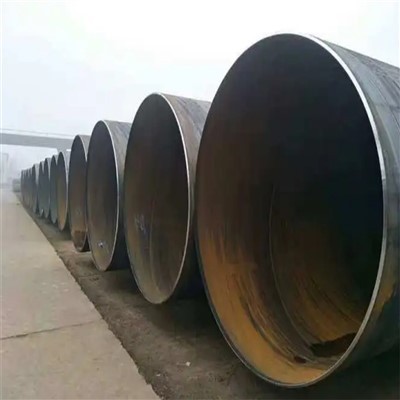
As a supplier of straight seam steel pipes, I often encounter inquiries from customers regarding the suitability of our products for high-temperature applications. This is a crucial question, as the performance of steel pipes under high temperatures can significantly impact the safety and efficiency of various industrial processes. In this blog post, I will delve into the factors that determine whether straight seam steel pipes are suitable for high-temperature use, and provide insights based on our experience in the industry.
Understanding the Basics of Straight Seam Steel Pipes
Straight seam steel pipes are manufactured by welding a steel plate along its length, resulting in a single longitudinal seam. This manufacturing process offers several advantages, including high production efficiency, good dimensional accuracy, and relatively low cost. Straight seam steel pipes are widely used in various industries, such as oil and gas, construction, and mechanical engineering.
Factors Affecting the Suitability of Straight Seam Steel Pipes for High-Temperature Applications
1. Material Composition
The material composition of the steel pipe is one of the most critical factors affecting its performance at high temperatures. Different steel grades have different chemical compositions, which determine their mechanical properties, corrosion resistance, and heat resistance. For high-temperature applications, steel grades with high chromium, nickel, and molybdenum contents are often preferred, as these elements can enhance the steel's strength, oxidation resistance, and creep resistance.
For example, our Versatile 16Mn Steel Pipe For Various Applications is a popular choice for many industrial applications. The 16Mn steel grade contains a certain amount of manganese, which improves the steel's strength and toughness. While it may not be suitable for extremely high-temperature environments, it can perform well in moderate-temperature applications.
On the other hand, our Premium 15NiCuMoNb5 Pipes For Industry is specifically designed for high-temperature and high-pressure applications. The addition of nickel, copper, molybdenum, and niobium enhances the steel's heat resistance, corrosion resistance, and weldability, making it an excellent choice for use in power plants, petrochemical industries, and other high-temperature environments.
2. Welding Quality
The quality of the weld seam is another important factor that can affect the performance of straight seam steel pipes at high temperatures. A well-welded seam ensures the integrity and strength of the pipe, while a poor-quality weld can lead to cracks, leaks, and other failures under high-temperature and high-pressure conditions.
At our company, we use advanced welding techniques and strict quality control measures to ensure the high quality of our straight seam steel pipes. Our welders are highly skilled and experienced, and we conduct comprehensive inspections on every pipe to ensure that the weld seam meets the required standards.
3. Temperature and Pressure Conditions
The specific temperature and pressure conditions of the application also play a crucial role in determining the suitability of straight seam steel pipes. Different steel grades have different temperature and pressure limits, and it is essential to select the appropriate pipe based on the actual operating conditions.
For example, in a high-temperature steam pipeline, the pipe needs to withstand both high temperatures and high pressures. In this case, a steel pipe with high heat resistance and pressure resistance, such as our ASTM A53 Straight Seam Welded Carbon Steel Pipe, may be a suitable choice. However, if the temperature exceeds the maximum allowable temperature of the steel grade, the pipe may experience deformation, creep, or other failures.
4. Corrosion Resistance
In high-temperature applications, corrosion can be a significant problem, especially in environments where the pipe is exposed to corrosive substances such as acids, alkalis, and salts. Corrosion can weaken the pipe's structure and reduce its service life, so it is essential to select a steel pipe with good corrosion resistance.
Some steel grades, such as stainless steel, have excellent corrosion resistance and can be used in highly corrosive environments. However, stainless steel pipes are generally more expensive than carbon steel pipes. In some cases, a combination of corrosion-resistant coatings and appropriate steel grades can be used to improve the pipe's corrosion resistance while keeping the cost under control.
Advantages of Using Straight Seam Steel Pipes in High-Temperature Applications
Despite the challenges associated with high-temperature applications, straight seam steel pipes offer several advantages that make them a viable option in many cases.
1. Cost-Effectiveness
Compared to other types of pipes, such as seamless steel pipes, straight seam steel pipes are generally more cost-effective. The manufacturing process of straight seam steel pipes is relatively simple and efficient, which allows for lower production costs. This makes them an attractive choice for applications where cost is a significant consideration.
2. Customizability
Straight seam steel pipes can be easily customized to meet the specific requirements of different applications. We can produce pipes in various sizes, wall thicknesses, and lengths, and we can also offer different surface treatments and coatings to improve the pipe's performance.
3. Wide Availability
Straight seam steel pipes are widely available in the market, which means that customers can easily source the pipes they need. This is especially important for projects with tight deadlines or where quick delivery is required.
Conclusion
In conclusion, straight seam steel pipes can be suitable for high-temperature applications, provided that the appropriate steel grade is selected, the welding quality is ensured, and the pipes are used within their temperature and pressure limits. At our company, we offer a wide range of straight seam steel pipes that are designed to meet the diverse needs of different industries. Our Versatile 16Mn Steel Pipe For Various Applications, Premium 15NiCuMoNb5 Pipes For Industry, and ASTM A53 Straight Seam Welded Carbon Steel Pipe are all excellent choices for high-temperature applications, depending on the specific requirements.
If you are considering using straight seam steel pipes for your high-temperature application, we encourage you to contact us for more information. Our team of experts can help you select the most suitable pipe for your needs and provide you with professional advice and support throughout the procurement process. Let's work together to ensure the success of your project.


References
- ASME Boiler and Pressure Vessel Code
- API Specification 5L
- ASTM Standards for Steel Pipes