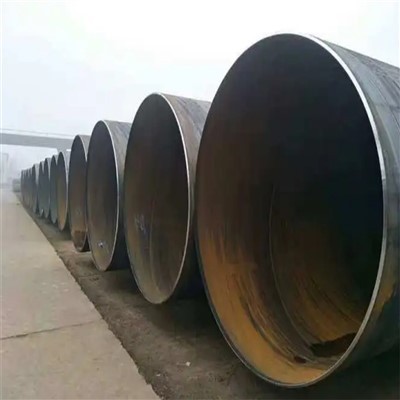
How to Measure the Hardness of Straight Seam Pipes
As a straight seam pipe supplier, I understand the critical importance of accurately measuring the hardness of our products. Hardness is a fundamental property that directly impacts the performance, durability, and suitability of straight seam pipes for various applications. In this blog post, I will delve into the different methods of measuring the hardness of straight seam pipes, the significance of hardness in pipe performance, and how we ensure the quality of our pipes through rigorous hardness testing.


Why Hardness Matters in Straight Seam Pipes
Hardness is a measure of a material's resistance to indentation, scratching, or abrasion. In the context of straight seam pipes, hardness plays a crucial role in determining their ability to withstand mechanical stress, wear, and corrosion. Pipes with the appropriate hardness are more likely to maintain their structural integrity over time, reducing the risk of failure and costly repairs.
For example, in applications where pipes are exposed to high-pressure fluids or abrasive materials, such as in the oil and gas industry or mining operations, pipes with high hardness are essential. These pipes can better resist the erosive effects of the flowing media and the mechanical forces exerted on them, ensuring a longer service life and improved safety.
On the other hand, in applications where pipes need to be bent or formed into specific shapes, such as in construction or automotive manufacturing, pipes with a certain level of ductility are required. Hardness testing helps us ensure that our pipes have the right balance of hardness and ductility to meet the specific requirements of each application.
Methods of Measuring Hardness
There are several methods available for measuring the hardness of straight seam pipes, each with its own advantages and limitations. The choice of method depends on various factors, such as the type of pipe material, the size and shape of the pipe, and the level of accuracy required.
Brinell Hardness Test
The Brinell hardness test is one of the oldest and most widely used methods for measuring the hardness of metals. In this test, a hard spherical indenter is pressed into the surface of the pipe under a specified load for a fixed period of time. The diameter of the indentation left on the surface is then measured, and the Brinell hardness number (BHN) is calculated based on the load and the diameter of the indentation.
The Brinell hardness test is suitable for measuring the hardness of large and thick-walled pipes, as it provides a relatively large indentation that is easy to measure. However, it is a destructive test, which means that it cannot be used on finished pipes without causing damage.
Rockwell Hardness Test
The Rockwell hardness test is another popular method for measuring the hardness of metals. In this test, a diamond cone or a hardened steel ball indenter is pressed into the surface of the pipe under a minor load, followed by a major load. The difference in the depth of penetration between the minor and major loads is measured, and the Rockwell hardness number (HR) is calculated based on this difference.
The Rockwell hardness test is a non-destructive test, which means that it can be used on finished pipes without causing damage. It is also a relatively quick and easy test to perform, making it suitable for high-volume production environments. However, it is less accurate than the Brinell hardness test for measuring the hardness of very hard or very soft materials.
Vickers Hardness Test
The Vickers hardness test is a more precise method for measuring the hardness of metals than the Brinell or Rockwell hardness tests. In this test, a diamond pyramid indenter is pressed into the surface of the pipe under a specified load for a fixed period of time. The diagonal length of the indentation left on the surface is then measured, and the Vickers hardness number (HV) is calculated based on the load and the diagonal length of the indentation.
The Vickers hardness test is suitable for measuring the hardness of small and thin-walled pipes, as well as for measuring the hardness of different phases or microstructures within a material. It is also a non-destructive test, which means that it can be used on finished pipes without causing damage. However, it is a more time-consuming and expensive test to perform than the Brinell or Rockwell hardness tests.
Ensuring Quality through Hardness Testing
As a straight seam pipe supplier, we are committed to providing our customers with high-quality pipes that meet or exceed their expectations. To ensure the quality of our pipes, we conduct rigorous hardness testing at every stage of the manufacturing process.
Before the pipes are manufactured, we test the raw materials to ensure that they have the appropriate hardness and other mechanical properties. During the manufacturing process, we perform in-process hardness testing to monitor the quality of the pipes and make any necessary adjustments to the manufacturing parameters. After the pipes are finished, we conduct final hardness testing to ensure that they meet the specified hardness requirements.
We use state-of-the-art hardness testing equipment and follow international standards and best practices to ensure the accuracy and reliability of our test results. Our experienced technicians are trained to perform the hardness tests correctly and to interpret the results accurately.
Our Product Range
We offer a wide range of straight seam pipes to meet the diverse needs of our customers. Our product range includes ASTM A240m Welded Cold Rolled Steel Pipe, ASTM A53 Carbon Steel Pipe, and STPG410 Steel Welded Pipe.
These pipes are made from high-quality materials and are manufactured using advanced welding and forming techniques to ensure their strength, durability, and reliability. They are available in various sizes, wall thicknesses, and lengths to meet the specific requirements of each application.
Contact Us for Procurement and Consultation
If you are in the market for high-quality straight seam pipes, we would be happy to hear from you. Our team of experts can provide you with detailed information about our products, including their hardness, mechanical properties, and applications. We can also help you select the right pipes for your specific needs and provide you with a competitive quote.
Whether you are a small business or a large corporation, we are committed to providing you with the best possible service and support. Contact us today to start the procurement process and take the first step towards ensuring the success of your project.
References
- ASM Handbook, Volume 8: Mechanical Testing and Evaluation. ASM International, 2000.
- ASTM International Standards for Hardness Testing of Metals. ASTM International, 2023.
- ISO Standards for Hardness Testing of Metals. International Organization for Standardization, 2023.