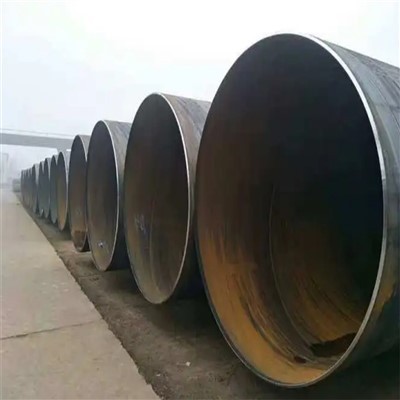
As a supplier of Submerged Arc Welded (SSAW) pipes, safety in production is not only a legal requirement but also a moral obligation. Ensuring safety throughout the SSAW pipe production process is crucial to protect workers, maintain product quality, and uphold the reputation of our business. In this blog, I will share some key measures that we implement to guarantee safety in SSAW pipe production.
1. Employee Training and Education
The first step in ensuring safety is to have well - trained employees. We provide comprehensive training programs for all workers involved in the SSAW pipe production. New employees go through an on - boarding training that covers basic safety procedures, such as proper use of personal protective equipment (PPE), emergency evacuation routes, and hazard recognition.
For employees in specific roles, like welders and machine operators, we offer specialized training. Welders are trained in the correct welding techniques to prevent weld defects and potential safety hazards. They learn about different types of welding electrodes, welding parameters, and how to handle welding equipment safely. Machine operators, on the other hand, are trained to operate complex machinery, such as pipe forming machines and cutting equipment. They are taught about machine maintenance, safety interlocks, and how to troubleshoot common problems.
Regular refresher courses are also conducted to keep employees updated on the latest safety standards and best practices. These courses are often based on industry research and feedback from safety audits. By investing in employee training, we empower our workforce to identify and address safety issues proactively.
2. Workplace Safety Design and Layout
The design and layout of the production workspace play a significant role in ensuring safety. Our production facility is designed with safety in mind. We have clearly marked walkways and work areas to prevent collisions between workers and moving equipment. Adequate lighting is installed throughout the facility to ensure good visibility, especially in areas where precision work is required, such as welding stations.
Machinery is arranged in a logical manner to minimize the risk of entanglement and other mechanical hazards. There are also sufficient clearance spaces around each machine for maintenance and emergency access. Additionally, we have installed safety guards and barriers around dangerous machinery parts, such as rotating shafts and moving belts. These guards are designed to prevent accidental contact and are regularly inspected to ensure they are in good working condition.
We also pay attention to the ventilation system in the production area. Welding and other manufacturing processes can produce harmful fumes and gases. A well - designed ventilation system helps to remove these pollutants from the workplace, protecting workers from respiratory problems and other health issues.
3. Quality Control of Raw Materials
The quality of raw materials used in SSAW pipe production is directly related to safety. We source our raw materials, mainly steel coils, from reliable suppliers. Before using any raw material, we conduct a series of quality inspections. These inspections include checking the chemical composition, mechanical properties, and surface quality of the steel coils.
For example, the chemical composition of the steel must meet specific standards to ensure the strength and durability of the final pipe product. We use advanced testing equipment, such as spectrometers, to analyze the chemical elements in the steel. Mechanical property tests, such as tensile tests and hardness tests, are also performed to ensure that the steel can withstand the stresses during the pipe - making process and in its intended application.
Surface quality is equally important. Any defects on the surface of the steel coil, such as cracks or scratches, can lead to weak points in the final pipe. These weak points may cause the pipe to fail under pressure, posing a safety risk. By ensuring the quality of raw materials, we lay a solid foundation for safe SSAW pipe production.
4. Welding Process Safety
Welding is a critical process in SSAW pipe production, and safety during welding is of utmost importance. We follow strict welding procedures to ensure the quality and safety of the welds. First, we use high - quality welding consumables that are compatible with the base metal. The selection of welding consumables is based on the specific requirements of the pipe, such as its application and the expected service conditions.
During the welding process, we monitor key parameters, such as welding current, voltage, and welding speed. These parameters are carefully controlled to ensure a consistent and strong weld. Welders are also trained to detect and correct any welding defects, such as porosity or lack of fusion, immediately.


To protect welders from the harmful effects of welding, we provide them with appropriate PPE, including welding helmets, gloves, and protective clothing. The welding area is also equipped with local exhaust ventilation to remove welding fumes at the source.
5. Non - destructive Testing (NDT)
Non - destructive testing is an essential part of ensuring the safety of SSAW pipes. After the pipes are manufactured, we conduct a series of NDT procedures to detect any internal or external defects without damaging the pipes. Common NDT methods used in our production include ultrasonic testing (UT), radiographic testing (RT), and magnetic particle testing (MT).
Ultrasonic testing is used to detect internal defects, such as cracks and inclusions, within the pipe wall. High - frequency sound waves are sent through the pipe, and any reflections from defects are detected and analyzed. Radiographic testing uses X - rays or gamma rays to create an image of the internal structure of the pipe. This method can detect both internal and external defects with high accuracy. Magnetic particle testing is mainly used to detect surface and near - surface defects in ferromagnetic materials, such as steel.
By performing NDT, we can identify and remove any defective pipes from the production line before they are shipped to customers. This helps to ensure that only high - quality and safe pipes are delivered to the market.
6. Emergency Preparedness
Despite all the preventive measures, emergencies can still occur in the production process. Therefore, we have a comprehensive emergency preparedness plan in place. This plan includes procedures for handling various types of emergencies, such as fires, explosions, and chemical spills.
We have installed fire - fighting equipment, such as fire extinguishers and sprinkler systems, throughout the production facility. Regular fire drills are conducted to ensure that employees know how to use this equipment and how to evacuate the building safely in case of a fire.
In the event of a chemical spill, we have a spill response team that is trained to handle different types of chemicals. They are equipped with appropriate protective gear and spill - containment materials. The emergency preparedness plan also includes contact information for local emergency services, such as fire departments and hospitals.
7. Continuous Improvement
Safety in SSAW pipe production is an ongoing process. We regularly review and evaluate our safety management system to identify areas for improvement. We collect feedback from employees, customers, and industry experts to gain different perspectives on safety issues.
Based on this feedback, we implement corrective and preventive actions. For example, if we find that a particular machine has a high risk of causing accidents, we may modify the machine or change the operating procedures. We also stay updated on the latest safety regulations and industry standards and make sure that our production processes comply with them.
In conclusion, ensuring safety in SSAW pipe production requires a comprehensive approach that covers all aspects of the production process, from employee training to emergency preparedness. By implementing these safety measures, we not only protect the well - being of our workers but also produce high - quality pipes that meet the safety requirements of our customers.
If you are interested in purchasing high - quality and safe SSAW pipes, such as L290 Spiral Welded Pipe, SSAW Carbon Steel Tube, or Q235 Spiral Welded Steel Pipe, please feel free to contact us for more information and to start a procurement negotiation.
References
- American Society of Mechanical Engineers (ASME) standards for pressure piping
- International Organization for Standardization (ISO) standards related to steel pipe manufacturing
- Welding Handbook, published by the American Welding Society