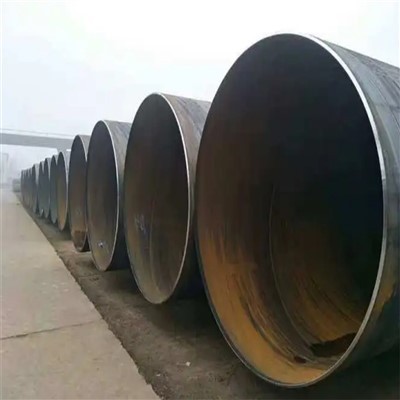
The carbon content in SSAW (Submerged Arc Welded) carbon steel tubes plays a crucial role in determining their properties. As a supplier of SSAW carbon steel tubes, I have witnessed firsthand how different carbon levels can lead to significant variations in the performance and applications of these tubes. In this blog, I will delve into the ways in which carbon content affects the properties of SSAW carbon steel tubes.
1. Strength and Hardness
One of the most notable effects of carbon content on SSAW carbon steel tubes is its impact on strength and hardness. Generally, as the carbon content increases, the strength and hardness of the steel also increase. Carbon atoms are smaller than iron atoms and can fit into the interstitial spaces within the iron lattice. When carbon is added to steel, it forms iron - carbide compounds, which act as obstacles to the movement of dislocations in the crystal structure. This restricts the plastic deformation of the steel, thereby increasing its strength and hardness.
For low - carbon SSAW carbon steel tubes (typically with carbon content less than 0.3%), they have relatively low strength and hardness. These tubes are more ductile and malleable, making them suitable for applications where forming and bending are required. For example, they can be used in the construction of frames and structures that need to be shaped easily during the installation process.
On the other hand, medium - carbon (carbon content between 0.3% - 0.6%) and high - carbon (carbon content above 0.6%) SSAW carbon steel tubes offer higher strength and hardness. Medium - carbon steel tubes are often used in applications that require a balance between strength and ductility, such as in the manufacturing of machinery parts and automotive components. High - carbon steel tubes, with their extremely high strength and hardness, are used in applications where wear resistance is crucial, like in the production of cutting tools and springs.
2. Ductility and Toughness
Ductility is the ability of a material to deform plastically before fracture, while toughness is the ability to absorb energy during deformation and resist crack propagation. As the carbon content in SSAW carbon steel tubes increases, the ductility and toughness of the steel generally decrease.


In low - carbon steel tubes, the relatively small amount of carbon allows for easy movement of dislocations, enabling the steel to undergo significant plastic deformation without fracturing. This high ductility makes them suitable for processes such as cold - forming and welding. When a low - carbon SSAW carbon steel tube is bent or stretched, it can accommodate the deformation without breaking, which is essential for many construction and manufacturing applications.
However, as the carbon content rises, the formation of iron - carbide compounds becomes more extensive. These compounds are brittle and can act as initiation sites for cracks. As a result, high - carbon SSAW carbon steel tubes are more prone to cracking under stress and have lower ductility and toughness. For instance, in a high - carbon steel tube, a small impact or excessive stress can cause a crack to form and propagate rapidly, leading to sudden failure.
3. Weldability
Weldability is an important property for SSAW carbon steel tubes, as welding is a common joining method in many applications. The carbon content has a significant influence on the weldability of these tubes.
Low - carbon SSAW carbon steel tubes have excellent weldability. The low carbon content reduces the risk of forming hard and brittle martensite during the welding process. Martensite is a hard and brittle phase that can form when the steel is rapidly cooled after welding, and it can lead to cracking in the weld zone. Since low - carbon steel has a lower hardenability, the heat - affected zone (HAZ) during welding remains relatively soft and ductile, minimizing the chances of weld defects.
As the carbon content increases, the weldability of SSAW carbon steel tubes deteriorates. Medium - and high - carbon steel tubes are more likely to form martensite in the HAZ during welding, which can cause cracking and reduced mechanical properties in the weld area. Special welding techniques and pre - and post - welding heat treatments may be required to improve the weldability of these tubes. For example, pre - heating the tube before welding can slow down the cooling rate and prevent the formation of martensite, while post - welding heat treatment can relieve the internal stresses and improve the toughness of the weld.
4. Corrosion Resistance
The carbon content in SSAW carbon steel tubes also affects their corrosion resistance. In general, higher carbon content tends to reduce the corrosion resistance of steel.
Low - carbon SSAW carbon steel tubes have a relatively uniform microstructure, which provides better corrosion resistance compared to high - carbon steel. The presence of less carbon means fewer iron - carbide compounds, which can act as anodes in a corrosion cell. When exposed to a corrosive environment, the uniform surface of low - carbon steel is less likely to form localized corrosion sites.
High - carbon SSAW carbon steel tubes, with their higher concentration of iron - carbide compounds, are more susceptible to corrosion. The iron - carbide phases are more electrochemically active than the ferrite phase in steel, creating a galvanic cell where the iron - carbide acts as the anode and the ferrite acts as the cathode. This leads to preferential corrosion of the iron - carbide, resulting in pitting and general corrosion of the tube surface.
Applications Based on Carbon Content
The different properties of SSAW carbon steel tubes due to varying carbon content make them suitable for a wide range of applications.
For low - carbon SSAW carbon steel tubes, their good ductility and weldability make them ideal for applications in the construction industry. They are used in building frames, pipelines for water and gas distribution, and structural components where easy fabrication and welding are required. You can find more information about SSAW Spiral Welded Pipe on our website.
Medium - carbon SSAW carbon steel tubes are commonly used in the manufacturing of machinery parts, such as shafts, gears, and axles. Their balance of strength and ductility allows them to withstand the mechanical stresses and loads in these applications. The Spiral Welded Pipe With X42 is an example of a medium - carbon steel pipe that is widely used in the oil and gas industry.
High - carbon SSAW carbon steel tubes are mainly used in applications where high strength and wear resistance are needed. They are used in the production of cutting tools, springs, and wire ropes. The A672 B55 B60 B65 B70 SSAW Pipe is a type of high - strength carbon steel pipe that can be used in high - pressure applications.
Conclusion
In conclusion, the carbon content has a profound impact on the properties of SSAW carbon steel tubes. It affects the strength, hardness, ductility, toughness, weldability, and corrosion resistance of these tubes. As a supplier of SSAW carbon steel tubes, we understand the importance of selecting the right carbon content for different applications. Whether you need low - carbon tubes for easy fabrication, medium - carbon tubes for balanced performance, or high - carbon tubes for high - strength and wear - resistant applications, we can provide you with the suitable products.
If you are interested in purchasing SSAW carbon steel tubes or have any questions about the products, please feel free to contact us for further discussion and negotiation. We are committed to providing high - quality products and excellent service to meet your needs.
References
- ASM Handbook Committee. (2004). ASM Handbook Volume 1: Properties and Selection: Irons, Steels, and High - Performance Alloys. ASM International.
- Callister, W. D., & Rethwisch, D. G. (2010). Materials Science and Engineering: An Introduction. Wiley.
- Degarmo, E. P., Black, J. T., & Kohser, R. A. (2003). Materials and Processes in Manufacturing. Wiley.