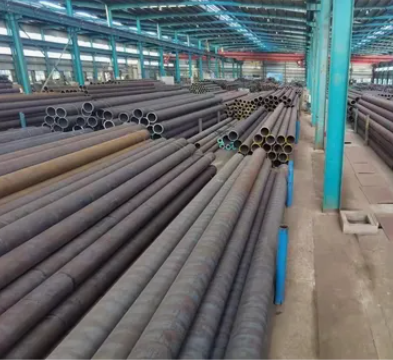
**1. What are the 3 grades of steel pipe?**
Common grades of steel pipe include:
- **ASTM A53**: Used for structural and low-pressure plumbing. Available in seamless/welded types (Grade A and B).
- **ASTM A106**: Designed for high-temperature service (e.g., boilers, refineries). Focuses on seamless pipes.
- **ASTM A500**: Structural tubing for construction (e.g., columns, frames). Available in Grades A, B, C, and D, with increasing strength.
**2. What is the difference between A53 and A500 steel pipe?**
- **Application**:
- A53: Plumbing, low-pressure systems, and general-purpose use.
- A500: Structural frameworks (buildings, bridges).
- **Material/Strength**:
- A53 (Grade B) has a minimum yield strength of 35 ksi.
- A500 (Grade C) offers higher strength (50 ksi yield).
- **Manufacturing**:
- A53: Seamless or welded.
- A500: Cold-formed welded (no seamless option).
**3. What is the best grade of steel?**
There is no universal "best" grade-it depends on the application:
- **304 Stainless Steel**: Corrosion resistance (food processing, marine).
- **4140 Alloy Steel**: High strength/toughness (gears, axles).
- **AR400/500**: Abrasion resistance (mining, construction equipment).
- **API 5L X70/X80**: High-strength pipelines (oil/gas transport).
**4. What steel pipe is the strongest?**
The strongest steel pipes are typically **high-grade alloys or specialized steels**:
- **Maraging Steel (e.g., Grade 300)**: Ultra-high tensile strength (2000+ MPa), used in aerospace/defense.
- **API 5L X120**: High-strength pipeline steel for extreme-pressure oil/gas transport.
- **HY-100/130**: Military-grade steel for submarines/ships (high yield strength and toughness).
Strength depends on heat treatment, alloy composition, and manufacturing methods.
5.Which grade steel pipe is best?
The best grade of steel pipe depends on the application:
- **ASTM A53/A106**: General-purpose, plumbing, or high-temperature fluids.
- **API 5L (X42-X80)**: Oil/gas pipelines.
- **ASTM A500**: Structural uses.
- **ASTM A335 (e.g., P11/P22)**: High-temperature/pressure (power plants).
Choose based on requirements like strength, corrosion resistance, and environment.