


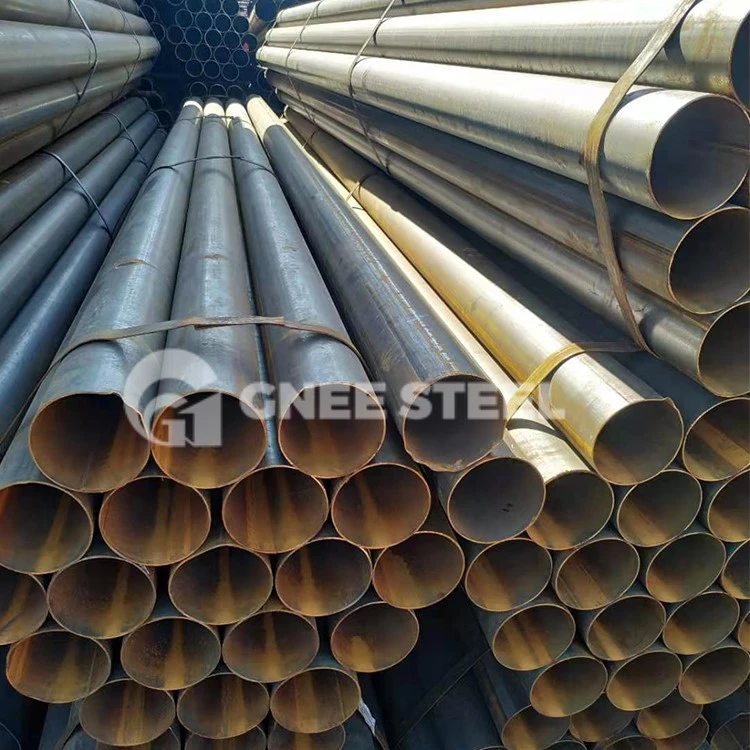
Welded steel pipe refers to the process of connecting two ends or parts of a steel pipe together through a welding process. This is a common metal processing and connection method, commonly used in many fields such as construction, manufacturing, and pipeline systems.
Welding method
1. Arc welding: This is a common welding method that uses an electric current to generate an arc to heat the electrode or wire to a high enough temperature to connect the workpieces to each other.
2. Gas shielded welding (TIG/MIG welding): TIG (argon arc welding) and MIG (metal inert gas welding) are commonly used gas shielded welding methods. They use inert gases such as argon to protect the welding area from oxygen and other impurities in the air.
3. Resistance welding: The workpieces are heated to a sufficient temperature through resistance, and then pressure is applied to connect them together. This method is often used to connect small diameter pipes.
Welding method classification:
Straight seam welded pipe (ERW pipe): manufactured using resistance welding or high-frequency induction welding methods, commonly used for general engineering and structural purposes.
Spiral seam welded pipe: manufactured using spiral submerged arc welding process, suitable for conveying fluids, structural purposes, and oil and gas pipelines.

Welding material classification:
Black welded pipe: Steel pipe without galvanizing or other anti-corrosion treatment on the surface, mainly used for general structural and engineering applications.
Galvanized welded pipe: The surface is galvanized to improve corrosion resistance, suitable for environments requiring higher corrosion resistance, such as water pipes.
Application field classification:
Structural welded pipe: Used in construction and structural engineering, bearing static and dynamic loads.
Fluid transport welded pipe: Used to transport water, gas, oil and other fluids.
Oil and gas pipeline welded pipe: Pipes dedicated to transporting oil and gas, usually require higher strength and corrosion resistance.
Application field
1. Building and infrastructure: Used for support, bridges, stairs, railings, etc. of building structures. Welded steel pipes are often used in buildings to build frames and support systems.
2. Pipelines and transportation systems: As the main component of pipelines that transport liquids (such as water, oil, natural gas) or gases (such as gas pipelines). Welded steel pipes are widely used in water supply systems, natural gas pipelines and oil and gas transportation.
3. Industry and manufacturing: Used for manufacturing equipment, mechanical structures and processing industrial purposes. Welded steel pipes can be used to build industrial equipment, machinery parts, and manufacturing lines.
4. Oil and gas industry: as pipelines for oil and gas. These pipelines require high strength and corrosion resistance, so welded steel pipes are very important in fields such as oil extraction, transportation, and refining.


