


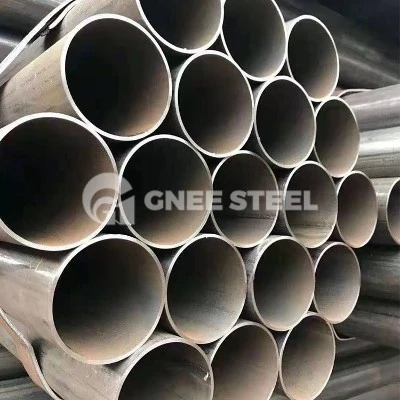
P355GH is a low alloy high strength pressure vessel steel plate under European standards. Its welded pipe form is a pipe made of this material steel plate by welding process. The core characteristics and applications are as follows:
1. Material definition and standard
Standard affiliation: Execute EN 10028-2 standard (pressure vessel steel plate specification), welded pipe manufacturing must comply with welding process standards (such as EN 10217);
Grade analysis:
P: Pressure vessel (Pressure vessel);
355: Minimum yield strength ≥355 MPa (normal temperature, thickness ≤16mm);
G: Fine grain steel (Gefüge);
H: High temperature application (High temperature).
2. Chemical composition (%)
| Element | C | Si | Mn | P≤ | S≤ | Nb,V,Ti |
|---|---|---|---|---|---|---|
| Scope | 0.10–0.22 | ≤0.60 | 1.10–1.70 | 0.025 | 0.010 | ≤0.09(Total) |
3. Mechanical properties
| State | Yield Strength | Tensile Strength | Elongation | Impact toughness(-20℃) |
|---|---|---|---|---|
| Normal Temperature | ≥355 MPa | 510–650 MPa | ≥22% | ≥27 J 45 |
| High temperature 300℃ | ≥285 MPa | -- | -- | -- |
4. Manufacturing and Process
Delivery Status: Normalizing treatment (to improve the uniformity of the structure);
Welding Requirements: Preheating before welding ≥100℃ (to prevent cold cracks);
Submerged Arc Welding (SAW) or High Frequency Welding (HFW) is recommended;
Acceptance Criteria: 100% ultrasonic flaw detection of welds (required for thick-walled pipes);
Provide EN 10204-3.1 warranty.
5. Application Areas
High-temperature pressure vessels: Boiler drums (300–400℃ long-term service);
Chemical pipelines: Reactor heat exchange tubes (resistant to hydrogen sulfide corrosion);
Energy equipment: Power station main steam pipelines (resistant to short-term high temperatures of 540℃).


