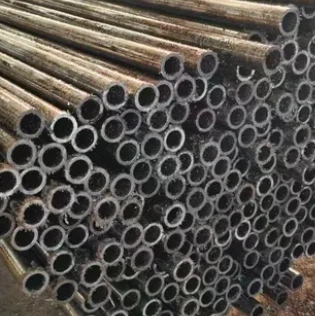
1. **ASTM A722**: This standard covers high-strength, uncoated steel bars for prestressing concrete structures. These bars are cold-drawn and have a specified minimum tensile strength significantly higher than standard reinforcement bars, typically available in grades of 1035 MPa (150 ksi) and 1080 MPa (160 ksi). They are used in applications like bridge girders, piles, and other structural elements requiring high tensile capacity.
2. **ASTM B743**: This specification covers seamless tubes made from UNS C70600 copper-nickel alloy (90-10 CuNi), specifically intended for condenser and heat exchanger service where resistance to seawater corrosion is critical. These tubes are supplied in the annealed condition and are commonly used in marine environments, power plants, and desalination plants.
3. **ASTM C780**: This standard provides the test method for preconstruction and construction evaluation of mortars and shotcrete (sprayed concrete) mixtures intended for use under field conditions. It covers procedures for measuring properties like consistency, density, air content, and compressive strength of laboratory-prepared specimens representing the job mixture proportions. Its primary purpose is evaluating potential mixture proportions before construction begins and monitoring consistency during construction.
4. **ASTM C177**: This is the standard test method for determining the steady-state thermal transmission properties (thermal conductivity) of flat, homogeneous insulation materials using the guarded-hot-plate apparatus. It measures the rate of heat flow through a material under controlled temperature gradients. This method is considered a primary, absolute technique for establishing thermal conductivity reference values and is used for precise laboratory measurements of low-thermal-conductivity materials.
5. **ASTM A529**: This specification covers carbon-manganese steel structural shapes, plates, and bars primarily intended for riveted, bolted, or welded construction where improved strength and notch toughness over mild steel (like ASTM A36) are beneficial, but high-strength steel (like ASTM A572) is not required. It provides minimum yield and tensile strength requirements and is commonly used in non-critical structural applications like buildings, bridges, and general construction.