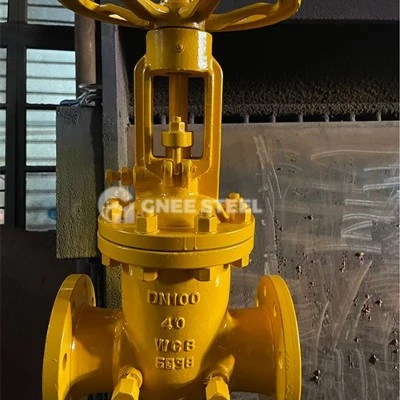
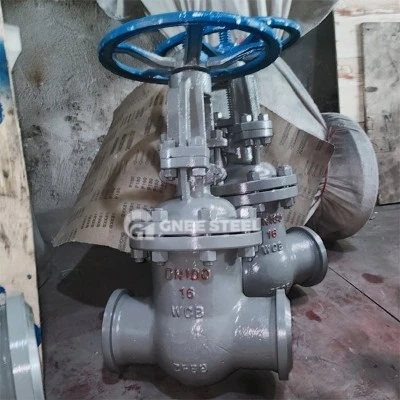
A wedge gate valve is a type of valve that controls the flow of fluid by raising and lowering a gate (disc). It is a shutoff valve and is widely used in pipeline systems. The following is a detailed explanation of gate valves:
Working Principle
A wedge gate valve uses a handwheel or actuator to rotate the valve stem, which drives the gate disc vertically upward and downward.
Open: The gate disc rises to the top of the valve chamber, allowing fluid to flow freely.
Closed: The gate disc descends to the valve seat, completely blocking fluid flow.
The sealing surface is perpendicular to the flow direction, and the seal is achieved by the tight fit between the gate disc and the valve seat.
Core Structure
Valve body: The main body that connects to the pipeline and withstands fluid pressure.
Gate: The core component, available in two types: wedge (single wedge and double wedge) and parallel types.
Wedge gate: A wedge-shaped gate disc achieves self-sealing through its wedge angle and is suitable for high-temperature and high-pressure applications.
Parallel gate: A simpler structure and easily repairable sealing surface after wear, but with slightly lower sealing performance.
Valve seat: The valve seat forms the sealing surface with the gate disc and must be made of a material compatible with the fluid. Valve stem: Connects the handwheel and the gate, transmitting power.
Sealing device: Includes a stuffing box (to prevent leakage at the valve stem) and a bonnet seal.
Main Features
Advantages:
Low fluid resistance: The flow path is unobstructed when fully open, with low pressure loss.
Good sealing: The gate fits tightly against the valve seat, making it suitable for applications with high sealing requirements.
High-temperature and high-pressure resistance: Wedge-type gate valves can withstand extreme operating conditions.
Bidirectional flow: No flow restrictions, flexible installation.
Disadvantages:
Long opening and closing time: The gate must be raised and lowered vertically, resulting in slower movement.
Complex structure: Multiple parts, making maintenance more difficult than a globe valve.
Susceptible to wear on the sealing surface: Frequent opening and closing may cause leakage.
Applications
Oil and gas: Long-distance pipelines, refineries, and natural gas processing stations.
Chemical industry: Pipelines for corrosive media.
Power sector: Boiler feed water and steam pipelines.
Water treatment: Waterworks and sewage treatment plants. Shipbuilding and Metallurgy: Ship piping systems, blast furnace cooling water piping.
Selection Key Points
Media Type: Corrosive media require corrosion-resistant materials (such as stainless steel and alloy steel).
Pressure Rating: Select the nominal pressure (PN) that matches the system pressure.
Temperature Range: Thermal expansion compensation should be considered for high-temperature applications.
Sealing Requirements: Wedge gate valves are preferred for high-sealing applications.
Actuation Mode: Manual, electric, pneumatic, or hydraulic, depending on automation requirements.
Maintenance and Troubleshooting
Regular Inspection: Check for sealing surface wear and valve stem lubrication.
Common Faults:
Leakage: Damaged sealing surfaces or aging packing require grinding or replacement of seals.
Difficulty Opening and Closing: Bent valve stem or impurities blocking the valve stem require cleaning or correction.
Noise: Turbulent flow or cavitation require optimized flow path design.