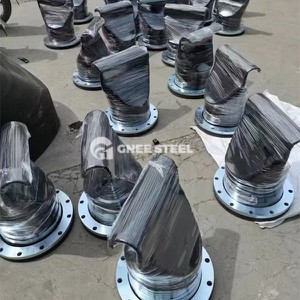
What is a flanged check valve?
A flanged check valve is a valve that automatically opens and closes based on the flow of the medium itself, preventing backflow within pipelines. Its flange connection facilitates installation and disassembly, providing excellent sealing performance. It is widely used in the petroleum, chemical, and power industries. According to the American Petroleum Institute (API 594), the nominal pressure range for flanged check valves is typically PN10-PN420 (corresponding to Classes 150-2500), and the applicable temperature range is -196°C to 550°C (if using special materials).
How does a flanged check valve work?
A flanged check valve primarily uses the weight of the valve core and the opposing force of the fluid to close the valve, preventing backflow. Its simple structure and easy maintenance make it suitable for use in various pipeline systems, including hydraulic projects, chemical plants, and power plants, for flow control and backflow prevention. When the flow direction of the medium is opposite to the valve's forward, backward, left, and right orientation, the valve automatically closes, preventing damage to the pipeline system caused by backflow.
Maintenance of Flange Check Valves
Flange check valves have a long service life, but they still require maintenance and care during long-term use. Routine maintenance methods include the following:
1. Regularly inspect the valve's sealing performance, including the valve cover, disc, and flange connections for leaks.
2. Clean and lubricate the valve promptly after use and after shutdown to prevent rust, seizure, or operational stiffness.
3. Inspect the valve's spring for signs of aging, deformation, or failure, and replace if necessary to ensure proper opening and closing.
4. Perform regular maintenance and troubleshooting to ensure proper valve operation and extend its service life.