### 1. Difference between DSAW and LSAW Pipes
**DSAW (Double Submerged Arc Welded)** pipes are welded on both the inside and outside of the pipe wall using the submerged arc welding process. This creates two weld seams.
**LSAW (Longitudinal Submerged Arc Welded)** pipes are welded along a single longitudinal seam (either inside, outside, or both). LSAW pipes are typically made from steel plates bent into a cylindrical shape.
**Key Difference**: DSAW has welds on both surfaces; LSAW has one longitudinal seam. DSAW is often used for larger diameters (>24 inches), while LSAW suits moderate to large diameters.
---
### 2. Seamless vs. ERW Pipe: Which is Better?
Neither is universally "better" – the choice depends on application:
- **Seamless Pipe**: Made by extruding solid billets. Has no welded seams, offering uniform strength and higher pressure/temperature resistance. Ideal for critical applications (e.g., oil/gas, high-pressure systems).
- **ERW (Electric Resistance Welded) Pipe**: Formed by rolling steel coil and welding the seam electrically. More cost-effective, with consistent dimensions. Suitable for low/medium-pressure uses (e.g., water, structural).
**Selection**: Choose seamless for extreme conditions; ERW for cost efficiency and standard pressures.
---
### 3. What is a DSAW Pipe?
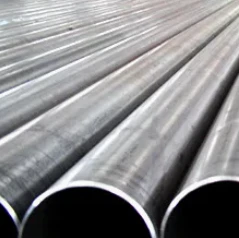
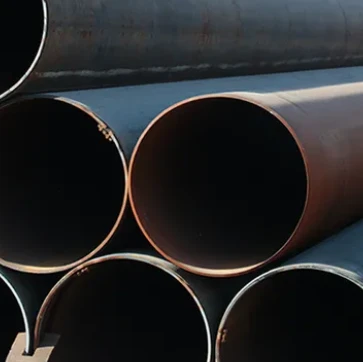
A **DSAW (Double Submerged Arc Welded) pipe** is manufactured by forming steel plates into a cylinder and welding the longitudinal seam using submerged arc welding on both the inner and outer surfaces. This dual-weld process enhances structural integrity, making DSAW pipes suitable for large-diameter, high-pressure applications like oil/gas transmission pipelines, especially in sizes above 24 inches.
---
### 4. Difference Between Pressure Pipe and Open Channel Hydraulics
- **Pressure Pipe Flow**: Fluid flows under pressure, completely filling the pipe cross-section (e.g., water supply pipes). Forces are driven by pressure gradients, and flow responds to pump/valve actions.
- **Open Channel Flow**: Fluid flows with a free surface exposed to atmospheric pressure, driven by gravity (e.g., rivers, canals). Flow depth and velocity depend on channel slope, roughness, and shape.
---
### 5. Why Open Channel Flow is More Complex Than Pipe Flow
Open channel flow is more complex due to:
- **Free Surface**: The flow depth can change dynamically, influenced by gravity, slope, and obstacles.
- **Varied Geometry**: Channels have irregular shapes (natural rivers) or non-uniform sections (canals), affecting flow patterns.
- **External Factors**: Rainfall, wind, and sediment transport add variability.
- **Flow Regimes**: Transition between subcritical (smooth) and supercritical (rapid) flow creates hydraulic jumps and instabilities.
In contrast, pipe flow is confined, pressurized, and typically steady, with predictable behavior governed by fixed boundaries.