1. **What is API 5L equivalent to ASTM?**
API 5L is a specification for line pipe established by the American Petroleum Institute (API). Its closest equivalent in ASTM standards is **ASTM A53** (for general use) and **ASTM A106** (for high-temperature service). However, API 5L is more specialized for oil and gas transportation, while ASTM standards cover broader applications.
2. **What does X65 pipe mean?**
X65 refers to a grade of steel pipe under the API 5L specification, indicating a minimum yield strength of **65,000 psi (448 MPa)**. It is commonly used in high-pressure oil and gas pipelines due to its balance of strength and toughness.
3. **What is API steel pipe?**
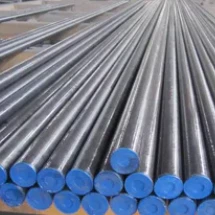
API steel pipe refers to pipes manufactured according to standards set by the American Petroleum Institute (API), such as **API 5L** for line pipe or **API 5CT** for casing and tubing. These pipes are designed for use in the oil and gas industry, ensuring specific mechanical properties, chemical composition, and performance under demanding conditions.
4. **What does X65 mean?**
In API 5L, **X65** designates a pipe grade with a minimum yield strength of **65,000 psi (448 MPa)**. The "X" denotes high-strength material, and the number represents the yield strength in ksi (kilo-pounds per square inch). X65 pipes are widely used in medium-to-high-pressure pipeline systems.
5. **What is API 5L X60 PSL2 specification?**
API 5L X60 PSL2 specifies a line pipe with:
- Minimum yield strength of **60,000 psi (414 MPa)**.
- Compliance with **PSL2 (Product Specification Level 2)**, which requires stricter controls on chemical composition, mechanical properties, toughness testing (e.g., Charpy V-notch), and non-destructive inspection compared to PSL1.
- Used in critical environments like offshore or high-pressure transmission pipelines.
(Note: PSL2 ensures higher reliability for severe service conditions.)