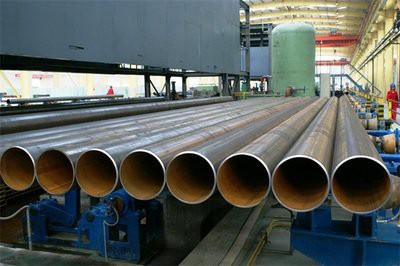

1. Material Composition
Q: What materials are commonly used for welded pipes in idler rollers?
A: Typically low-carbon steel (e.g., Q235, ASTM A36) or carbon structural steel (e.g., #20 steel, ASTM A53) for balanced strength, weldability, and wear resistance.
2. Key Manufacturing Steps
Q: What are the critical processes in producing these welded pipes?
A:
Strip forming → High-frequency welding (HFW) → Deburring → Sizing/Straightening → Non-destructive testing (NDT, e.g., ultrasonic/eddy current).
3. Standard Dimensions
Q: What are the standard specifications for idler roller pipes?
A:
OD: 60–219 mm | Wall thickness: 2.0–8.0 mm | Length: Custom (e.g., 500–1500 mm per segment).
Tolerance standards: ISO 3183 or ASTM A53 for dimensional accuracy.
4. Quality Control Metrics
Q: How to ensure pipe straightness and roundness?
A:
Laser-guided calibration during rolling.
Post-production checks: ≤0.5 mm/m straightness deviation, ≤1% ovality.
5. Surface Treatments
Q: What coatings or treatments are applied?
A:
Galvanization (Zinc coating) for rust prevention.
Epoxy powder coating for corrosive environments (e.g., mining).
Optional: Internal polishing to reduce friction.