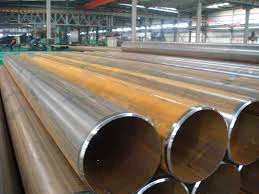

Q1: What should be paid attention to when installing Q275 steel pipe?
Before installing Q275 steel pipe, check whether the specifications and models meet the design requirements. Use special lifting equipment when transporting to avoid collision damage. Clean the groove and choose the appropriate welding process when welding and installing. Bolts should be tightened evenly in sequence to avoid local stress concentration. After installation, a comprehensive inspection should be carried out, especially welds and connections.
Q2: How to maintain Q275 steel pipe during use?
Regularly check the surface condition of Q275 steel pipe, and promptly detect and deal with rust problems. For load-bearing structures, regular inspection of deformation should be carried out to ensure safe use. Increase the inspection frequency in corrosive environments, and perform touch-up maintenance when necessary. Keep the connection parts tight to prevent loosening. Establish a complete maintenance record to provide a basis for subsequent maintenance.
Q3: What are the common failure forms of Q275 steel pipes?
Common failure forms of Q275 steel pipes include thinning of wall thickness caused by uniform corrosion. Local corrosion such as pitting can cause stress concentration and cracking. Fatigue cracks may occur under alternating loads. Brittle fracture may occur in low temperature environments. Stress corrosion cracking is prone to occur at welding defects. Understanding these failure forms helps to take targeted preventive measures.
Q4: How to extend the service life of Q275 steel pipes?
Choose a suitable surface treatment method, such as hot-dip galvanizing or spraying anti-corrosion coating. When used in a corrosive environment, a cathodic protection system can be installed. Avoid steel pipes in a humid or polluted environment for a long time. Perform anti-corrosion maintenance regularly and repair damaged coatings in time. Reasonably design the structure to avoid stress concentration and fatigue damage.
Q5: What is the standard for scrapping Q275 steel pipes?
When the wall thickness of Q275 steel pipes is reduced by more than 15% of the original thickness due to corrosion, they should be scrapped. Replacement is required when severe deformation (straightness deviation exceeds 1/500) affects the safety of the structure. Stop using it when defects such as cracks are found and cannot be repaired. Scrap when the mechanical properties do not meet the minimum requirements after testing. After reaching the designed service life, professional evaluation is required to determine whether to continue using it.