


1. Porosity: Porosity formed when bubbles in the molten pool fail to escape during solidification during welding.The existence of pores will reduce the effective area of the weld and reduce the strength of the weld.The main cause is related to the purity of the shielding gas. For example, insufficient purity and flow of argon gas during argon arc welding, or insufficient purity and high water content of carbon dioxide during carbon dioxide shielded welding, will lead to the formation of pores.

2. Slag inclusion: Slag in the weld.On the one hand, it may be caused by oxygen cutting during material cutting, such as insufficient nitrogen purity or flow during laser cutting, which leads to cutting oxidation; on the other hand, it may be that the flow of shielding gas is too large or too small during welding, causing slag to accumulate in the weld.
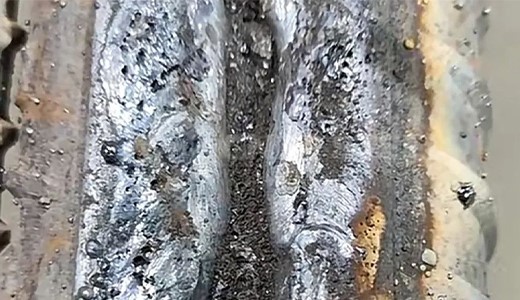
3. Bite edge: Continuous or intermittent grooves or depressions are produced along the boundary between the weld and the parent material.It will reduce the effective cross-sectional area of the parent material, reduce the structural bearing capacity, and cause stress concentration, which may develop into a crack source.It may be caused by excessive welding current, too long arc, incorrect electrode angle, and too long arc stay time at the upslope during horizontal welding.

4. Lack of penetration: A common defect in butt welds of pressure pipelines, which is more harmful than strip-shaped buried defects of comparable geometric dimensions. When rated, it often exceeds the standard due to excessive length, which may lead to reduced strength at the weld joint.

5. Lack of fusion: Improper welding parameters and oscillation may cause lack of fusion defects.

6. Weld cracks: Cracks are the most dangerous defect in pressure pipelines and are the main cause of brittle failure of pipelines. They may occur when welding alloy steels (especially when the carbon equivalent is high).


