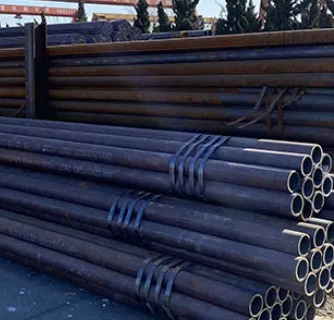
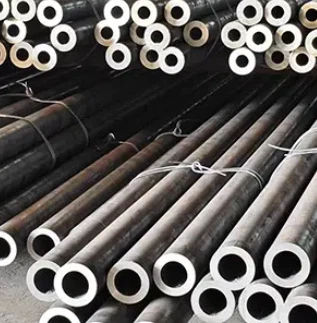
1. **What is ASTM A106 equivalent to?**
ASTM A106 (seamless carbon steel pipe for high-temperature service) is commonly equivalent to **EN 10216-1/2 P235GH**, **DIN 17175 St35.8**, **JIS G3454 STPG370**, and **ISO 9329-1 P235GH**. These standards cover similar carbon steel pipes used in high-temperature applications.
2. **What is the difference between ASTM A106 and ASTM A105?**
- **ASTM A106**: Specifies seamless carbon steel pipes for high-temperature service (e.g., piping systems in refineries, power plants).
- **ASTM A105**: Covers carbon steel forgings (flanges, fittings, valves) for ambient and higher-temperature pressure systems.
**Key difference**: A106 is for pipes, while A105 is for forged components. Their manufacturing processes (seamless vs. forging) and applications differ.
3. **What is ASTM A36 equivalent to?**
ASTM A36 (structural carbon steel) is broadly equivalent to **EN 10025-2 S235JR**, **JIS G3101 SS400**, **GB/T 700 Q235**, and **ISO 630 Gr. E235B**. These materials are general-purpose structural steels with similar yield strength (~250 MPa) and composition.
4. **What is the ASTM equivalent of 10CrMo910?**
10CrMo910 (DIN/EN standard) is a heat-resistant Cr-Mo steel used in boilers and pressure vessels. Its closest ASTM equivalent is **ASTM A335 Gr. P22** (chromium-molybdenum alloy steel pipe for high-temperature service). Both have similar composition (2.25% Cr, 1% Mo) and applications.
5. **What is equivalent to ASTM A514?**
ASTM A514 (high-strength quenched and tempered alloy steel plate) is comparable to **EN 10025-6 S690Q**, **JIS G3125 SHY685**, and **ISO 4950 Gr. 690**. These grades offer similar yield strength (~690 MPa) and are used in heavy-load structural applications (e.g., cranes, mining equipment).