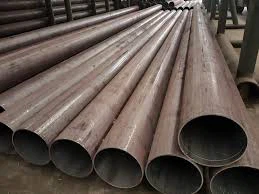
SUS316 is a Japanese JIS standard designation for a widely used austenitic stainless steel. Its international equivalents are ASTM 316 and UNS S31600. It is a chromium-nickel-molybdenum alloy, essentially an upgrade from the more common SUS304, with the key addition of 2-3% Molybdenum. This addition significantly enhances its corrosion resistance, making it a premium choice for demanding applications.
1. Primary Uses and Applications
SUS316 pipes are utilized across a broad spectrum of industries due to their excellent performance in corrosive environments.
Chemical and Process Industries:
Transportation of Corrosive Chemicals: Used in pipelines, transfer lines, and manifolds for acids, alkalis, and salts.
Process Equipment: Essential in reactors, heat exchangers, distillation columns, and storage tanks where resistance to chemical attack is critical.
Marine and Offshore Applications:
Shipbuilding: Used for seawater piping systems, ballast lines, and exhaust systems.
Offshore Platforms: Ideal for handling seawater, which is highly corrosive due to its chloride content.
Oil and Gas Industry:
Used in downstream processing, especially in environments containing chlorides and H₂S (sour gas).
Food and Beverage Processing:
Sanitary Tubing: Perfect for process lines carrying ingredients, beer, dairy, and juices. Its non-reactive nature ensures product purity and it can withstand rigorous cleaning with acidic or chlorinated cleaners.
Pharmaceutical and Biotechnology:
Used in high-purity water systems (WFI - Water for Injection) and process piping where sterility and corrosion resistance are paramount to prevent contamination.
Architecture and Construction (A&C):
Used in exterior facades, handrails, and structural components in coastal areas where salt spray from the ocean is a concern.
Power Generation:
Applied in flue gas desulfurization systems and other components in power plants exposed to corrosive by-products.
Medical Devices:
Used for surgical instruments and implants due to its good biocompatibility and corrosion resistance within the human body.
2. Key Benefits and Advantages
The properties of SUS316 make it superior to many other standard stainless steels.
Superior Corrosion Resistance: The addition of Molybdenum (Mo) is the key differentiator. It drastically increases resistance to pitting and crevice corrosion, especially in chloride-ion environments (like seawater and salt-laden air).
Excellent High-Temperature Strength: SUS316 maintains its mechanical strength and exhibits good oxidation resistance at elevated temperatures, making it suitable for high-temperature applications like heat exchangers and furnace parts.
Good Formability and Weldability: It can be readily formed and fabricated using standard methods. It also possesses excellent weldability, with or without the addition of filler metal.
Outstanding Hygiene and Cleanability: Its non-porous, smooth surface prevents bacterial growth and is easy to clean and sterilize, which is essential for food, pharmaceutical, and medical applications.
Aesthetic Appeal: It has a bright, attractive finish that can be polished to a high luster, making it suitable for architectural and consumer product applications.
Good Mechanical Properties: It offers a good combination of tensile strength, yield strength, and ductility.
3. Development Prospects and Future Trends
The future for SUS316 stainless steel pipes remains very bright, driven by global industrial and technological trends.
Growing Demand in Emerging Economies: Rapid industrialization in Asia, Africa, and South America will continue to drive demand for corrosion-resistant piping in chemical plants, water treatment facilities, and infrastructure projects.
Focus on Water and Wastewater Treatment: As global water scarcity intensifies, investments in desalination plants and advanced wastewater treatment systems will rise. SUS316 is a preferred material for key components in these plants due to its resistance to chlorides.
Expansion of the LNG (Liquefied Natural Gas) Industry: The LNG supply chain, from liquefaction to regasification, involves low temperatures and corrosive environments, creating a steady demand for high-performance materials like SUS316.
Advancements in Additive Manufacturing (3D Printing): SUS316 is a commonly used material in metal 3D printing. This allows for the production of complex, custom-designed pipes, fittings, and integrated components that are difficult to make with traditional methods.
Sustainability and Circular Economy: Stainless steel is 100% recyclable. The inherent "green" credentials of SUS316, coupled with its long service life and low maintenance, align perfectly with global sustainability goals, ensuring its continued relevance.
Development of Enhanced Variants: While SUS316 is a workhorse, future development lies in more advanced versions like SUS316L (low carbon for improved weld corrosion resistance) and high-molybdenum super-austenitics for even more aggressive environments, which will solidify the 316 family's position in the market.
Conclusion
SUS316 stainless steel pipe is a versatile, high-performance material whose value is proven across critical industries. Its unique blend of corrosion resistance, strength, and hygiene makes it indispensable. Driven by global trends in infrastructure, energy, water security, and advanced manufacturing, the demand and prospects for SUS316 pipes are set to grow steadily, reinforcing its status as a fundamental engineering material for the present and future.