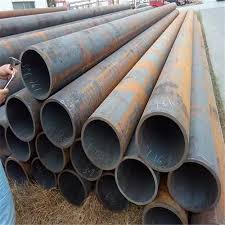
Q1: What are the internationally accepted standard systems for high-quality carbon steel pipes?
The main global standards for high-quality carbon steel pipes include: ASTM A106 (American standard seamless pipe for high temperature), ASTM A53 (fluid delivery pipe), EN 10216-2 (European standard pressure pipe), JIS G3454 (Japanese standard pressure piping) and API 5L (pipeline pipe). ASTM A106 is divided into three grades: Gr.A/B/C, of which Gr.B is the most widely used, and stipulates that the carbon equivalent CE≤0.43%; EN 10216-2 divides steel pipes into multiple grades of P195TR1-P265TR2 according to their use; API 5L PSL2 requires a more stringent Charpy impact test. These standards have detailed provisions on chemical composition, mechanical properties and testing methods.
Q2: How does China's GB standard classify high-quality carbon steel pipes?
China's GB standard system divides high-quality carbon steel pipes into: GB/T 8163 (seamless pipes for fluid transportation), GB 5310 (high-pressure boiler pipes), GB 6479 (pipes for fertilizer equipment) and GB 9948 (petroleum cracking pipes). GB/T 8163 includes multiple grades such as 10, 20, Q345, and stipulates that S≤0.020%, P≤0.025%; GB 5310-20G requires grain size testing (grades 5-8) and high-temperature tensile testing; GB 6479 has special requirements for corrosion resistance in hydrofluoric acid media. Compared with ISO standards, GB standards have added process performance tests such as flattening tests and expansion tests.
Q3: What industry certifications do high-quality carbon steel pipes need to pass?
Key industry certifications include: pressure piping component manufacturing license (TSG D2001), API monogram certification (petroleum industry), CE-PED certification (EU Pressure Equipment Directive), classification society certification (CCS/DNV, etc.) and nuclear power quality assurance system certification (HAF603). API certification requires the factory to have a complete quality traceability system and destructive testing capabilities; CE certification requires EN 10204 3.1 type test; nuclear power pipes must also meet the purity requirements in the RCC-M standard. These certifications usually require annual supervision and audit to ensure continued compliance with the standards.
Q4: What are the special requirements for the marking content of high-quality carbon steel pipes?
The complete marking should include: standard number (such as GB/T 8163), material grade (20#), specification (Φ89×6mm), manufacturing process (hot rolling/cold drawing), furnace batch number, production date and manufacturer identification. For special purpose pipes, the following additional information is required: heat treatment status (N stands for normalizing), non-destructive testing level (UT Level B), and implementation standard version number (such as GB/T 8163-2018). API 5L steel pipes also require marking of steel grade (such as Gr.B), PSL grade, and pipe number traceability code. The marking should be low-stress stamped or laser engraved, and the depth should not exceed 5% of the wall thickness.
Q5: What technical documents are required for exporting high-quality carbon steel pipes?
The necessary documents include: material certificate (MTC) in accordance with EN 10204 3.1 standard, third-party inspection report (such as SGS/BV), non-destructive testing report (RT/UT), heat treatment curve record, dimensional inspection record, and packing list. For pipes used in pressure equipment, simulated post-weld heat treatment (PWHT) test data must also be provided. All documents must be in Chinese and English, and some countries require embassy certification. Special projects (such as nuclear power) also require smelting analysis reports, intergranular corrosion test reports, and product instructions.