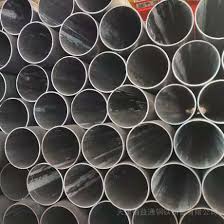
1. What is the fundamental manufacturing difference between seamless and welded line pipe?
Answer: Seamless pipe is formed from a solid cylindrical steel billet which is heated and pierced through the center to create a hollow shell, which is then elongated and rolled to the required size. Welded pipe is made by rolling steel plate or coil into a cylindrical shape and then welding the seam along its length.
2. What is the primary advantage of using seamless pipe over welded pipe?
Answer: The primary advantage is the absence of a longitudinal weld seam. This makes seamless pipe inherently stronger and more reliable under high pressure, high temperature, and corrosive environments, as the weld seam is often the weakest point in a pipe.
3. In which critical oil & gas applications is seamless pipe mandatory?
Answer: Seamless pipe is typically mandated for high-pressure, high-temperature (HPHT) wells, sour service (where H₂S gas is present), offshore risers, deepwater applications, and gas transmission lines in demanding terrain. These applications demand the highest level of structural integrity.
4. What does "Sour Service" mean, and why is seamless pipe preferred for it?
Answer: Sour Service refers to environments containing hydrogen sulfide (H₂S). H₂S can cause Sulfide Stress Cracking (SSC). Seamless pipe, with its homogenous structure and absence of a weld seam, is less susceptible to the initiation of SSC and is often specified for such critical service.
5. How does the wall thickness consistency of seamless pipe compare to welded pipe?
Answer: Seamless pipe generally has less consistent wall thickness around its circumference (known as eccentricity) compared to high-quality welded pipes made from precisely rolled plate. This is a key inspection point for seamless pipes, as excessive eccentricity can lead to failure under high pressure.