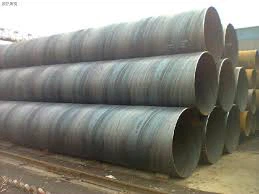
What are the common inspection methods for resistance welded pipes?
Ultrasonic testing can detect internal defects such as incomplete penetration or pores. Eddy current testing is suitable for rapid screening of surface and near-surface defects. Hydrostatic testing verifies the tightness and pressure bearing capacity of pipes. X-ray testing provides internal images of welds with high accuracy. Visual inspection and dimensional measurement are basic quality control methods.
How to inspect resistance welded pipes by ultrasonic waves?
The ultrasonic probe moves along the weld and emits high-frequency sound waves. The sound waves will reflect when they encounter defects, and the location and size of the defects are determined by signal analysis. This method does not require the destruction of the pipe and is highly efficient. Detectable defects include cracks, slag inclusions, etc. The test results need to be compared with the standard to determine whether they are qualified.
What is the purpose of hydrostatic testing?
The hydrostatic test simulates the pressure-bearing state of the pipe in actual use. By applying a water pressure higher than the working pressure, the strength and tightness of the pipe are tested. During the test, observe whether there is leakage or deformation. This is an important means to ensure the safety of high-pressure pipelines. The test pressure and pressure holding time must meet industry standards.
What scenarios are suitable for eddy current testing?
Eddy current testing is suitable for rapid screening of mass-produced resistance welded pipes. It can detect surface and near-surface defects such as cracks and pores. No coupling agent is required and the operation is simple. However, the detection ability of deep defects is limited. It is often used for quality control of stainless steel and non-ferrous metal pipes.
What does the dimensional inspection of resistance welded pipes include?
Outer diameter, wall thickness and ovality are basic dimensional inspection items. Length and straightness affect the installation and use of pipes. Weld excess height and misalignment must be controlled within the standard range. Inspection tools include calipers, micrometers and laser measuring instruments. Dimensional accuracy directly affects the interchangeability and connection performance of pipes.