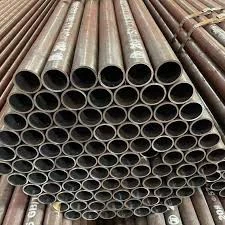
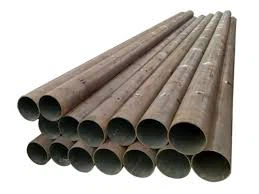
1. Main Uses and Applications
Q460 steel pipe is a high-strength, low-alloy (HSLA) structural steel product widely used in demanding applications where high load-bearing capacity and structural efficiency are critical. Its primary uses include:
Large-Span Architectural Structures: It is a fundamental material for iconic buildings like stadiums, convention centers, airports, and skyscrapers. For instance, it was extensively used in the construction of the Beijing National Stadium (Bird's Nest) due to its ability to create lightweight yet incredibly strong frameworks that cover large distances without intermediate supports.
Heavy-Duty Industrial Structures: Commonly employed in industrial plants, mining equipment support structures, large crane booms, and transmission towers, where it must withstand heavy dynamic loads and harsh environmental conditions.
Bridge Engineering: Used in the construction of large bridges, especially for key load-bearing components such as arches and main trusses, helping to reduce the overall weight of the structure while maintaining superior strength.
Specialized Machinery and Vehicle Frames: Its high strength-to-weight ratio makes it ideal for the chassis of high-performance construction machinery, mining trucks, and other specialized heavy equipment.
2. Key Advantages and Benefits
The widespread adoption of Q460 steel pipe is driven by its superior mechanical and chemical properties, which offer significant advantages over conventional carbon steels.
High Strength and Excellent Toughness: With a minimum yield strength of 460 MPa, Q460 offers significantly higher load-bearing capacity than common grades like Q235 (235 MPa) or Q355 (355 MPa). It also maintains good toughness at low temperatures (especially grades like Q460D and Q460E), preventing brittle fracture.
Weight Reduction and Material Efficiency: The high strength of Q460 allows for the use of thinner walls and smaller cross-sections in structural designs. This leads to a substantial reduction in the total weight of the structure, saving on material costs, simplifying transportation and installation, and reducing the load on foundations.
Good Weldability and Processability: As a low-alloy steel, Q460 is designed with good weldability. When proper procedures and suitable welding materials are used, it can achieve high-integrity welded joints. It also maintains good cold bending and forming properties.
Economic Efficiency: Although the cost per ton of Q460 is higher than that of lower-grade steels, its weight-saving benefits often lead to lower overall project costs. This includes savings in material tonnage, fabrication, transportation, and construction.
3. Future Development Prospects
The future of Q460 steel pipe is closely tied to global trends in infrastructure, sustainability, and technological advancement. Its prospects are very promising, driven by the following factors:
Demand from New Infrastructure and Green Energy: The global push for renewable energy, such as large-scale wind power projects (for towers and foundations) and solar farm support structures, requires materials that are both strong and lightweight. Q460 is perfectly positioned to meet this demand.
Advancements in Manufacturing Technology: The future will see wider adoption of Thermo-Mechanical Control Process (TMCP) and Quenching & Tempering (Q&T) technologies for producing Q460 pipes. These processes further enhance strength, toughness, and weldability, enabling the production of even more reliable and efficient pipes for critical applications.
Trend Towards Customization and High Performance: Market needs are shifting towards customized steel solutions. The development of Q460 pipes with specialized properties, such as improved weather resistance (atmospheric corrosion resistance), higher fire resistance, and optimized performance for specific environments (e.g., offshore, Arctic), will be a key growth area.
Synergy with the "Dual Carbon" Goals (Carbon Peak and Carbon Neutrality): The high-strength nature of Q460 contributes to "green building" and sustainable development. By reducing the amount of steel required in structures, it directly lowers the carbon footprint associated with steel production and logistics, aligning perfectly with global environmental sustainability goals.
In conclusion, Q460 steel pipe, with its exceptional strength, economic benefits, and adaptability, is a crucial material in modern engineering. Its applications will continue to expand as technology advances, solidifying its role in building the safer, more efficient, and sustainable infrastructure of the future.