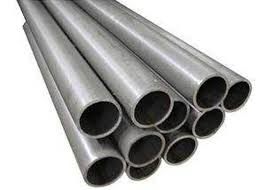
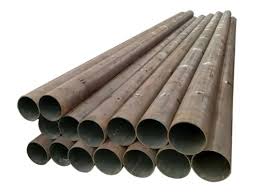
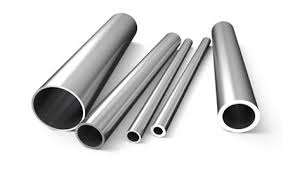
Q1: What is the basic production process of precision seamless pipes?
The production of precision seamless pipes includes seven key steps: hot-rolled tube blank preparation → pickling and descaling → phosphorus saponification and lubrication treatment → cold drawing/cold rolling forming → intermediate annealing (eliminating work hardening) → finishing (straightening, sizing) → non-destructive testing. The cold drawing process requires 3-5 deformation passes, with a diameter reduction of 10-30% per pass; cold rolling uses a two-roll or three-roll mill, and the deformation of a single pass can reach 50%. The final product needs to undergo 100% eddy current or ultrasonic testing to ensure that there are no internal defects. Advanced production lines have achieved fully automated control, such as the cold rolling unit of Germany's MEER company with an accuracy of up to ±0.02mm.
Q2: Why do precision seamless pipes require multiple intermediate annealings?
Intermediate annealing is a necessary process to eliminate cold working hardening: cold deformation will cause metal lattice distortion, increase hardness but reduce plasticity (such as 45# steel hardness increases from 180HB to 260HB after cold drawing); recrystallization annealing (680-720℃) can restore material plasticity, which is convenient for subsequent processing; each annealing can reduce 30-50% of residual stress; annealing atmosphere (such as hydrogen and nitrogen mixture) can prevent surface oxidation; precision tubes usually need to be annealed once every 2-3 cold working passes. Annealing quality directly affects the dimensional stability and cutting performance of the final product.
Q3: What are the surface treatment technologies for precision seamless tubes?
Mainstream surface treatments include: pickling passivation (removing oxide scale and forming a passivation film); electrolytic polishing (reducing Ra to below 0.2μm); chrome plating (thickness 10-30μm, improving wear resistance); phosphating (improving lubricity and rust resistance); special coatings (such as DLC diamond-like coating, friction coefficient ≤0.1). Precision tubes for hydraulic cylinders are usually required to have Ra≤0.4μm after electrochemical polishing, while food-grade stainless steel tubes need to be electrolytically polished to a surface chromium content of ≥12%. Surface treatment can extend the service life by 3-5 times.
Q4: How to control the dimensional accuracy of precision seamless tubes?
The key points of dimensional control include: micron-level processing accuracy of molds/rollers (contour error ≤5μm); real-time monitoring of online laser diameter gauges (sampling frequency 1000Hz); multi-roll straightening machines to ensure straightness (≤0.3mm/m); constant temperature workshops (20±1℃) to avoid thermal deformation; automatic sorting systems are graded according to tolerances (such as H7/H8/H9). For small tubes below Φ20mm, the use of oxygen-free copper molds can reduce scratches; large diameter tubes (>Φ100mm) require hydraulic tension to control roundness. Modern CNC technology can stabilize the outer diameter tolerance within ±0.01mm.
Q5: Common defects and prevention in the production of precision seamless tubes?
Common defects include: inner wall scratches (caused by insufficient lubrication, the phosphorus saponification process needs to be optimized); excessive ovality (improper straightening parameters, the roller spacing should be adjusted); surface orange peel (annealing temperature is too high, controlled within ±10°C); transverse cracks (material segregation, strengthen billet inspection); dimensional fluctuations (temperature control failure, constant temperature environment required). Defects can be identified in real time through online detection systems (such as smart cameras + AI algorithms), and the scrap rate can be reduced from 3% to below 0.5%. For high-value pipes, eddy current + ultrasonic double inspection can also be used to ensure zero defects.