1. Q: What is the core scope of the ASTM A335 standard? What are its overall requirements for P5 steel pipe?
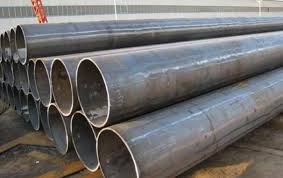
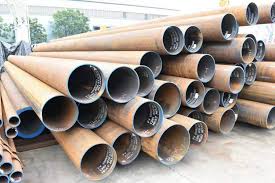
A: The ASTM A335 standard is titled "Standard Specification for Seamless Ferritic Alloy Steel Pipe for High-Temperature Service." Its core scope specifies the requirements for seamless ferritic alloy steel pipe for high-temperature service. These pipes are typically used in boilers, superheaters, heat exchangers, and refineries. The overall requirements for P5 steel pipe are comprehensive, covering all aspects, including manufacturing process (must be seamless), material grade (P5), chemical composition range, heat treatment (must be normalized and tempered), mechanical properties (tensile strength, yield strength, elongation, hardness), dimensional tolerances, surface quality, nondestructive testing (hydrostatic testing, NDT), test methods, and markings, ensuring that the steel pipe meets the essential requirements for high-temperature and high-pressure service.
2. Q: In addition to ASTM A335, what other relevant standards apply to P5 steel pipe systems?
A: A complete P5 steel pipe pressure system adheres to a system of standards, not a single standard. For matching pipe fittings, ASTM A234 WP5, which specifies the technical requirements for wrought carbon steel and alloy steel pipe fittings for pressure-containing applications, must be followed. For forgings such as flanges and valves, ASTM A182 F5 must be followed. For welding, ASME Section IX Welding and Brazing Qualification Standards and piping installation codes such as ASME B31.1 (Power Piping) or ASME B31.3 (Process Piping) must be followed. These standards reference each other, ensuring quality control throughout the entire process, from materials and manufacturing to installation.
3. Q: How did the ASME Boiler and Pressure Vessel Code adopt ASTM A335 P5?
A: The ASME Boiler and Pressure Vessel Code (BPVC) is a mandatory safety code established by the American Society of Mechanical Engineers. It incorporates material standards such as ASTM into its code through "approval adoption." ASTM A335 Gr. P5 has been fully adopted by ASME BPVC Section II, Part A and given the ASME designation SA335 Gr. P5 (note the prefix "SA," not "ASTM"). This means that when P5 material is used in ASME-certified boilers, pressure vessels, or nuclear applications, its production, inspection, and certification must meet both the standard requirements of ASTM A335 and the additional safety requirements of the ASME code.
4. Q: Is there an equivalent designation to ASTM A335 P5 in the International Organization for Standardization (ISO) or European Standards (EN)?
A: Yes, there is, but it is not an exact equivalent. The European designation that is chemically closest to ASTM A335 P5 is 12CrMo4-5 or 12CrMo5 (the older designation) in EN 10216-2. The number "12" represents the carbon content of approximately 0.12%, and "CrMo4-5" indicates the chromium and molybdenum content. Similarly, ISO 9327-2 also covers similar materials. Despite similar chemical compositions, due to differences in standard systems, test methods, and acceptance criteria, the selection of alternative materials for specific projects requires detailed calculation and approval by the design engineer and cannot be simply substituted.
5. Q: Do quality grades PSL1 and PSL2 apply to ASTM A335 P5?
A: No. Product Specification Level (PSL) is a concept unique to the API 5L (linepipe) standard, used to distinguish requirements of varying severity. For example, PSL2 has more stringent toughness, nondestructive testing, and marking requirements than PSL1. ASTM A335 is a standalone material standard that does not utilize the PSL grading system. Its requirements for all P5 steel pipes are unified and fixed. The rigor of its inspection and testing is embedded in the standard's provisions. All P5 steel pipes conforming to ASTM A335 must meet the same comprehensive set of technical requirements.