


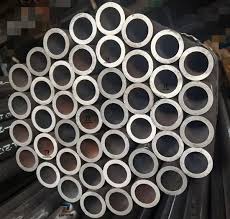
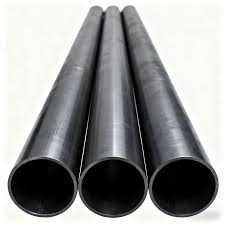
Introduction to P355NH Carbon Steel Boiler Steel Pipe
P355NH is a normalized fine-grain carbon-manganese steel plate and pipe material specifically designed for pressure vessel and boiler applications at elevated temperatures, particularly in welded constructions. The designation follows the European standard EN 10216-3 (Seamless steel tubes for pressure purposes - Part 3: Alloy fine grain steel tubes) and EN 10217-3 (Welded steel tubes for pressure purposes - Part 3: Alloy fine grain steel tubes).
Key Characteristics:
Composition & Processing: It is a fine-grain steel, treated with micro-alloying elements like niobium (Nb) or vanadium (V) and subjected to a normalizing heat treatment. This process refines the grain structure, resulting in improved toughness, strength, and good weldability.
High-Temperature Performance: The "NH" in its name stands for "Normalized for elevated temperature applications." It is engineered to maintain enhanced yield strength and creep resistance at service temperatures typically up to approximately 400-500°C, making it suitable for critical pressure parts in boilers, heat exchangers, and superheaters.
Weldability: Its fine-grain chemistry and normalized condition provide excellent weldability without requiring post-weld heat treatment in many cases, which is crucial for the fabrication of large boiler structures.
Applications: Primarily used in the construction of steam boilers, pressure vessels, and piping systems for power generation (fossil fuel and biomass), industrial plants, and district heating systems where components operate under high pressure and temperature.
Typical Chemical Composition and Mechanical Properties
The following tables summarize the standard requirements per EN 10216-3/EN 10217-3. Exact values can vary slightly by manufacturer and product form (seamless or welded).
Table 1: Typical Chemical Composition (Weight %, max unless range specified)
| Element | Content (%) | Notes |
|---|---|---|
| C (Carbon) | ≤ 0.20 | Provides strength; low content aids weldability. |
| Si (Silicon) | ≤ 0.60 | Deoxidizer and strengthens ferrite. |
| Mn (Manganese) | 0.90 - 1.70 | Enhances strength and hardenability. |
| P (Phosphorus) | ≤ 0.025 | Impurity; kept low for toughness. |
| S (Sulfur) | ≤ 0.015 | Impurity; kept very low to prevent hot shortness. |
| Nb (Niobium) | ≤ 0.05 | Grain refiner; improves strength and toughness. |
| V (Vanadium) | ≤ 0.12 | Grain refiner/precipitate strengthener. |
| Al (Aluminum) | ≥ 0.020 | Grain refiner (min. content often specified). |
| N (Nitrogen) | ≤ 0.020 | Controlled to prevent aging. |
| Cu (Copper) | ≤ 0.30 | Residual element. |
| Mo (Molybdenum) | ≤ 0.08 | Residual element, can enhance high-temp strength. |
| Ni (Nickel) | ≤ 0.50 | Residual element, improves toughness. |
Table 2: Key Room Temperature Mechanical Properties
| Property | Value | Condition / Note |
|---|---|---|
| Yield Strength (ReH), min | 355 MPa | Nominal yield strength (355 N/mm²). |
| Tensile Strength (Rm) | 470 - 630 MPa | Range for normalized condition. |
| Elongation (A), min | 20 - 24%* | Depends on thickness and test specimen. |
| Impact Energy (KV), min | 40 J avg (27 J min) | Charpy V-notch test at -20°C or -50°C*. |
Table 3: Elevated Temperature Properties (Minimum Yield Strength - Rp0.2)
| Test Temperature (°C) | 100 | 150 | 200 | 250 | 300 | 350 | 400 | 450 |
|---|---|---|---|---|---|---|---|---|
| Min Yield Strength (MPa) | ~335 | ~315 | ~295 | ~275 | ~255 | ~235 | ~215 | ~200 |
(Note: Specific impact test temperature and minimum elongation are defined by the material's designated sub-grade and product standard. Common sub-grades include P355NH with impact testing at -20°C or -50°C.)*
Advantages Summary:
Excellent combination of strength, toughness, and weldability.
Reliable high-temperature mechanical properties for pressure equipment.
Proven performance in critical energy sector applications.
Compliance with stringent European safety standards for pressure equipment (PED).
P355NH steel pipe is therefore a fundamental and trusted material for engineers designing safe and efficient high-temperature, high-pressure containment systems.


